
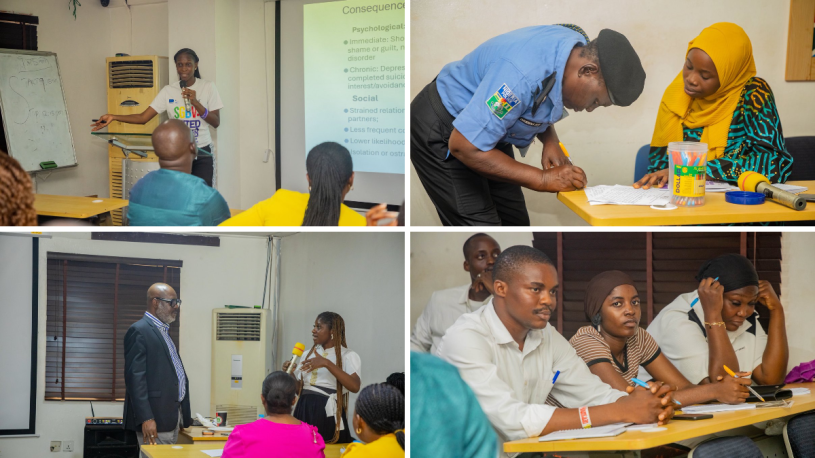
The Lagos State Domestic and Sexual Violence Agecy (DSVA), in partnership with the Lagos State Police Command, has upgraded five additional Police Divisions into Family Support Units (FSUs) as part of efforts to strengthen the State’s response to Domestic and Sexual Violence and ensure survivors receive appropriate and professional support.
The newly upgraded FSUs are located in Isheri, Idimu, Meiran, Ijesha and Iju (Red House).
Officers from the units, alongside officers from the Gender Desk of the Police Command, participated in a two-day capacity-building programme organised by DSVA at the Lagos Chamber of Commerce and Industry (LCCI) Conference and Exhibition Centre, Alausa-Ikeja.
As part of the upgrading process, newly designated officers of the Family Support Units were trained on best practices for the investigation and prosecution of Sexual and Gender-Based Violence (SGBV) cases, which brought together 24 police officers from the newly upgraded units and officers from the Gender Desk of the Police Command, while strengthening evidence gathering, reporting, investigation and inter-agency collaboration.
The training featured technical presentations, case studies, interactive discussions and practical exercises covering the guiding principles of SGBV response, human rights and legal frameworks, police reporting standards, handling cases involving women, men and children, medical and forensic reports, forensic evidence, investigative practices, and referral pathways and services available to survivors across Lagos State.
Facilitators comprised professionals with expertise in law enforcement, medicine, criminal justice, prosecution and survivor support, including Executive Secretary, DSVA; Titilola Vivour-Adeniyi, DSP Kenneth Emegwamor Okafor (Retired); Dr. Oluwajimi Sodipo; Babajide Boye; and Head of Case Management, DSVA, Oluwatumininu Oni.
In her remarks, Vivour-Adeniyi commended officers serving in the Family Support Units and Gender Desks for their commitment to protecting survivors and supporting access to justice.
She emphasised that professional and effective investigation is critical to ensuring accountability, strengthening public confidence and improving outcomes for survivors.
Participants were equipped with practical approaches to survivor engagement through the RE-S-PONSE framework, Respect, Empathy, Supportiveness, Positivity, Openness and Non-judgemental conduct.
The training also covered child sexual abuse investigations, child-friendly interviewing, preservation of evidence, forensic medical examinations, interpretation of medical reports and timely referrals.
The programme highlighted the importance of collaboration among law enforcement, healthcare providers, prosecutors and other service providers.
Participants were sensitised to State services including Sexual Assault Referral Centres, shelters, healthcare, psychosocial support and legal assistance.
At the conclusion of the training, participants called for sustained capacity building for law enforcement officers and stronger legal protection against threats or intimidation directed at parents of sexually abused children.

