The Nigerian National Petroleum Company (NNPC) Limited’s decision to reduce petrol prices through a discount on its retail profit margin does not amount to a return of fuel subsidy.
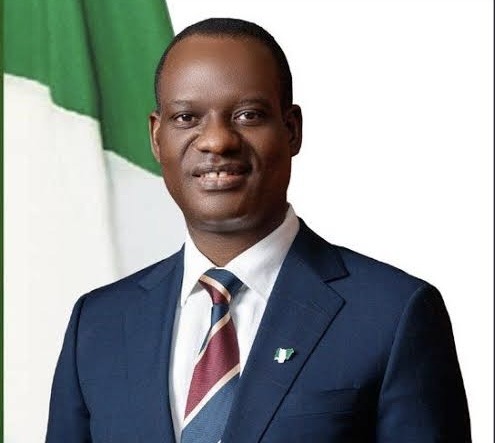
The Coordinating Minister of the Economy and the Finance, Taiwo Oyedele, insists that the arrangement will not require public funds.
Oyedele, who made the clarification in a statement issued in Abuja, said the discount was a commercial decision by NNPC Retail Limited to reduce its earnings per litre and pass the savings to customers.
He said the initiative, which has lowered petrol prices at NNPC retail outlets since October 1, 2026, would provide some relief to households, commuters and transport operators struggling with high fuel costs.
According to him, the company can reduce its retail margin to attract more customers, increase sales and strengthen its business without requiring the government to pay part of the cost of petrol.
The discount lowers prices for consumers and can strengthen NNPC Retail’s business and profits at the same time,” Oyedele said.
He explained that a retail margin is the difference a marketer adds to the price it pays for petrol to cover its business costs and make a profit.
A discount occurs when the retailer reduces that margin, temporarily accepts no profit on the product or passes part of its earnings to customers.
A fuel subsidy, by contrast, involves the government paying part of the cost of petrol to keep the price paid by consumers below what it would otherwise be.
Oyedele said the distinction was important because government-funded subsidies draw on public revenue that could otherwise be spent on education, healthcare, salaries and infrastructure.
He maintained that the Federal Government had ended the petrol subsidy regime in 2023 and was not bringing it back through the NNPC Retail discount.
The minister said the discount would be financed entirely from NNPC Retail’s retail margin and would not be paid for through the Federal Government’s budget or the Federation Account.
He explained that NNPC Retail purchases petrol from the Dangote Refinery and other suppliers at prevailing market prices before adding its retail margin to determine the pump price.
Under the discount arrangement, the company reduces the margin it would normally earn, allowing motorists to buy petrol at a lower price without the government paying the difference.
Oyedele said the arrangement was different from selling crude oil belonging to the Federation below its market value.
According to him, if the government sells its crude oil below the prevailing market price, the difference represents a loss of public revenue and could amount to a subsidy.
He maintained that the NNPC Retail initiative does not involve such a loss because the company is reducing its own commercial earnings rather than asking the government to cover the discount.
Oyedele said the discount was consistent with the role for which NNPC Retail Limited was established more than 20 years ago.
The company, a wholly owned subsidiary of NNPC Limited, was set up to market petroleum products and help ensure their availability and distribution across the country.
He said its responsibilities extended beyond maximising profits to include making refined petroleum products accessible to Nigerians at competitive prices.
The minister noted that NNPC Retail had historically sold petrol at prices below those of some other marketers, adding that its latest decision to reduce its margin was a continuation of that commercial approach.
He said any retailer could adopt a similar strategy to attract customers, improve sales and strengthen its position in the market.
The minister also dismissed concerns that reducing the retail margin would necessarily lower NNPC Limited’s profits and reduce the dividends paid to the Federation.
He said a smaller profit on each litre of petrol sold could be offset by an increase in sales volumes, while the discount could encourage customers to remain loyal to the company even after the offer ends.
According to him, higher sales and stronger customer loyalty could improve the company’s overall performance and potentially increase the dividends it pays to the government.
He described the arrangement as one that could benefit consumers through lower prices while strengthening the company’s business.
Oyedele said margin discounts were a common commercial practice among retailers and should not automatically be interpreted as evidence of government intervention in the pricing of petroleum products.
The minister further argued that the discount was unlikely to distort the domestic petrol market or create a significant new incentive for smuggling.
He said the retail margin accounts for less than five per cent of the pump price, limiting the extent to which a discount on that margin could reduce the final price.
According to him, petrol prices in neighbouring countries are between 20 and 40 per cent higher than those in Nigeria.
He therefore argued that the reduction in NNPC Retail’s margin would not substantially widen the price difference between Nigeria and neighbouring markets.
Oyedele said this made the initiative different from the former subsidy arrangement, which created opportunities for the diversion of cheaper Nigerian petrol to other countries.
He maintained that the current discount would allow consumers to benefit from lower prices without creating the same market distortions associated with the previous subsidy regime.
The minister said the retail discount was one of several measures the Federal Government was pursuing to reduce the burden of high fuel prices on households and businesses.
These include expanding the use of compressed natural gas (CNG) for transportation, removing taxes and duties on petrol, and curbing illegal road levies that increase transport fares and logistics costs.
The government is also increasing funding for cash transfers to vulnerable households and expanding access to subsidised credit for small businesses and consumers.
Oyedele said the measures were designed to provide relief without returning Nigeria to a subsidy system that placed a heavy burden on public finances.
Separately, the Presidency has announced that NNPC Retail will forgo its petrol retail profit margin for 30 days and sell the product at cost as part of efforts to protect Nigerians, particularly vulnerable households and commercial transport operators, from the impact of rising global crude oil prices.
The announcement was contained in a statement signed by the President’s Special Adviser on Information and Strategy, Bayo Onanuga.
The Presidency said the arrangement had the backing of President Bola Ahmed Tinubu and formed part of the measures announced by Oyedele to cushion the effects of rising energy costs.
Under the arrangement, if NNPC’s cost of obtaining petrol is N1,300 per litre, the company will sell it at that price without adding its retail profit margin.
The Presidency said NNPC Retail already sold petrol at competitive prices and that the temporary move was intended to provide additional relief as international oil market volatility put pressure on domestic fuel costs.
Oyedele expressed the hope that other petroleum marketers would adopt similar measures, noting that the recent increase in crude oil and petrol prices was not expected to persist indefinitely.
He stressed that NNPC’s decision to reduce its margin should not be confused with the restoration of petrol subsidy, which ended on May 29, 2023, when Tinubu assumed office.
The minister also announced plans for forward sales of crude oil to domestic refineries as part of the government’s response to international oil market volatility.
He said increased production and the release of crude oil previously committed to other arrangements would help improve the availability of crude for local refiners.
The government expects the arrangement to make crude supplies more predictable and help shield domestic petrol prices from sudden changes in the global market.
By improving the supply of crude to local refineries, the government hopes to reduce some of the uncertainty affecting the cost of producing and supplying petroleum products.
Oyedele said the Federal Government was negotiating a ceiling of N1,350 per litre on the ex-gantry or landing cost of petrol to moderate sharp increases in pump prices.
Under the proposed arrangement, refiners and importers would initially bear any cost above the ceiling and recover the difference later when crude oil prices or the exchange rate improved.
He said the objective was to spread the impact of changes in supply costs over time instead of allowing every increase in international prices to translate immediately into higher petrol prices.
The minister stressed that the proposal was neither a subsidy nor a permanent system of price control.
“This is neither a subsidy nor a price control: it is designed to smooth prices over time rather than suppressing them,” he said.
Oyedele explained that keeping prices relatively stable would help consumers and businesses plan their spending, particularly because transport fares often rise quickly when fuel prices increase but may not fall at the same pace when fuel becomes cheaper.
“The reasoning is simple. 1,400 naira a litre today and 1,400 tomorrow is better than 1,500 today and 1,300 tomorrow, because volatility itself adds to uncertainty and cost,” he said.
He added that the proposed ceiling would be reviewed monthly and adjusted when market conditions required, with the relevant figures published to promote transparency.
The minister said the Federal Government was working with state governments and security agencies to curb the collection of road taxes and levies that increase transportation and logistics costs.
The initiative is being pursued under the 2025 tax reform laws and is intended to reduce the additional charges faced by transport operators and businesses moving goods across the country.
Such costs are often passed on to passengers and consumers through higher fares and prices of goods.
The government is also increasing financial support for vulnerable households through cash transfers and providing subsidised credit to small businesses and consumers.
Oyedele said the Federal Government was working with state governments to accelerate the deployment of compressed natural gas for transportation.
He said CNG was between 60 and 70 per cent cheaper than petrol, offering transport operators an opportunity to reduce their fuel expenses.
The government expects the savings to translate into lower fares for passengers as more commercial vehicles adopt the alternative fuel.
The expansion of CNG is part of the government’s broader strategy to reduce the effect of petrol price increases on daily transportation and the movement of goods.
However, the extent of the relief will depend on the availability of gas-powered vehicles, refuelling facilities and the willingness of transport operators to pass their savings to passengers.
The Federal Government is also considering an excess-profit tax for operators across the energy value chain who take undue advantage of consumers during periods of high prices.
Oyedele said any revenue generated from such a tax would be used exclusively to cushion the effects of rising fuel costs through transport support or vouchers.
The proposed assistance would target urban minimum-wage earners, whom the government considers particularly vulnerable to higher transportation expenses.
The Federal Government also plans to work with the National Assembly to consider additional tax relief for low-income earners under the 2027 Finance Bill.
The measures are intended to provide targeted assistance to people most affected by rising living costs rather than subsidise fuel consumption across the entire population.
The government is investing in a National Strategic Fuel Reserve to protect households and businesses against future disruptions in energy supplies.
Under the plan, refined petroleum products would be released into the market according to clearly published rules whenever global supply disruptions or hoarding threaten availability and price stability.
The government said the reserve would help prevent artificial scarcity, discourage market manipulation and strengthen Nigeria’s long-term energy security.
It stressed that the initiative would not subsidise petrol or impose fixed prices but would provide an additional source of supply when market disruptions threaten consumers and businesses.
The effectiveness of the reserve will depend on the quantity of products held, the arrangements for storing them and the conditions under which supplies are released into the market.
The Federal Government is also planning to improve traffic management, particularly in major cities, to reduce congestion and unnecessary fuel consumption.
Traffic management agencies are expected to improve the movement of vehicles on busy roads, helping transport operators reduce the time and fuel spent in traffic.
The government also cited the Nigerian Postal Service’s newly introduced address codes as a measure that could make deliveries more efficient and reduce logistics costs.
More efficient addressing could help delivery operators locate destinations more easily, reduce wasted journeys and lower the cost of moving goods.
The government believes that improvements in transportation and logistics, alongside the other measures, would help reduce costs across the economy.
The Presidency acknowledged the difficulties Nigerians were facing because of high fuel prices but maintained that restoring a general petrol subsidy would create greater economic problems in the long run.
It said the former subsidy system had been associated with fuel shortages, smuggling, pressure on the naira and fiscal difficulties.
The government argued that the current measures were designed to provide relief while preserving the reforms introduced to reduce the burden of petrol subsidies on public finances.
“Government is not out to reverse a necessary reform designed to set our country on the path towards sustained prosperity. It is to ensure its gains reach more Nigerians, faster and in more tangible ways,” the Presidency said.
It added that the government remained committed to finding ways to ease the pressure on households and businesses without returning to a system it considers financially unsustainable.
The Presidency also disclosed that the Federal Government was working on a comprehensive package of fiscal measures aimed at bringing inflation down to single digits sustainably in the near term.
The government is therefore relying on temporary commercial discounts, more predictable crude supplies, a proposed landing-cost ceiling, alternative fuels, targeted assistance and improved logistics to cushion consumers against rising energy costs without restoring the former petrol subsidy regime.

