
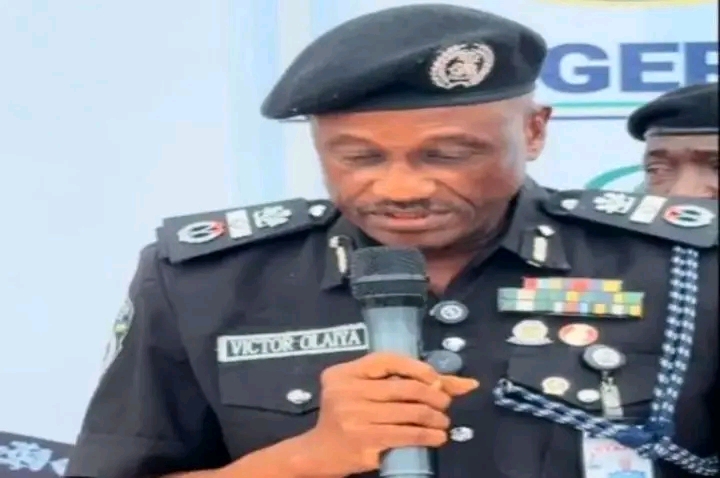
The Assistant Inspector-General of Police, Zone 7 Headquarters, Abuja, AIG Victor Olaiya, has urged Nigerian journalists to prioritise facts, verification and responsible reporting in their coverage of security issues.
Olaiya warns that misinformation could trigger unnecessary panic and undermine public confidence.
He gave the charge while declaring open a two-day media interaction organised by the Zone 7 Headquarters, Abuja, with the theme: “Reporting Security in the Digital Age: Curtailing Misinformation, Preventing Panic and Upholding Fact-Based Journalism in Nigeria.”
The AIG said the rapid evolution of digital platforms had fundamentally changed the information landscape, enabling reports, photographs, videos and voice notes to travel across cities and borders within seconds, often before the facts surrounding them could be properly established.
He noted that while the digital revolution had made communication faster and more accessible, it had equally created serious challenges for security communication and responsible journalism.
According to him, “an unverified report can generate unnecessary panic, a misleading headline can distort public perception, while an old photograph presented as a current event can create the impression of a new security incident.
Olaiya stressed that responsible journalism could have the opposite effect by calming rather than alarming the public, clarifying rather than confusing issues, and strengthening rather than undermining confidence in security institutions.
He said the Police recognised that its responsibility extended beyond responding to crime and security threats to include effective and transparent communication with the public.
The AIG therefore called for stronger collaboration between the Police and the media, stressing that both institutions, despite their different roles, ultimately serve a common public interest—building a safer, better-informed and more resilient society.
He said the interaction was designed to deepen mutual understanding between security personnel and media practitioners, particularly on the operational realities of policing and the professional challenges confronting journalists in the digital age.
“Where communication gaps exist, we must identify them. Where misinformation emerges, we must confront it with facts. Where there are misconceptions, we must provide clarity,” Olaiya said.
He added that the Police was not seeking a relationship with the media in which difficult questions would be avoided, but one where questions could be asked responsibly and answered constructively.
Trust is not built by avoiding scrutiny; it is built by responding to scrutiny with professionalism, transparency and facts,” he stated.
The AIG urged participants to use the two-day engagement to share experiences, ask questions and develop practical solutions capable of improving the quality of security reporting in Nigeria.
He also expressed appreciation to the sponsors, partners, resource persons, professional bodies and media organisations supporting the programme, noting that public safety was a shared responsibility that could not be achieved by the Police alone.
Earlier, the Deputy Commissioner of Police in charge of Administration, Zone 7 Headquarters, Abuja, welcomed participants to the interaction, describing it as an opportunity to bring together key stakeholders within Nigeria’s information and security ecosystem.
The DCP said the programme would provide participants with opportunities to engage experienced resource persons, exchange ideas and build stronger professional relationships between the Police and the media.
He encouraged journalists to actively participate in the sessions, ask questions and share experiences, noting that valuable outcomes could emerge not only from formal presentations but also from professional conversations and networking.
The DCP also highlighted some of the additional activities provided for participants, including exhibition booths and medical services such as vital-sign checks, eye examinations and the provision of reading glasses where required.
He urged media practitioners to extend the experience beyond the venue by telling the story of the engagement, showcasing the ideas exchanged and highlighting the Police-media partnership to their audiences.
Declaring the two-day interaction formally open, AIG Olaiya called for a communication environment where facts travel faster than rumours, verification precedes publication and context accompanies information, stressing that responsible journalism remains an essential pillar of public safety and confidence in Nigeria.
 securityandsafetymatters