Nigeria has intensified its campaign for the establishment of state police, with President Bola Tinubu’s administration telling top United Nations police advisers that the proposed policing structure would bridge the widening trust gap between communities and law enforcement across the country.
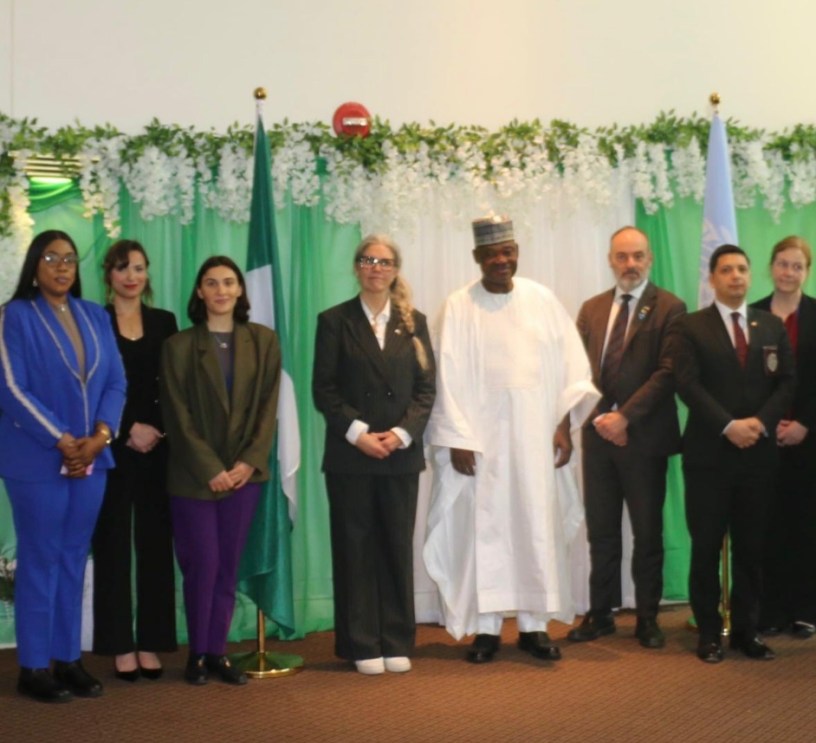
The position was presented in New York on Friday by Nigeria’s Permanent Representative to the United Nations, Jimoh Ibrahim, during a high-level engagement with U.N Police Advisers and international policing stakeholders.
Ibrahim said the Tinubu administration was committed to overhauling Nigeria’s security architecture through decentralised policing and institutional reforms aimed at improving accountability, operational efficiency and grassroots security management.
According to him, the proposed state police system would decentralise law enforcement operations from the ward and local government levels to structures controllable by state governments, thereby strengthening community trust and responsiveness.
“The Nigeria Police performance in international missions triggers President Bola Tinubu’s ongoing reform of establishing the Nigeria State Police,” Ibrahim said.
He explained that the proposed framework would enhance crime prevention, improve manpower deployment and address Nigeria’s complex internal security challenges more effectively.
“The new approach aims to address internal security challenges and make effective use of manpower,” he added.
The Nigerian envoy disclosed that the Federal Government planned to provide the logistics, institutional backing and operational equipment needed for the successful implementation of the new policing structure.
“The President is dedicated to providing the necessary logistics and equipment for this new setup,” Ibrahim said.
He further revealed that Nigeria was seeking strategic support from the United Nations and other international partners to ensure the success of the proposed reform initiative.
According to him, the state police agenda is also designed to close the growing gap between citizens’ expectations and police accountability in communities across the country.
“President Bola Tinubu is working to improve the Nigerian state police, addressing the gap between communities’ expectations and police accountability,” he added.
Highlighting Nigeria’s international policing credentials, Ibrahim noted that Nigerian police officers had earned global recognition for professionalism and operational excellence during peacekeeping missions in countries such as Liberia, Sudan and Mali.
He disclosed that Nigeria had deployed more than 13,000 personnel, including Formed Police Units, to various international peace support operations under the United Nations framework.
The ambassador said Nigerian officers had played major roles in disarmament programmes, reintegration processes and electoral security operations in several conflict-affected countries.
Ibrahim also urged the United Nations to modernise global policing strategies to confront emerging threats such as cybercrime, artificial intelligence-related crimes and cross-border digital offences.
“The United Nations plays a vital role in addressing challenges such as digital transformation, cybercrime, AI-related crimes and cross-border policing,” he said.
He revealed that the Nigerian Senate was already working towards establishing the legal framework required for the creation of state police.
The envoy further disclosed that President Tinubu had directed the Inspector-General of Police, Tunji Disu, to deepen collaboration with international policing stakeholders at the United Nations as part of broader efforts to strengthen security diplomacy and strategic global partnerships.
Also speaking at the meeting, ACP Dolapo Badmos, who serves as Co-chair of the U.N Strategic Police Advisory Group (SPAG), reaffirmed Nigeria’s commitment to global peacekeeping and international security cooperation.
Badmos described the engagement as a demonstration of Nigeria’s commitment to professional, accountable and community-centred policing in addressing modern security realities.
“The Federal Republic of Nigeria welcomes my colleagues from other nations and the United Nations element,” she said.
A policing expert with the United Nations Office on Drugs and Crime, Lotta Gustafsson, commended Nigeria’s strategic role in combating global drug-related crimes.
The immediate past Chair of SPAG, Patrik Engstron, also praised Nigeria’s leadership in advancing security diplomacy at the United Nations, particularly within the Strategic Police Advisory Group framework.

