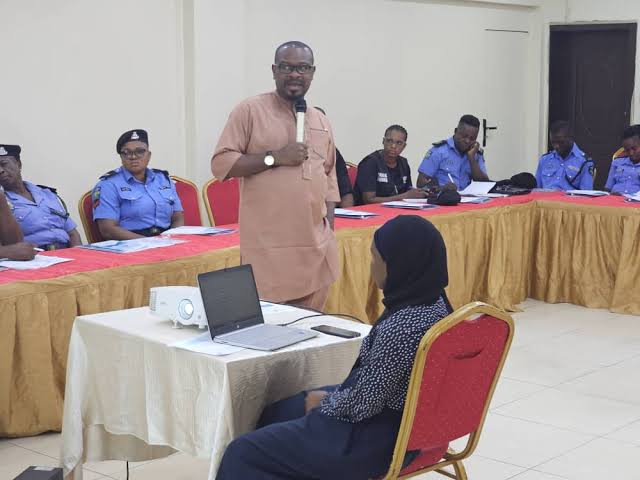
The Rule of Law and Accountability Advocacy Centre, RULAAC, has warned that treating police welfare as a privilege rather than a right weakens professionalism, integrity, and public safety in Nigeria.
It says Nigeria has consistently approached police reform incorrectly by focusing on discipline and effectiveness while ignoring the poor living and working conditions of police officers.
Its Executive Director, Okechukwu Nwanguma, states that the long-standing neglect of officers’ welfare, both during service and after retirement, continues to undermine policing in the country.
Nwanguma referenced the Nigeria Police Force Pension Board Bill passed by the National Assembly on 4th December, 2025, describing it as a crucial step toward rescuing retired police officers from poverty, ill health, and indignity.
He expressed concern that the bill has reportedly been delayed and may be altered before reaching the President, warning that any such action would amount to a betrayal of serving and retired officers.
According to him, a police institution that underpays its officers, withholds allowances, neglects healthcare, provides poor housing, and abandons officers in retirement cannot realistically demand integrity or professionalism.
He stressed that corruption often thrives where institutions fail to support their personnel.
Nwanguma highlighted the harsh realities faced by police officers across the country, including dangerous assignments without adequate allowances, insurance, equipment, or transport.
Many officers, he said, fund investigations from their own pockets, endure delayed or insufficient salaries, lack access to quality healthcare, and struggle to educate their children.
After decades of service, many are left in a contributory pension system that has failed to guarantee dignity in retirement.
He argued that officers under severe economic pressure are more vulnerable to corruption and abuse of power, noting that this explanation does not excuse misconduct but exposes its structural causes.
Genuine reform, he said, cannot succeed without fixing broken welfare systems.
Describing the Police Pension Bill as a matter of justice rather than charity, Nwanguma said the creation of an independent Police Pension Board would recognise the unique risks of policing, similar to existing provisions for the military.
He called on all levels of government, police authorities, oversight institutions, civil society, and the media to prioritise police welfare alongside accountability.
Improving salaries, allowances, pensions, insurance, healthcare, housing, and educational support for officers’ families, he said, are basic necessities for a professional and accountable police force.
Nwanguma urged that the Police Pension Bill be transmitted to the President immediately and without alteration, warning that failure to do so would send a dangerous message that sacrifice and loyalty are unrewarded

