The United States has raised serious concerns over Nigeria’s ability to protect Christian communities following the abduction of 177 worshippers in Kaduna State, as bandits were sighted moving freely through forest corridors with their captives, days after storming churches without resistance.
On Sunday, gunmen attacked three churches in Kurmin Wali community in Kajuru Local Government Area of Kaduna State and whisked away more than 177 worshippers, with 11 managing to escape, while 166 are still in captivity.
The United States warning came as a high-level delegation of their officials arrived in Nigeria on Thursday on a week-long diplomatic tour aimed at reviewing counterterrorism efforts and the protection of vulnerable religious groups across Africa, the Middle East and Europe.
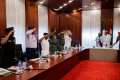
The meeting is part of the United States-Nigeria Joint Working Group and was co-chaired by the National Security Adviser, Nuhu Ribadu, and the US Under Secretary of State for Political Affairs, Allison Hooker.
It took place amid heightened diplomatic tensions after US President Donald Trump redesignated Nigeria as a Country of Particular Concern over alleged religious freedom violations. However, the Federal Government has repeatedly dismissed claims of systemic Christian persecution, maintaining that insecurity affects citizens of all religious backgrounds.
Hooker said recent attacks showed that despite reported security operations, Christian communities in parts of northern Nigeria remained dangerously exposed.
Hooker said the mass abduction in Kaduna underscored persistent security failures that the Nigerian government must urgently address.
She added that advancing religious freedom and security would deepen US-Nigeria relations in other areas, including trade, economic cooperation, health responses and the fight against terrorism.
Her comments came amid fresh field reports confirming that the abductors of the Kurmin Wali worshippers were seen trekking with their victims between Ungwan Gamu and Maro communities in Kajuru Local Government Area, exploiting forest routes long known as bandit hideouts.
The abductors have reportedly demanded the return of 17 motorcycles, valued at N28.9m, which they claim were seized during recent military operations, as a condition for the release of the victims.
In response, National Security Adviser, Nuhu Ribadu, acknowledged the gravity of the situation, saying the Federal Government had intensified joint military operations, intelligence coordination and investigations into attacks on religious communities.
Ribadu said violence framed along religious lines was unacceptable and would be treated as an attack on the Nigerian state, assuring that perpetrators would be tracked and prosecuted.
Ribadu said President Bola Ahmed Tinubu had authorised expanded security deployments, enhanced intelligence coordination and stronger investigations into attacks on religious communities, assuring that perpetrators would be tracked and prosecuted.
Briefing journalists after the meeting, the Minister of Information and National Orientation, Mohammed Idris, said the engagement reflected sustained efforts to deepen security partnerships and deliver concrete results.
He noted that collaboration between the two countries had translated into operational gains on the ground.
Idris also highlighted the US commitment to deliver outstanding military equipment procured over the past five years, including drones, helicopters, and support systems, and noted readiness to provide surplus defence equipment.
On domestic measures, he stated, “Nigeria is acting decisively. Security agencies have clear instructions to protect communities and respond swiftly to threats.”
He added that the Federal Government was strengthening early-warning systems and developing a national database to generate accurate figures on deaths and casualties linked to violence.
“This will give us a single, trusted source of data to guide decisions, improve accountability, and sharpen our security response,” he said.
The minister urged Nigerians to remain patient and supportive as reforms continue.
The session was attended by senior Nigerian officials, including the Minister of Defence, Gen. Christopher Gwabin Musa (retd.), the Chief of Defence Staff, Gen. Olufemi Oluyede, and the Inspector General of Police, Kayode Egbetokun. Aside Hooker, the US delegation included Deputy Commander of AFRICOM Lt. Gen. John Brennan, and other senior officials.
Other countries that the US Under Secretary is billed to visit are Muscat, Oman; Manama, Bahrain; and Rome, Italy, the US Department of State announced in a statement.
Her itinerary includes strategic dialogues in Oman and Bahrain, where she will lead discussions aimed at advancing cooperation on a range of security, economic and cultural priorities with both governments.
In Rome, she will engage with international partners and counterparts on major global issues, including the Russia-Ukraine war, Venezuela and peace efforts in the Middle East.
She is also scheduled to meet representatives of United Nations agencies such as the World Food Programme and the Food and Agriculture Organisation to discuss oversight and accountability for US-funded assistance programmes, and to explore new agricultural trade opportunities for American farmers.
Hooker, who was appointed Under Secretary of State for Political Affairs in 2025, oversees key regional and bilateral policy issues across the State Department and plays a central role in shaping US diplomatic engagements globally.

