
The Lagos State Government has raised the alarm over the rapidly deteriorating state of the Lagos Lagoon.
The government describes the situation as an impending environmental and social catastrophe unless urgent action is taken.
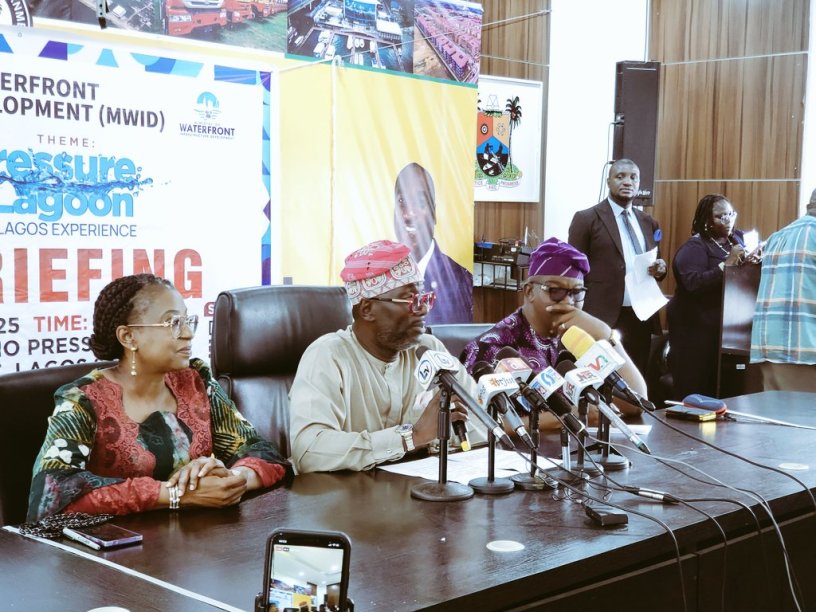
Commissioner for Waterfront Infrastructure Development, Dayo Bush-Alebiosu underscores the urgency of addressing the challenges threatening the state’s lagoon and waterfronts.
This is just as he outlined a series of escalating threats to the lagoon’s ecosystem, ranging from industrial pollution and illegal fishing to climate change-induced sea level rise and coastal erosion.
According to him, the Lagos Lagoon is under intense pressure from both human-driven and climate-related factors, saying without urgent and coordinated intervention, the vital ecosystem and the communities it supports may be lost forever.
The commissioner expresses concern that the lagoon had become one of Africa’s most polluted ecosystems, with over 10,000 cubic metres of industrial waste discharged into it daily, sadly noting that these effluents, originating largely from oil, textile, and manufacturing sectors, contained hazardous heavy metals such as mercury, cadmium, lead, and nickel.
Besides, he says domestic sewage and agricultural runoff also continue to dump toxic organic compounds into the lagoon, further endangering aquatic life and public health, even as he equally highlighted the impact of over exploitation of aquatic species, particularly through illegal fishing practices.
According to him, the unwholesome practices have caused a drastic decline in fish populations, saying such had threatened the lagoon’s biodiversity and undermined the livelihoods of local fishing communities.
Speaking further, the Commissioner states that activities such as sand mining, dredging, and unregulated land reclamation had also significantly altered the lagoon’s natural terrain, leading to large-scale habitat loss.
He expresses concern over Lagos’ rapid urban development, saying that such development had continued to encroach on vital wetland areas natural flood buffers that support both human and ecological resilience.
The commissioner warns that construction in sensitive wetland zones is a direct invitation to increasing the city’s vulnerability to urban flooding, adding: “Every wetland lost is a flood risk gained.”
Bush-Alebiosu, said this at a news briefing on the forthcoming Maiden Lagos State Waterfront Summit, holding on 11th September at Victoria Island.
He said the maiden Lagos State Waterfront Summit, themed ‘Pressure on the Lagoon: The Lagos Experience’, is designed to spotlight the increasing pressures on Lagos’ lagoon, stimulate informed conversations, and generate sustainable solutions.
The Commissioner also reaffirmed the commitment of the administration of Governor Babajide Sanwo-Olu to preserving the state’s waterfronts, noting that the summit would mark a turning point in Lagos’ approach to waterfront management.
Bush-Alebiosu revealed that coastal erosion has already swept away some Lagos coastal communities, including Idotun Village in Ibeju-Lekki, displacing families and destroying livelihoods.
He noted that the challenge is not unique to Lagos alone, citing Keta Municipality in Ghana as another West African coastal area currently battling similar devastating erosion.
Bush-Alebiosu stated that Coastal erosion is a regional problem with global implications, saying Lagos must take urgent steps to safeguard its communities, infrastructure, and economy.
He said the State Government has initiated collaboration with the Netherlands, a country renowned for its expertise in coastal and water management, to find lasting and innovative solutions.
The Commissioner also emphasised the importance of harnessing the vast economic and social potentials of the lagoon, explaining that the lagoon, if properly managed, can serve as a hub for transportation, tourism, fisheries, and trade, creating jobs and boosting livelihoods for Lagosians.
Bush-Alebiosu stressed that pressing realities necessitated the invitation of experts and professionals across multiple fields to the forthcoming summit, noting that their insights and recommendations will be valuable in charting practical solutions to salvage, restore, and sustainably manage the lagoon.
He said the Lagos Lagoon is under intense pressure from both human-driven and climate-related factors. Without urgent and coordinated intervention, this vital ecosystem and the communities it supports may be lost forever.
“The lagoon has become one of Africa’s most polluted ecosystems, with over 10,000 cubic metres of industrial waste discharged into it daily. These effluents, originating largely from oil, textile, and manufacturing sectors, contain hazardous heavy metals such as mercury, cadmium, lead, and nickel.
“The lagoon is not just a body of water; it is our heritage, our economy, and our future. This summit is a call to action for Lagosians, experts, and stakeholders to work together in protecting it before it is too late.”

