
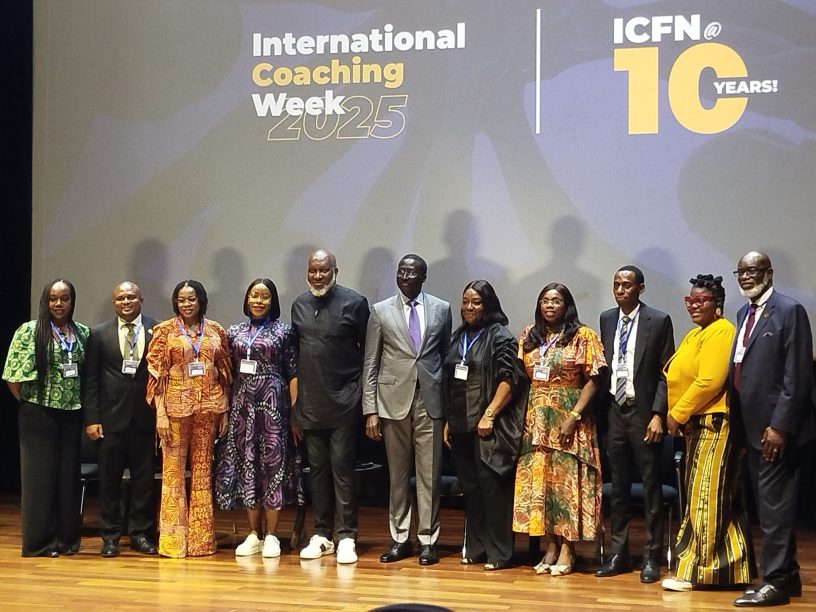
Coach Expert, Dr Tunde Reis says as Nigeria grapples with persistent economic challenges, leaders should turn to professional leadership coaching to strengthen performance, innovation, and decision-making across sectors.
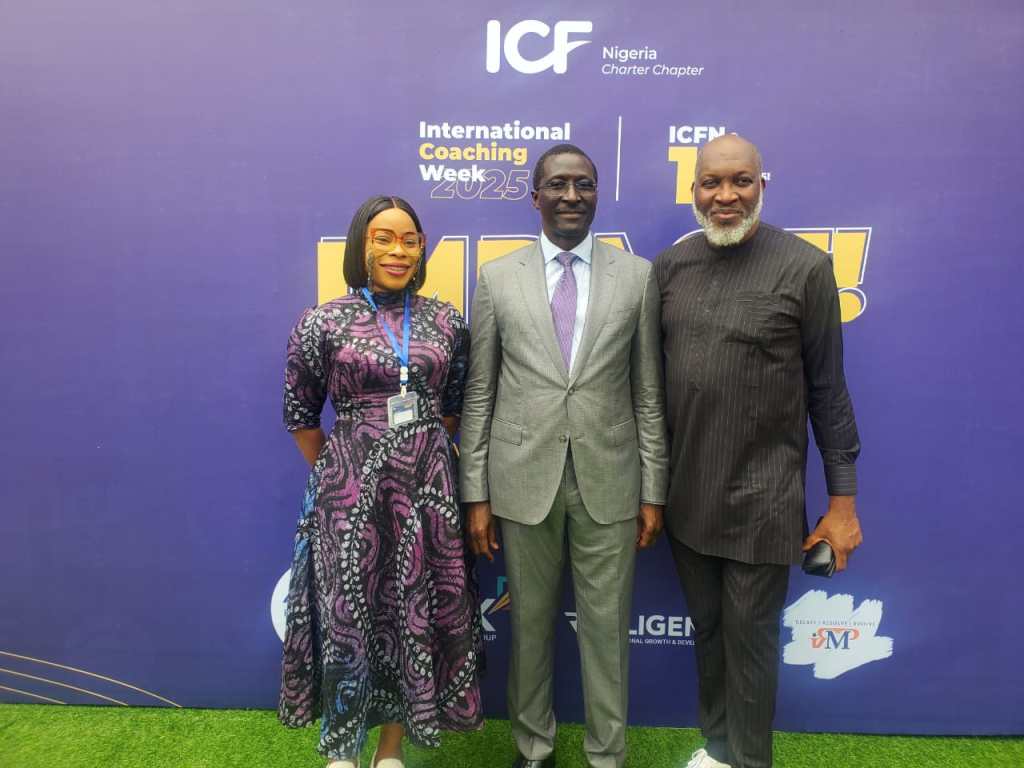
Dr Reis, a retired Army Brigadier General notes that Nigeria and other developed nations need to explore coaching in order to impact on the society.
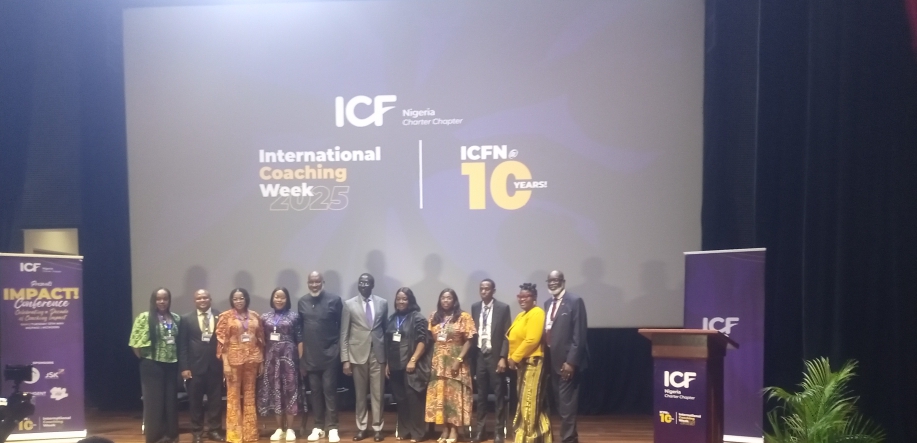
Reis who is founder and Chairman, First World Communities states that vision and empowerment, unlocking potential and curiosity culture are the qualities that set innovative leaders apart.
He highlights the lack of training and preparation for those in leadership positions, leading to a focus on personal gain rather than effective governance.
Reis made this known while speaking on Innovative Leadership: Coaching As A Catalyst For Transformation at the International Coaching week in commemoration of the International Coaching Federation of Nigeria, a Decade of Coaching Impact.
The retired Army Brigadier General called on government and corporate entities in the country to adopt innovative leadership for transformation of their processes and effectiveness of their policies.
According to him, every leader must be innovative in order to be effective, adding that innovation in leadership is the first step towards transformation and success.
In his words, leadership coaching is critical to transforming societies, hence the need for government and organisations to partner with the International Coaching Federation for optimal benefits.
He explained that the socioeconomic challenges that Nigeria and Africa are currently facing can be surmounted if the continent can leverage the skills of its leadership coaches.
Dr. Reis added that fast tracking development on the continent requires innovative thinking and pragmatic leadership skills that can truly transform the lives of the people.
According to him, nowhere in the world is coaching for innovative leadership more needed than Nigeria and the rest of Africa, where potentials are marginally developed and opportunities are denied the right atmosphere for realisation.
He said with leadership coaching being a powerful tool for change, adoption of it by corporate organisations and governments at all levels in Nigeria can propel the country towards realisation of its economic growth and development.
Reis, emphasised that Nigeria’s economic survival requires collective intelligence and multi-disciplinary collaboration, saying Coaching enables an environment of curiosity and learning that brings everyone to the table, not just the loudest voice or the highest rank.
He stressed that the country’s hierarchical cultural norms often hinder innovation, as younger, tech-savvy professionals are sidelined despite having practical insights into modern solutions.
Age and experience should serve as a compass, not a roadmap, Reis said, advocating for a leadership culture that values listening and adaptation, both of which coaching promotes.
While the profession is financially rewarding, Reis agreed that the real value of coaching lies in its impact, saying it is about seeing leaders become more empathetic, more effective, and ultimately more human.
He said as Nigeria continues to seek innovative paths to economic recovery and long-term growth, coaching is emerging not just as a developmental tool, but as a leadership imperative.
Reis affirmed that Leadership is not static, saying it must evolve and coaching is one of the most effective vehicles to drive that evolution in boardrooms, government houses, and everywhere decisions that shape lives are made.
In his welcome speech, President of International Coaching Federation, Nigeria, Akanimo Ekong, said Nigerian leaders, both political and corporate, require professional coaching services to lead differently and impact on the citizens to thrive.
Ekong noted that Nigeria and indeed Africa has ‘leadership disaster’ and not a natural problem, echoing the power of coaching to transform leaders at all levels.
He said the aim of the profession is to positively transform the society by raising transformative leaders, saying ten years of its existence in Nigeria had seen its coaches help transform processes at both sub-national and corporate levels, making leadership give more to the people in terms of deliverables.
According to him, our profession is about psychological transformation, a form of change that brings something new, something that has not been seen before, something that impacts the society in a way that generates other positive outcomes.
Ekong further reiterated the Chapter’s commitment to positively impacting its immediate environment by teaching soft skills that can help transform redundant processes into high yielding and effective ones.
He urged governments, corporate organisations and individuals to take advantage of the Federation’s transformative principles, using them as catalysts for positive change.
Responding to questions from newsmen on the sidelines, he said one of visions of the ICF is to make coaching an integral part of transforming society.
About three or four years ago, Lagos State Governor, Babajide Sanwo-Olu asked us to coach his entire executive cabinet and that’s pioneering as a state. No state has done it.
If the governor felt that coaching will help my cabinet, then the other states, federal entities very likely will say we need to do that as well.
“We cannot continue to lead the way we have leading before when we have a different generation that thinks differently and expects differently.”
Ekong said for the past ten years in Nigeria, ICF has been educating, empowering and inspiring people about the power of coaching.
The conference which attracted professional coaches across the country was also held in commemoration of the 30th anniversary of the ICF global and 10 years of its existence in Nigeria.
Panelists including; Samson Umurhurhu, PCC; Dr Mirian Kene, PCC, Femi Odelusi, PCC and Linda Uneze, ACC advocated for coaching and mentoring programs for leaders, particularly new ones, to help them develop their self-awareness, decision-making skills, and leadership style to foster a more collaborative and effective approach to governance.
 securityandsafetymatters