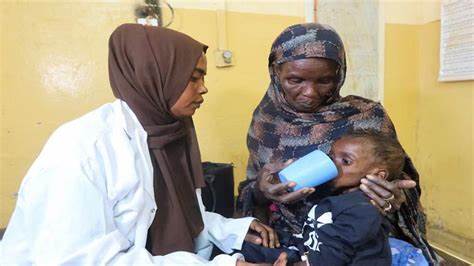
In a nutrition ward at a hospital in Sudan’s war-stricken capital, gaunt mothers lie next to even thinner toddlers with wide, sunken eyes.
The patients at Alban Jadeed Hospital are in urgent need of help after nearly two years of battles that have trapped residents and cut off supplies, but doctors have to ration the therapeutic milk and other products used to treat them.
Keep up with the latest medical breakthroughs and healthcare trends with the Reuters Health Rounds newsletter.
The war that erupted in April 2023 from a power struggle between Sudan’s army and the paramilitary Rapid Support Forces (RSF) has created what the United Nations calls the world’s largest and most devastating humanitarian crisis.
About half of Sudan’s population of 50 million now suffer some degree of acute hunger, and famine has taken hold in at least five areas, including several parts of North Darfur State in western Sudan.
The real situation could be worse, since fighting has prevented proper data collection in many areas, medics and aid staff say.
In Sudan’s greater capital, where the cities of Khartoum, Omdurman and Bahri are divided by the Nile, the warring factions have prevented deliveries of aid and commercial supplies, pushing the prices of goods beyond most people’s reach.

