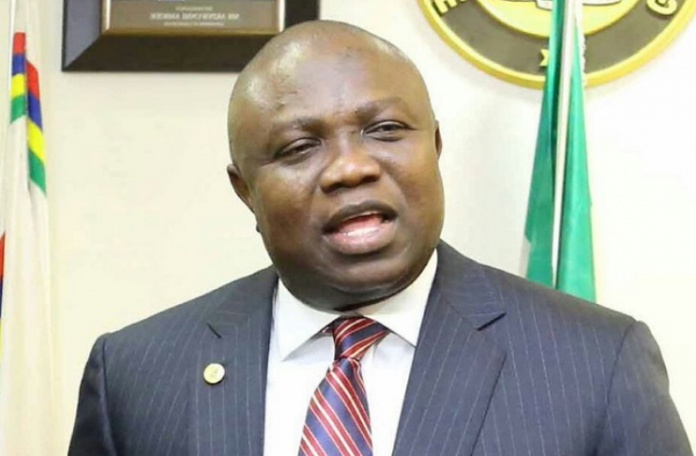
Governor Akinwunmi Ambode of Lagos State, has highlighted the role of the home in the upbringing of wholesome children.
Ambode says the parents are the primary educators of the children and the home is the first place of security of the children, saying every kind of behaviour begins from the home; it is from their behaviour that children learn.
He spoke through his Special Adviser on Social Development, George Onafowokan, at a Symposium organised by Domestic and Sexual Violence Response Team in Lagos, saying parents should be cautious in bringing up children because of the effect it has to the larger society.
Also, Justice Sybil Nwaka of the Lagos Domestic Violence and Sexual Offences Court said the Lagos State Judiciary was taking up the fight against sexual and domestic violence.
Nwaka said domestic and sexual violence cases were being expressly disposed of and justice was being served, saying government and Justice Sector were coming to the doorsteps of people, creating awareness, encouraging survivors to come forward and not be afraid of stigma.
Delivering a keynote address at the Symposium, themed “Securing the Home Against Violence”, and put together to commemorate the twenty-eighteen Domestic and Sexual Violence Month in Lagos, a Professor of Sociology at the University of Lagos, Fatal Badru, said statistics indicated that a minimum of five cases of domestic violence were being reported daily in Lagos.
Badru said according to the DSVRT statistics, there had been an increase in domestic violence daily in Lagos, saying recent doctoral studies also showed that domestic violence was more prevalent in the urban areas than the rural areas.
He attributed the high level of domestic violence in urban areas to psychological factors and stressful living conditions, saying People with disabilities were also highly vulnerable to violence.
According to him, both men and women with disabilities are vulnerable to domestic and family violence at higher levels than men and women without impairments, saying women with disabilities experience higher level of sexual abuse.
He advocated the protection of persons with disabilities from domestic violence, calling for a need to understand the gendered nature of domestic violence as well as the factors that make individuals vulnerable to domestic violence.
Badru said a key barrier to seeking help for domestic violence was when the survivor depended on the perpetuator for upkeep and survival, saying the principle of respect and value for one another should be re-informed throughout the community.
He said this should be done by the education system, community leaders, social and sporting organisations and leaders of faith, saying Securing the home against violence is everyone’s responsibility.

