
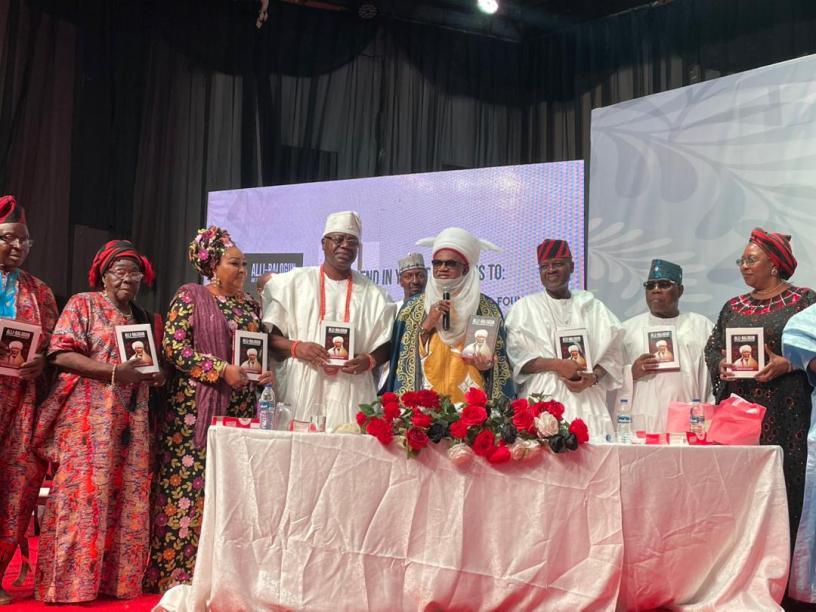
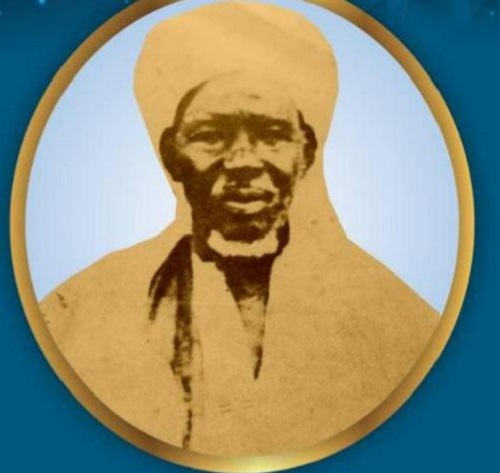
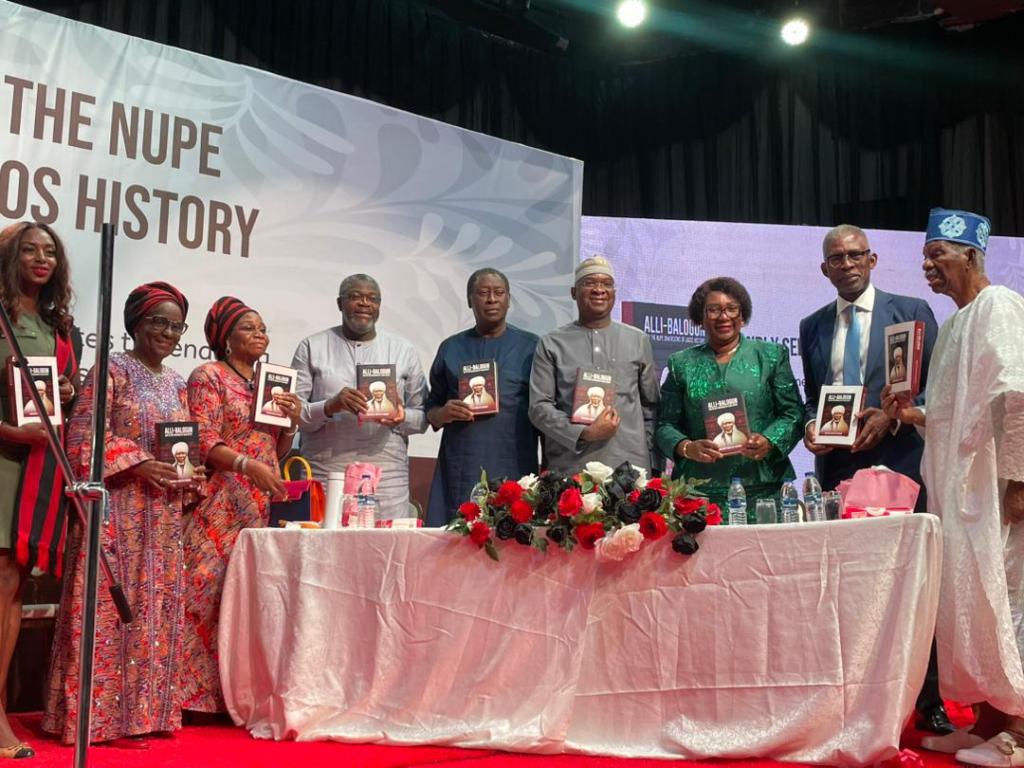
The unveiling of “Alli-Balogun and the Nupe Dimensions of Lagos History” by Dr. Gbolahan Alli-Balogun highlights the historical legacy of the Alli-Balogun lineage and its influence on the history of Lagos.
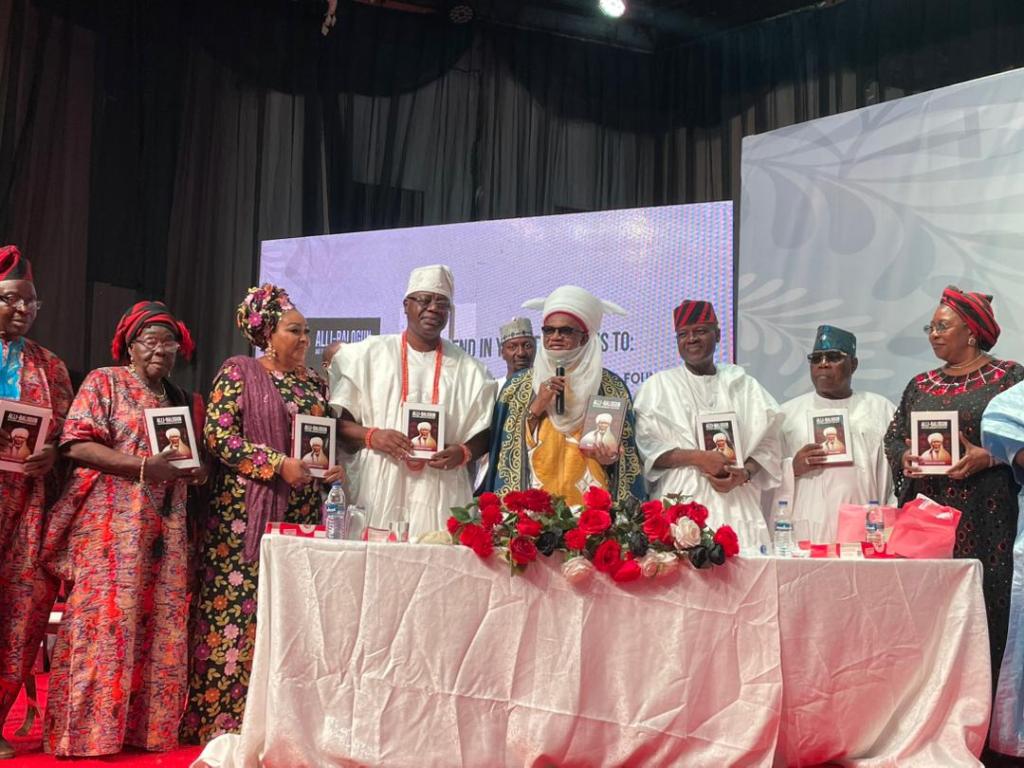
The historical work explores the enduring impact of Alli-Balogun and the Nupe connection in shaping the social and cultural development of Lagos.
The event brings together scholars, historians, and cultural stakeholders to reflect on the historical narratives and heritage of Lagos.
They described the Late Sheikh Aliu Makanjuola Alli-Balogun as a visionary leader, a devout believer and a powerful influence on governance in Lagos State.
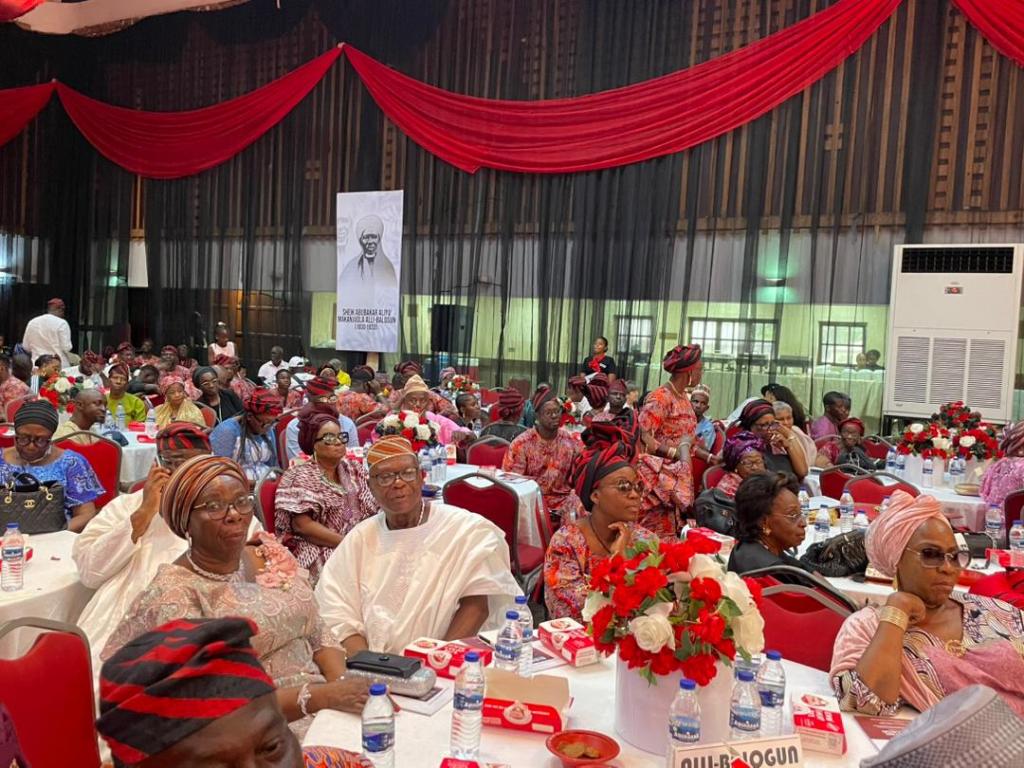
The Author, Gbolahan Alli-Balogun said the decision to document the journey were born not only out of duty but also a deep conviction that the story of the progenitor deserved to be preserved for prosperity.
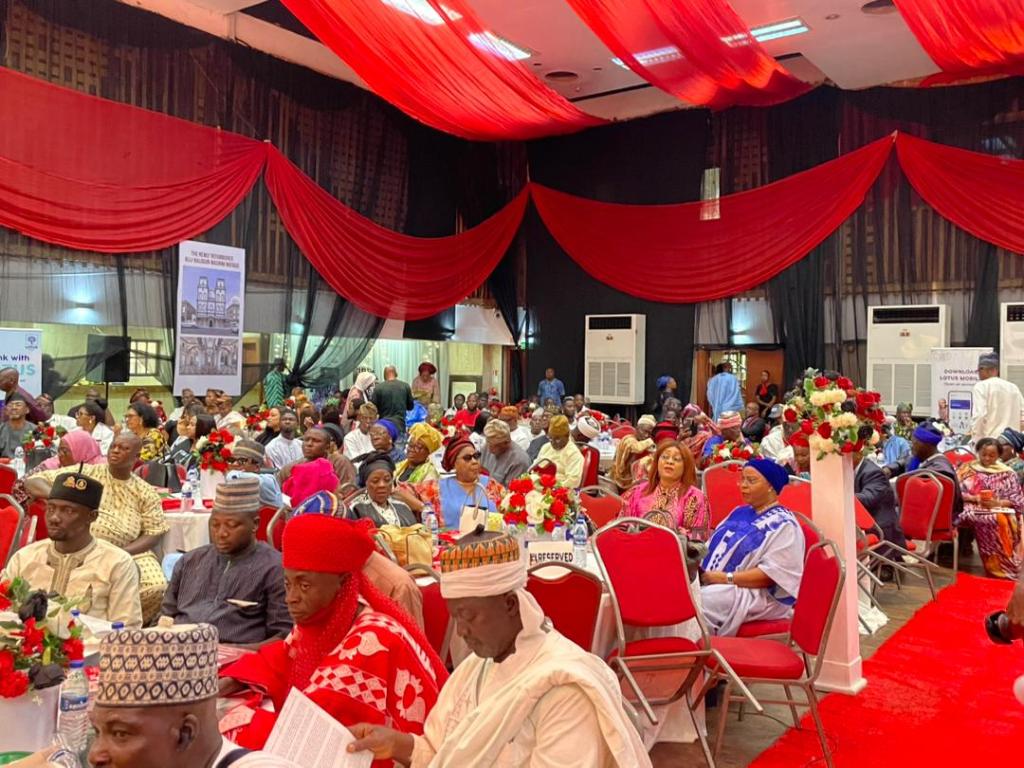
The Author noted that it is important that every Lagos Family writes their own history so as to avoid being projected wrongly to members of the Public.
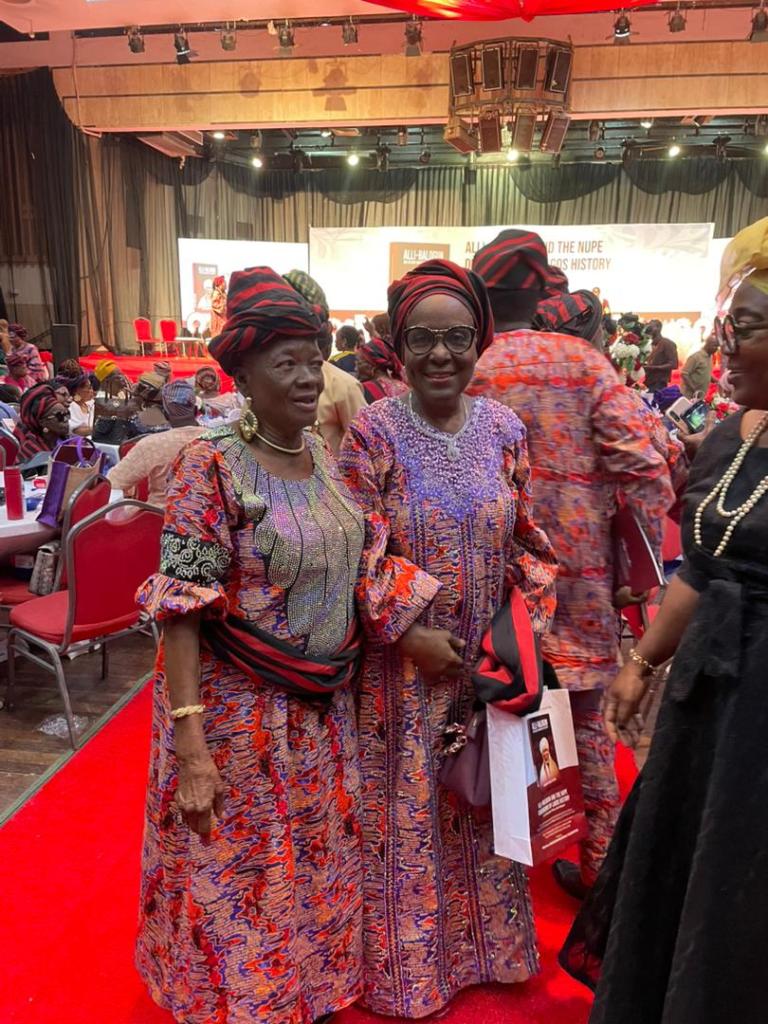
Member, Board of Trustees of the Alli-Balogun Memorial Foundation, Justice Olasumbo GoodLuck explained the importance of preserving cultural heritage through documentation, noting that the book serves as a vital resource for future generations seeking to understand the roots and complexities of Lagos’ identity.
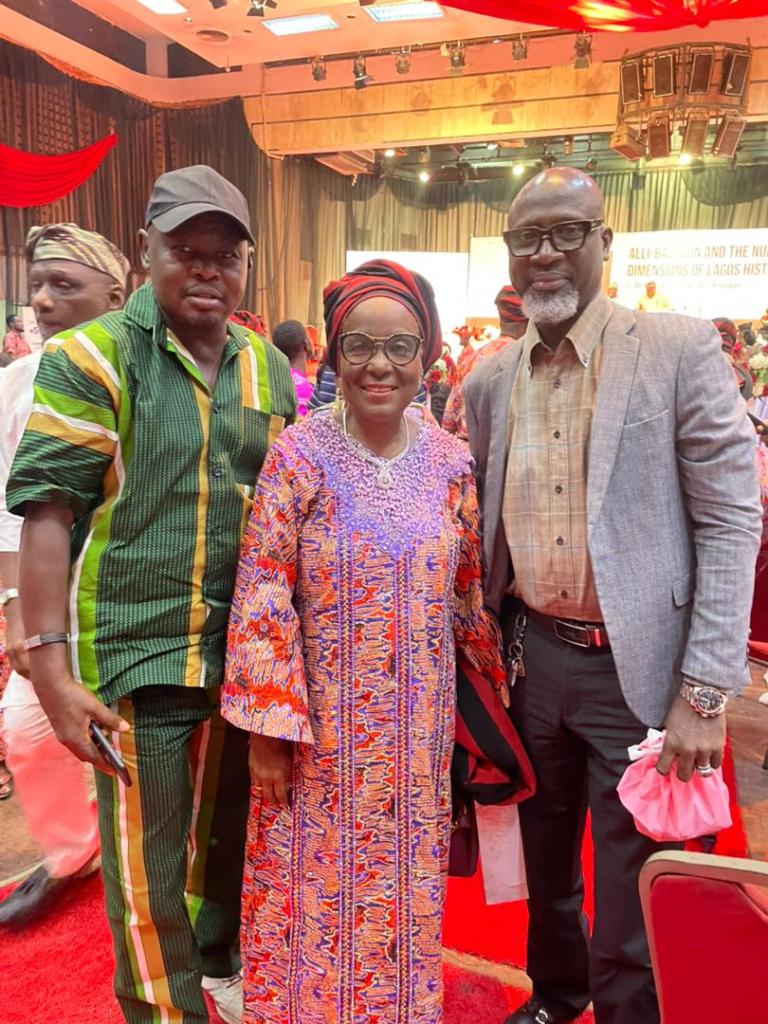
The Late Sheikh Aliu Makanjuola Alli-Balogun was born in 1830 in Isale Eko Quarters of Lagos Island and passed on July 13, 1933 a period which was adjudged as on of the most epochal and Consequential period in Lagos History.
Born in 1830 of a Nupe Prince of Tapa ancestry and an Awori lady of Isale Eko extraction, Alli-Balogun, a philanthropist reputed to be one of the wealthiest in his era, was a very religious and affluence man, whose opulence, business acumen and humanitarian gesture touched all and sundry.
With a name synonymous with Lagos popularity, in that, nearly a century after his exit from earth, he remained iconic, revered, remembered, and honoured by not only his descendants, and the Muslim community, his Tapa clans, and anyone whose history crossed path with him.
No surprise why his descendants held back nothing when it cames to remembering their great progenitor. Perhaps a sneak peek into a report from his dynasty would give a better view of how much he meant to humanity.
This only modestly summarises what Alli-Balogun represents, but a simple search of the name Alli-Balogun online would avail you a more in-depth and better knowledge of him as historically captured by his descendants, as this report only focuses on how he is still being revered by his descendants, with the latest way being the creation of a foundation to immortalise his values.
In his welcome address at the remembrance ceremony, the chairman, Alli-Balogun Descendants Union, Otunba Nurudeen Adeyinka Ojora-Adejiyan, describe Alli-Balogun as “our ever glowing mirror in the sun,” who died two years after registering his last will.
Similarly, another member of his descendant Dr. Olasupo Alli-Balogun who is based in Poland referred to him as “my greatest mentor and I built my entire life copying his lifelong achievements.
His peripheral engagement in the provision of basic social amenities to the society, his fraternity with Lagos political bourgeois upper class and the taking up the then Oba of Lagos, in a matter which he believed he was right.
Not to mention the meticulous distribution of his houses and the condition he gave his children for their disposal in his final will, is something to be emulated. I am proud and privileged to come from him.” Alas, other lessons abound for emulation.
The Foundation, A Replica Of Alli Balogun’s Value Speaking during a chat with journalists, the chairperson of the Foundation and Iya Adini of Alli-Oloko Wasinmi Mosque, Alhaja Lateefat Yoyinsola Makanjuola, noted that she feels elated to have come from such a noble family of Alli-Oloko.
“It is a noble family indeed because Papa is a legend nobody can replace. I feel elated and belonged. His name is ever living. He was one of the richest men in the history of Lagos. His monuments are still standing, particularly the mosque built in 1925. He can’t be forgotten.”
She said Alli-Balogun was a great philanthropist who was very accommodating; to the extent that some people, including some of his workers, adopted his name because he was so down-to-earth, and humble.
“There was an adage in those days that if you enter Papa’s house crying you will come out laughing. He lived till the age of 103 when medicine was not popular. So, he should be celebrated, and his legacies preserved.”
On the foundation, she said, “We decided to establish a Foundation to consolidate his legacies and his philanthropic gesture. He went about helping people. So the foundation is about the continuation of what he did during his lifetime. He was a religious man that didn’t compromise his faith as a Muslim. We pray that his name lives on.
Speaking on three key lessons to learn from the life of Alli-Balogun during the remembrance, the guest lecturer, Prof. Siyan Oyeweso, said Nigerians must adopt Alli-Balogun’s knowledge of the holy Quran, love for education, independency on inheritance, and wisdom.
According to him, “The family of Alli Balogun is good. It’s a family that met history, knows history and is writing history. They have held on to the good name of Alli Balogun, Unity, and the care of the Mosque, which Baba left behind ‘Wasimi Mosque ‘, so it can remain everlasting.
“Look at how long Baba had died. On July 14, 1933, the newspaper editorial that came out that time read, ‘Alli Balogun is Dead, What Shall We Do?’
“That question was asked exactly 90 years ago. How many homes have their father died five years ago or 10 years ago and are still doing the remembrance of their father or grandparents? If there is no yesterday, there can never be today, and when we now have today, we must follow the words of the holy Quran which says, what we owe the dead is to always pray for the repose of their souls. This is the lesson from this memorial.
“Another lesson from the life of Alli Balogun is never to depend on inheritance. When Alli Balogun began his life sojourn, he never depended on his father’s wealth, though his father was wealthy. He started as a petty trader, and little by little, he grew the business to become very successful, especially in the period he was alive, which was harder than what we probably have seen today.
“We are talking about 1830, which captures the period of the Kosoko Civil War, the Gbomiro Civil War, and several other civil wars. These wars include the war at the central mosque, between the Apapa Land matters with Herbert Marcauly and Alli Balogun, which were just small gaps.
“Altogether, Baba knows how to share his wealth. To the extent that his family has remained united despite the massive wealth, he left behind. This is unlike some polygamous families of today or even nuclear families of today with several children.
“Go and check Baba’s will. He shared his properties very well. Aside from his family, he even willed some of his properties to neighbours, friends, and religious institutions, including Christians, while also building and supporting mosques and churches.”
In his lifetime, he supported education, not only by sending all his children to school, but likewise by sending all the children of his neighbours to school, and also children of some other members of the community.
Also, when he died and his ‘Will was read, he stated in his will that for all his children, grandchildren, and future generations who would like to study Law, Engineering, and Medicine overseas, he set aside some amount of money which he called ‘Alli Balogun Residuary Trust fund’ for them to school overseas.
“Then, he supported the Central Mosque and several mosques within Lagos State. This made us realise that he loves knowledge and is a true Muslim.”
Alli-Balogun also built mosques in the community and handed them over to community members, while also instituting the structure for anyone who wanted to become an Imam in the Mosque to become one. As God will have it, 98 years after, a seed of Alli Balogun has now eventually become an Imam of the Mosque for the first time.
“Thirdly, when you check his will, you will see that he had some friends who were not Muslims like him, but they lived in peace and harmony. Among such friends were Obanikoro, who was a traditional worshiper before he converted to Islam.”
“These three things, namely, Education, Community Service, and Inter-Religious Relationship, form the objectives of this foundation. So, the intervention that the foundation would be carrying out will be focused on education, community services, and interreligious relationships.
“We will kick-start the foundation activities with the Inter-Religious Relationship, which would take the form of an Alli Balogun Memorial Lecture every year. While the education and community interventions will be carried out and determined by members of the board of the foundation.”
Nicknamed Alli-Oloko (Alli the Canoe Driver), essentially because of his fleet of trading canoes, some of which he had inherited from his illustrious father; and built upon, he was also referred to as Baba L’oke, Kinihun Onibudo, Alli Dodondawa and Makanjuola but it was his chieftaincy title that stuck to his name; hence he became most popular as Alli Balogun.
Neatly carved on the white marble tombstone, underneath where he was buried on Victoria Street (now Nnamdi Azikiwe Street) Lagos were the words Alli Balogun 1830-1933 (103 Years); and in the Yoruba language ‘A Lo Ma Ni Gbagbe’ (Unforgettable).
Fond memories of the late Sheikh Aliu Makanjuola Alli-Balogun came to life recently, as descendants of the late Islamic cleric, business mogul and philanthropist gathered to celebrate the iconic life and times of their progenitor.
The event, organised by Alli-Balogun Memorial Foundation, came with the official commissioning of the newly renovated 100-year-old Alli Balogun Wasimi Mosque, on Lagos Island.
The re-opening of this modern architectural design is a demonstration of urban regeneration, historical preservation, commitment to the Islamic faith and a celebration of legacy.
The modern architecture of the mosque blends functional spaces for prayers with symbolic, artistic and historical elements featuring domes, pillars, minarets, and courtyards.
The newly refurbished mosque, it was gathered, was built in 1925 by Sheikh Alli-Balogun. But today, the old mosque wears a new look with sustainable materials, glass, steel, and wood as modern designs while maintaining its traditional, geometric and calligraphic ornamentation with sustainable values.
The Alli Balogun Memorial Wasimi Mosque stands as an imposing edifice on Nnamdi Azikiwe Street, (formerly Victoria Street) in Lagos.
This was not the first time the family would roll out the drums to celebrate their great progenitor, in July 2023, the descendants of the late cleric also gathered to launch the Alli- Balogun Memorial Foundation, under the umbrella of the Alli-Balogun Dynasty.
It was their own way of honouring the legacies of a man whose name has continued to resonate in Lagos and beyond, having touched so many lives in his time.
The foundation, the reporter gathered, focuses on three core areas: education, community service and inter-religious harmony.
Prominent Nigerians that gathered at the event included the renowned Nigerian lawyer and elder statesman, Alhaji Lateef Femi Okunnu, SAN; Lagos State Deputy Governor, Dr. Kadri Obafemi Hamzat; former Lagos State governor, Babatunde Raji Fashola, SAN; Senator Gbenga Ashafa, white caps chiefs that represented the Oba of Lagos, Oba Rilwan Akiolu, led by the Opeluwa of Lagos, Chief Lateef Aderibigbe Ajose; and Chief Imam of Lagos State, Fadilatul-Shaikh Sulaimon Oluwatoyin Abu-Nollaand, an engineer, community leaders among others.
Also present were Prince Mosediq Adeniji Kazeem, Great grand-daughter of Alli- Balogun, Alhaja Lateefat Yoyinsola Makanjuola; her husband, Mr. Aderemi Makanjuola; and the Chief Imam of Lagos State, Fadilatul-Shaikh, Sulaimon Oluwatoyin Abu-Nolla.
Others were Alhaji Rafiu Adisa Ebiti, Mr. Jamiu Alli-Balogun, the Chief Imam of the mosque, Alhaji Monsur Omokehinde Alli Balogun, Chairman, Alli-Balogun Descendants Union; and Otunba Nurudeen Ojora, among others.
In his remarks, Dr. Hamzat, said the legacies of the late Alli-Balogun would continue to live in the minds of not only his descendants but also those that had benefitted from his impactful life.
“This is legacy- a house of worship for Muslims to pray in. And as our Imams have always told us, there are few things that you can leave behind which will be your reward after death. This is one of them, may Almighty Allah grant Aljana Firdaus to him and all those that are supporting us today.
“Baba has done his own and I am sure he has got the blessings of Almighty Allah. We thank Almighty Allah that we are able to gather here today, and it reminds us as Muslims that we are at the forefront of great things in this state and we should not forget.
Therefore, when you mention Lagos, we should not be behind. We must be at the forefront to say these are the things we have done to foster good relationships. When Mama was talking, she said some of the people that contributed to the newly refurbished mosque were Christians. In our community, we don’t divide ourselves based on religion and may Almighty Allah continue to allow peace to reign in our state,” he said.
Great grand-daughter of the deceased and wife of Mr Aderemi Makanjuola, Chairman of Caverton Offshore Support Group, Mrs Lateefat Yoyinsola Makanjuola, said the event was about cherishing one’s heritage.
Makanjuola, who is also the chairperson of the Foundation, explained that she was overwhelmed with joy.
“It is pleasing to inherit such an edifice. A house of worship. This is a monument. You cannot quantify a building right in the heart of Lagos Island to be 100 years plus and nothing happened to it. When you look around the pillars, the structures that it holds, including the first floor, the minaret, it is fantastically unbelievable. “They are still intact. We just changed few things.
Initially, we thought it would take us a year or two because of the magnitude of repairs but we were able to do it under one year. This is a historic house of worship that has stood as a beacon of faith and unity for over 100 years. For us as a family, we are very proud to have something that has stood the test of time. A hundred years is not a short period and we believe that the edifice will stand for the next 100 years.
“To carry on the legacy, this is why we are here today and we want to appreciate everybody for being there for us. It is 100 years plus now and it is my prayer that almighty Allah will let it stand for another 100 years and for upcoming generations”.
She expressed her gratitude to prominent Nigerians who contributed to give the mosque a new facelift.
“To every hand that contributed to the restoration of this mosque through great financial support, skilled labour, wise counsel, or heartfelt joy, we are grateful. We only shut this mosque for just three months, and going forward, we have set a committee that would oversee the maintenance of the mosque,” she stated.
Former Lagos State governor, Babatunde Raji Fashola, described the Alli- Balogun mosque as not just a mosque but a very important piece of the history of Lagos in the pre-colonial era.
“This newly renovated mosque should last beyond that. Just as you have seen, buildings last hundreds of years in other parts of the world. Instructive also as the Management Committee and Board of Trustees told us, this was an initiative that was supported not just by Muslims, but also by Christians. And if you read the brochure and leaflet you will see the history of Lagos in the colonial era.
“There are lots of positives. You can see the beauty of the architecture of that time.
“So, instead of bringing it down, they actually refurbished it, preserved and restored it,” the ex- minister of Works and Housing stated.
Meanwhile, elder statesman, Alhaji Lateef Femi Okunnu, SAN, noted that there are lessons to be learnt regarding the event.
“I feel very happy for the descendants and his great grandchildren who have done this. May Allah reward them abundantly. The lessons learnt here is that what is in your pockets is not yours. Give generously and always assist the poor.”
Chairman of Crescent Bearers, Mr. Dele Martins, said the event represents a true testament to excellence.
“You cannot be in here and not have a feel of being in the Al-Haram Mosque in Mecca, and I think those who designed it were trying in their own little way to replicate that Masjid.”
In his remarks, Chairman Alli-Balogun Descendants Union, Otunba Nurudeen Ojora said : “We thank God that we are part of that history now. A hundred years and still counting, this mosque is here. Under the support of our Chairperson, our sister, and the Iyadini, Alhaja Lateefat Yoyinsola Makanjuola.”
Commissioner for Basic and Secondary Education in Lagos State, Jamiu Alli- Balogun, who is also one of the great great-grandsons of Sheik Alli-Balogun said the move is about taking charge of God’s property which was built by his great-grandfather.
“I am very happy for the descendants of Alli-Balogun. It is his great grandchildren who have done this, may Allah reward them abundantly. We came together to come and assess the situation of the mosque and then God gave us that strength, the resources to rehabilitate the mosque. This is the result. It is a common effort of the family and friends of the family who came together and rallied round to give the mosque a new look.”
He added that plans are underway to sustain the legacy.
“Maintenance is the essence of those donations. We have capable hands that are in charge of those resources. We have ex-bankers in the family who know how to manage resources, along with seasoned administrators. They are all part of those that will take charge and maintain the mosque.”
Meanwhile, Secretary of the foundation, who is also one of the great grand-daughter, Mrs. Lola Ogunbambi, explained that the turnout of dignitaries was great and overwhelming.
“The funds that we got and the turnout of dignitaries was a huge blessing to us .It is a big honour to us that Alhaji Okunnu came, at his age. He promised to come and he made it happen. If I look back at my great-great-grandfather, the late Sheikh Alli-Balogun, one of the ideals that he lived for were religion and community and we got the support of community today. I am happy to be part of history as a descendant of Sheikh Alli-Balogun”, she said.
One of the members of the foundation, Alhaji Rafiu Adisa Ebiti, expressed gratitude to Allah for the success of the project.
Chief Imam of the Mosque, Alhaji Monsur Omokehinde Alli-Balogun said he was elated as the first descendant to occupy the high office.
“I am the first descendant of the deceased to be appointed Imam of this mosque, which to me is a call to service. It is now 101 years this year but seven years ago, it was in a bad shape.
“But through the efforts of my people and people of like minds, we were able to put it back to this envious position and restore the structure. I am happy and I promise to keep the legacy alive,” the cleric explained.
Mr. Rotimi Makanjuola, who is also one of the great-grandchildren of the late Alli-Balogun, described the newly renovated mosque as their heritage.
“It is so wonderful to be here, looking at the legacy that has been preserved. My mother has worked very hard to carry on from her grandfather. We will continue to maintain our heritage and keep it for generations to come,” he stated.
Reputed to be one of the wealthiest in his era, religious and affluent; his opulence, business acumen and humanitarian gesture touched all and sundry. Sheikh Alli Balogun, a renowned businessman born in 1830, was a Nupe Prince of Tapa ancestry whose mother was an Awori woman of IsaleEko extraction. He died in 1931 and 90 years after he remains unforgettable.
His name is synonymous with Lagos. So popular was his name that nearly a century after his exit from the planet of earth, he remained iconic. Alli Balogun was a wealthy business man, religious leader and politician in Lagos in the late 18th century. Alli Balogun in his early life was a deeply spiritual kids who is well grounded in reading and learning Qur’an. Not long after, his father passed and his uncle took charge of his upbringing.Shortly after, his uncle also passed.
A man of destiny who wouldn’t allow his circumstances to hamper his vision, barely into his twenties, he had known that the inherited business game his father established had to change and be built upon. From being harboured, tutored and guided, he now had to break out on his own and fully take control of his life.
His first effort at fully fending for himself was in trading in bits and ends, especially iron bands (ojaagba). He started off brightly but things moved rather slowly. Very soon, he analysed his competition and his opportunities and came up with the idea that, all alone, he could not reach all of his intended targets without some form of assistance from deploying more human resources to his business. So, he employed a band of people to assist him trade extensively while he conducted the business from the top. Fortune soon smiled on him because by trading outside religious, ethnic and other sectional lines with his itinerant small timers, he was able to garner a critical mass of customers to satisfy on a daily basis. But, much more than his trading instincts, was his ability to keep his accounting books.
He was so adept at keeping his accounts, it was said that he knew by rote all his transactions and those carried out by his subordinates. With time, he opened his own shops and he was no longer itinerant, even though his employees still were. Sensing his business acumen and his visible success, he was approached by a retinue of European companies to be their representative in Lagos and in the hinterland, trading in merchandise.
This was the beginning of the stupendous wealth of Alli Balogun. Having to trade with those in the hinterland, he figured out pretty quickly that he had to invest more in a transport system. He chose to massively invest in merchandise bearing canoes along the rivers, lagoons and creeks by which he could easily reach out to the hinterland. This was to markedly improve his fortune and earned him the sobriquet Alli Oloko (essentially because of his merchandise bearing trading canoes).
Like all forward looking shrewd business people, he decided to diversify into another line of business that will challenge more his sharp intellect. Meanwhile, he had become so successful from merchandising and he was living large. He had imported a Rolls Royce car from the United Kingdom and after a few years, bought yet another Rolls Royce, making two, the second of which he rode during Muslim holidays and festivities.
Then came the idea of supporting entrepreneurs to engage in any line of business and be successful at it, especially those who lacked the financial muscles to attain a decent start or those who had run into financial rough weather in the process. Combining his book keeping skills and his money liquidity, he set up shop to be a financial potentate in what was then a loose financial regulatory environment. In a short while, he became adept at it, made so much money that he became a first point of call, an alternative and subsequently a competitor, to the risk management functions of the only bank in Nigeria at the time- the British Bank of West Africa (the precursor of today’s First Bank of Nigeria).
Clearly, the most financially successful man of his time, Alli Balogun was the largest depositor in the British Bank of West Africa in that era. Having conquered the business world he expanded his empire. Alli Balogun decided to venture into real estate. While he invested in properties with his own proceeds, he also benefited from properties as a result of asset foreclosures and forfeitures from his risk management business.
He built a lavish property of his own on Victoria Street (now Nnamdi Azikiwe Street) and called it “Makanjuola House’, a name which also became one of his many aliases. At Muslim festivities, he had the habit of returning the title deeds of foreclosed properties to their former owners. This gesture was always anticipated and was met with joy and celebrations, every year. Still, by the time Alli Balogun died in July 13th, 1933, he had a total of 44 properties; all on Lagos Island, except for the one in Iddo; opposite the Railway Terminus.
One other noticeable interesting attitude of Alli Balogun was his non-belief in courtship between young people before marriage. He would simply give out his daughters in marriage to his friends and acolytes. Indeed, his first daughter was given out in marriage to the Chief Imam of Lagos, Imam Ibrahim. Subsequently, his other marriage- age daughters were betrothed to other noble Lagos families.
Given his reach, wealth and influence in Lagos, it was a question of time before Alli Balogun played the politics of his time. The seed for his full involvement in Lagos politics was sown by the British Colonial Government in 1899 when the Colonial Governor, Sir William MacGregor appointed Alli Balogun a member of the General Sanitation Board. Mixing business with religion and politics, the business magnate succeeded.
And many years saw him calling the shot in Lagos politics. While he was dip in the politics of Lagos there were some policies in terms of levels and constitutional matters such as appointments that were resisted. The intrigues that led to the suspension of the then Oba Eshugbayi. But sense of reason prevailed, Oba Eshugbayi was reinstated after he agreed to cancel his controversial appointments.
That Alli Balogun was a deeply religious man was an understatement. There was a fraca in the religious setting at that time where different factions emerged. It was in the midst of all these that Alli Balogun decided to build his own mosque, a stone throw from the Central Mosque, on Victoria Street, now Nnamdi Azikiwe Street. An architectural masterpiece, it had cost him £10,000 at its completion, in 1925.
His mosque would later serve as a Central Mosque where Jumat prayers will be held. It was such a prophetic riposte. Six decades down the line in the 1980s when the old Central Mosque was pulled down for the building of a new one, the Alli Balogun mosque assumed the position of the Lagos Central Mosque, for the number of years it took for the new Central Mosque to be built.
Of tall, imposing and stately stature, Alli Balogun was highly reputed for his philanthropy, particularly in his avowed and unflinching support to the cause of Islam. Indeed, it was asserted that Alli Balogun was formally introduced to Lagos Royalty by the King of Saudi Arabia in the 1800s because of his philanthropic activities.
Not only did he build his own mosque, he also channeled his immense resources towards supporting the Jumat Central Mosque; accented and initiated by his name being the first of the eight signatories to the address read at the commissioning of the new Lagos Central Mosque in July 1913, at which Oba EshugbayiEleko was in attendance. Aside, he supported morally and financially in building several mosques in Lagos and Ejinrin. He equally provided resources for native institutions and funded many, such as the Glover Memorial Hall, the Industrial and Commercial Bank, the Nigerian Mercantile Bank, the Young Ansar- Ud- Deen Society School and so many others.
Alli Balogun also took a firm stand in the direction of western education. Even though an ardent Muslim, He insisted that his children, grandchildren, nephews, nieces, grand nephews and grandnieces should benefit from western education; and provided resources to do so. But, more importantly, even the children of his relatives, those of his servants and their children who lived in the neighbourhood were all encouraged to go to school. To make their admission to school easier and to demonstrate who was in charge of footing the bill, quite a number of the non-family beneficiaries even registered their wards with the Alli Balogun surname.
Still, nothing supports Alli Balogun’s philanthropic disposition better than his last will and testament. The will had Alli Balogun’s friend, Henry Carr, O.B.E as Executor and Trustee. After bequeathing some of his huge possessions to the Central Mosque, his children and grandchildren, he directed that any of his children or grandchildren who showed an aptitude to study Medicine, Law or Civil Engineering should be sent to England for the programmes and the fees and upkeep should be funded from his Alli Balogun Residuary Trust Fund. After this, he applied his mind to his neighbourhood and gave out properties and monetary gifts to all and sundry. Alli Balogun, would bequeath his will to benefit even those living in his neighbourhood’
Variously nicknamed as Alli Oloko, essentially because of his fleet of trading canoes, some of which he had inherited from his illustrious father; and built upon, he was also referred to as Baba L’oke, Kinihun Onibudo, Alli Dodondawa and Makanjuola but it was his chieftaincy title that stuck to his name, hence he became most popular as Alli Balogun.
Neatly carved on the white marble tombstone, underneath where he was buried on Victoria Street(now Nnamdi Azikiwe Street)Lagos were the words ALLI BALOGUN 1830-1933(103 Years); and in the Yoruba language A LO MA NIGBAGBE(UNFORGETTABLE).
Alli Balogun died on Thursday, July 13, 1933. The Daily Times of Nigeria of July 14 1933, on its front page announced his passing as that of a Prince Merchant and a Philanthropist. On the lower right portion of the same Daily Times newspaper was the content of a telegram sent by the British Bank of West Africa to its Overseas Head Office, expressing concern about the death of the Bank’s largestdepositor. The telegram read *Alli Balogun is dead. What shall we do?
Such was the massive impact the life of service Alli Balogun had on Lagos, its people and its politics. May his soul find eternal rest.

