
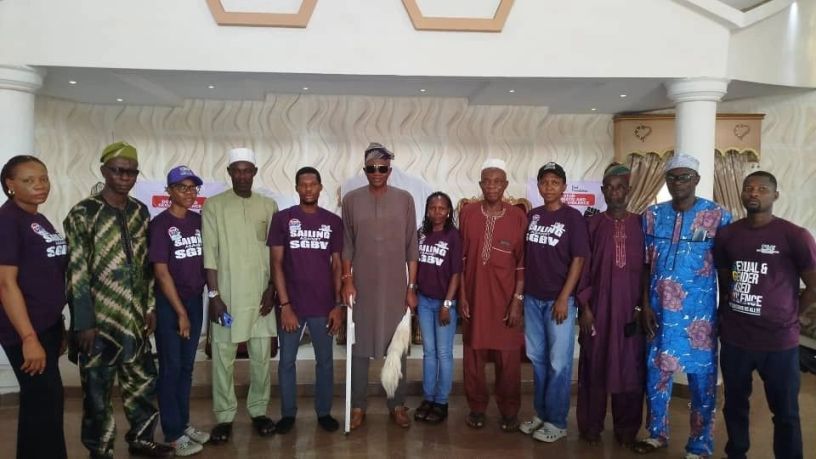
A Palace Courtesy Visit and Community Engagement exercise was conducted with His Royal Majesty, Alayeiluwa Oba (Dr.) Gausu Alani Rasaki Obagbade (Musa I) Ovori of Ibeshe Kingdom.
The visit was undertaken as part of ongoing community-based interventions aimed at strengthening partnerships with traditional institutions in the prevention and response to Sexual and Gender-Based Violence (SGBV).
The team was warmly received by His Royal Majesty, who expressed appreciation for the initiative and reaffirmed the commitment of the palace and traditional council to supporting efforts targeted at safeguarding the rights and wellbeing of women, children, and other vulnerable groups within the community.
The courtesy visit provided an opportunity to brief Kabiyesi on the objectives of the engagement and to seek his continued support in mobilizing community members for sustained advocacy against SGBV.
Following the palace visit, a community sensitization session was held for members of the community. Participants were educated on Sexual and Gender-Based Violence (SGBV), its various forms including domestic violence, sexual violence, child abuse, emotional and psychological abuse, and harmful traditional practices.
Emphasis was placed on the legal framework governing SGBV in Lagos State, highlighting the protections available to survivors and the consequences for perpetrators under the law.
The session also provided detailed information on available reporting mechanisms, including how and where to report cases of SGBV, the importance of timely reporting, and the need for confidentiality and survivor-centered responses.
Participants were informed about the support services available, including medical care, psychosocial support, legal aid, shelter services, and referral pathways for survivors.
The engagement was interactive, with community members asking questions, sharing concerns, and discussing prevailing norms and challenges related to SGBV within the community.
Key messages focused on the role of families, community leaders, and traditional institutions in preventing violence, promoting safe disclosure, protecting survivors from stigma, and ensuring accountability for perpetrators.
Overall, the palace courtesy visit and community engagement yielded positive outcomes, strengthening collaboration with the traditional leadership and enhancing community awareness on SGBV, the law, reporting mechanisms, and available support services.
The activity contributed to increased community ownership of SGBV prevention efforts and reinforced the role of traditional rulers as critical partners in driving social change and protecting community members

