
Speakers after speakers say the adoption of Artificial Intelligence, AI, would create a shift in mindsets from fear of AI to actively leveraging it as a tool for efficiency and innovation.
The Speakers want the Federal Government to prioritise investments in Artificial Intelligence as a pathway to accelerating national development.
They advocate for a multi-stakeholder compact to guide Nigeria’s adoption of Artificial Intelligence, warning that without a coordinated action, Nigeria could be left behind in the global AI evolution.
According to them, the multi-stakeholder compact must include government, private sector, regulatory authorities, civic societies and the academia.
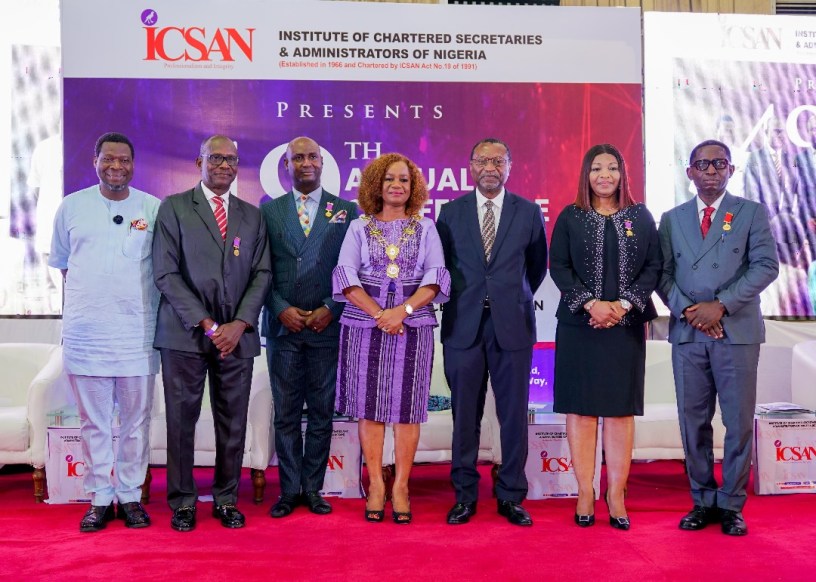
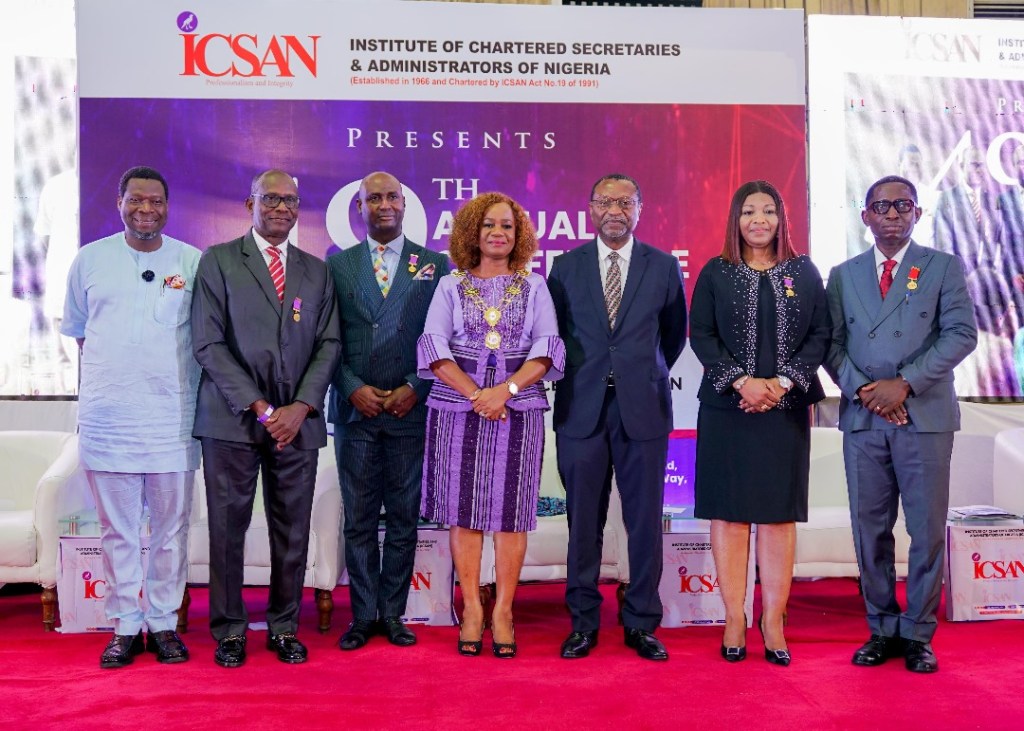
The Speakers spoke at the Institute of Chartered Secretaries and Administrators of Nigeria, ICSAN, 49th Annual Conference in Lagos, themed; Reimagining Governance: Navigating the Artificial Intelligence Revolution for Excellence.
In his opening remark, the Conference Chairman, Senator Udo Udoma, noted the importance of minimising regulatory risks in governing AI evolution.
The Senator who is the Chairman of Seplat Energy said it was critical to translate technological affordances into demonstrable gains in integrity, service delivery and stakeholder trust.
Udoma said while AI would impact every aspect of business and governance, responsibilities must be defined and systems in place to ensure accountability.
He noted that Stakeholders must also recognise how approachable the National Assembly is on the issues, urging ICSAN to forward its resolutions and recommend a clear path of accountability.
Delivering a keynote, Group Executive Director, Chams Holding Company, Dr. Femi Oyenuga, said ICSAN should promote mandatory AI Impact Assessments, Large corporates and regulated entities should conduct prior to deployment, and make high-level summaries available to relevant regulators and stakeholders.
According to him, this is to articulate principles and minimum standards for AI governance in corporate and public institutions.
He said it was imperative for professionals charged with corporate governance and administration to enable AI adoption to deliver organisational and public value.
Oyenuga added that it was necessary to embed ethical, legal and institutional guardrails so that AI innovation would be accountable, transparent and inclusive.
He said for governance professionals whose mandate was to safeguard integrity, transparency and fiduciary responsibility, AI revolution compelled a recalibration of roles, rules and capacities.
According to him, Rapid digital adoption, expanding data footprints, and increasing private-sector experimentation with AI create opportunities to raise governance quality.
In his words, equally, uneven institutional capacity, legacy regulatory frameworks, and limited public understanding of algorithmic decision-making increase vulnerability to harm if AI is deployed without systemic oversight.
Oyenuga said AI could materially improve governance outcomes by predictive oversight, operational transparency and efficiency and accessibility.
He said the objective for ICSAN should be to convert AI’s technological affordances into demonstrable gains in integrity, service delivery and stakeholder trust.
Oyenuga said they should also encourage regulators to adopt risk-based, sector-specific guidance rather than blanket bans or prescriptive rules that hinder innovation.
According to him, boards should adopt explicit responsibilities for AI oversight, including appointment of a responsible executive and periodic independent algorithmic audits.
He said ICSAN should publish model provisions for procurement, vendor due diligence, data stewardship and incident response tailored to Nigerian contexts, and also establish an ICSAN centre for digital governance.
In his words, AI is a governance inflection point, ICSAN and Chartered Secretaries are uniquely positioned to convert technological change into institutional value by protecting integrity, enabling transparency, and ensuring human-centred accountability.
According to him, this is a leadership moment, to shape standards, to professionalise practice, and to ensure Nigeria’s governance architecture evolves in step with technological change.
Oyenuga remainded that governance is ultimately a human enterprise, AI amplifies both capacities and responsibilities, saying if they exercise stewardship, insist on accountability, and build capability, they will ensure AI serves excellence and the public good.
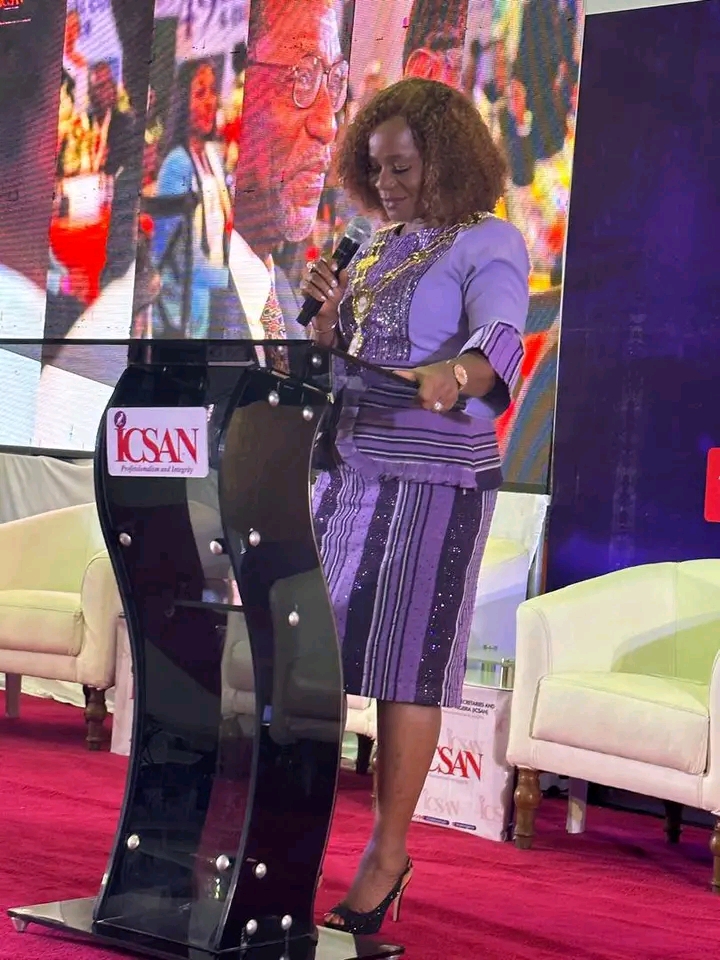
In her welcome address, the ICSAN President and Governing Council Chairman, Uto Ukpanah, said Artificial Intelligence was not fantasy but already a part of daily life.
Ukpanah said from voice assistants such as Siri and Alexa, to recommendation systems on Netflix and Spotify, AI was enhancing experiences by making them more personalised and efficient.
She said the global race for AI was not just about technology; but about shaping the future of societies, saying as countries would invest in AI research, the competition would intensify.
Ukpanah noted that the Nigeria Data Protection Act – General Application and Implementation Directive would become fully effective on Sept. 19.
She said it provided practical guidance on the interpretation and implementation of the Nigeria Data Protection Act (NDPA) 2023 and explained several areas.
She, however, noted that alongside opportunities came challenges, as AI evolution raised questions about ethics, data privacy, human displacement and the accountability of machines in decision-making.
Ukpanah pledged that the institute, through the conference, would ensure that professionals and policymakers would not merely react to AI but proactively shape its application in ways that would benefit the society.
According to her, professionals and corporate leaders should urgently embrace ethical Artificial Intelligence (AI) to aid professional efficiency and boost economy to ensure long-term development.
Ukpanah, noted that the rising influence of AI on governance and business operations required deliberate attention, saying AI has come to change the way things are done in many areas of human life, especially in the commercial world and professional milieu.
The Annual Conference is the annual flagship event in the calendar of our Institute, which offers a platform for the Institute’s members and other stakeholders to converge and brainstorm on the direction of governance, corporate practice, and trending issues on national development. Through activities such as the Annual Conference, ICSAN has consistently reaffirmed its role as a leading voice on Corporate Governance and Public Administration.
The theme of this year’s conference, “Re-imagining Governance: Navigating Artificial Intelligence Revolution for Excellence,” could not have come at a more appropriate time. But before I go on, let me defer to our culture of making introductory remarks about our Institute for the benefit of our guests and other stakeholders, who are not too familiar with ICSAN.
ICSAN is the leading, statutorily established professional body, dedicated to enhancing the status and practice of Corporate Governance and Public Administration. It is the only professional body authorised in Nigeria to conduct the examinations leading to the qualification as Chartered Secretaries and Administrators. Although ICSAN started in Nigeria in 1944 as an associate of the international body based in the United Kingdom, it elected its first president in 1966, which was about 57 years ago. ICSAN became Chartered by Decree 19 of 1991 (Now Act CAP I13 LFN 2004).
ICSAN is a member of the Corporate Secretaries International Association (CSIA), a global organisation registered initially in Geneva, but now incorporated as a limited by guarantee entity in Hong Kong and dedicated to developing the study/practice of Secretaryship and Administration to improve professional standards, the quality of governance practice and organisational performance. The Association is the global voice of Corporate Secretaries and Governance Professionals.
Over the past 59 years, ICSAN has consistently promoted the ideals of Corporate Governance through periodic issuance of policy papers and Guidance materials on Corporate and Public Administration. Our Institute has produced seasoned governance professionals who have meritoriously contributed their quota to Nigeria’s advancement.
On behalf of the Governing Council, I would like to extend our appreciation to our esteemed Chairman, Distinguished Senator Udoma Udo Udoma, for honouring us with his presence. It is a particular honour to have Senator Udoma, not only in recognition of his deep footprint in legal practice, but also his courage in navigating the choppy waters of politics and public office.
This is not the first time Senator Udoma has chaired an ICSAN event, as he chaired the Corporate Governance Roundtable several years ago. At that event, he expressed his desire to be an ICSAN member. Senator Udoma, there’s no better time than now to actualise that desire. Thank you, Sir, for your unwavering commitment to excellence and for continuing to inspire generations of professionals.
Returning to the 2025 Annual Conference, the theme is once again, “Re-imagining Governance: Navigating Artificial Intelligence Revolution for Excellence.”
Artificial Intelligence is not a futuristic fantasy; it is already a part of our daily lives. From voice assistants like Siri and Alexa to recommendation systems on Netflix and Spotify, AI enhances our experiences by making them more personalised and efficient. But what does it mean for AI to take a more central role in our world? As AI technology advances, we can expect it to perform more complex tasks. This could range from managing traffic systems in smart cities to assisting doctors in diagnosing diseases. In South Korea, AI is being deployed to secure public areas such as parks, leading to a significant decrease in crime. The potential is vast, and we are only scratching the surface of what AI can achieve. AI can also provide real-time insights and analytics, helping businesses make informed decisions more efficiently. Imagine having an AI that can predict market trends based on data analysis, enabling companies to stay ahead of the competition and the ever-evolving market environment. This could lead to a more dynamic economy where innovation thrives.
The global race for AI is not just about technology; it’s about shaping the future of our societies. As countries invest in AI research, the competition intensifies. The United States and China are currently leading the charge, but Europe, Canada, and emerging markets are making significant strides. Nigeria cannot afford to stand aloof from this revolution. As professionals in governance and administration, we have a responsibility to lead the conversation on how AI can be harnessed ethically, responsibly, and effectively to improve our institutions.
Artificial Intelligence offers opportunities that can fundamentally transform governance. Imagine a future where government services are delivered with precision and speed, where corporate boards rely on real-time data analytics for strategic decisions, and where public records are safeguarded with digital integrity. This is the promise of AI when it is applied appropriately in governance. Nigeria, like many developing nations, should harness AI to transform our electoral processes, improve financial accountability, modernise corporate governance, and enhance service delivery across ministries, departments, and agencies.
I must mention here that the Nigeria Data Protection Act – General Application and Implementation Directive (“GAID”) will become fully effective on 19 September 2025. The GAID provides practical guidance on the interpretation and implementation of the Nigeria Data Protection Act (NDPA) 2023 and explain areas such as: (a) the use of emerging technologies (artificial intelligence (AI), blockchain, and the internet of Things (IoT)) for processing personal data; and (b) conducting of Data Protection Impact Assessment (DPIA) amongst others, thereby offering organisations and individuals greater clarity on the application of the NDPA.
However, alongside opportunities come challenges. AI raises questions about ethics, data privacy, human displacement, and the accountability of machines in decision-making. Thus, as we re-imagine governance in this context, it is crucial to ensure that technology serves humanity, not the other way around.
I will refrain from probing further into the theme in order not to steal the thunder of our capable resource persons. It is sufficient to say that the relevance of this theme lies in its urgency. ICSAN, through this conference, seeks to ensure that professionals and policymakers do not merely react to AI but proactively shape its application in ways that benefit society. We have established the tradition of bringing experienced, accomplished and seasoned professionals as resource persons to our programmes, including, of course, the Annual Conference. The array of resource persons for the 2025 Annual Conference is a testament to the fact that this worthy tradition has been sustained. At the juncture, I wish to extend the appreciation of the Governing Council to the Keynote Speaker, Dr Olufemi Oyenuga, for accepting to lead the discourse today. Indeed, the constellation of resource persons Mr. Oluseyi Abiodun FCIS, Mr. Uchenna Ogbonna, Mr. Christopher Ogirri, Mr. Oluwabankole Falade ACIS, Mrs Obianuju Otudor ACIS will make for robust interactions and insights.
As we deliberate on our theme, I enjoin all participants to immerse themselves fully in the sessions. Let us engage, let us question, let us share experiences and insights. As we continue to explore the capabilities of AI, we should do so with a sense of wonder and responsibility. The future holds countless opportunities and possibilities, and by harnessing the power of AI ethically and thoughtfully, we can unlock new horizons for human achievement. Embrace the journey of discovery and remember that while AI may assist us in many ways, it is our unique human qualities that will always distinguish us.
The outcome of this Conference must not end here in Harbour Point. Let me also assure you that the observations and recommendations in our discourse today will be reduced into a communique by our team of seasoned rapporteurs, and it will be circulated to political leadership, policy makers, private sector stakeholders and the general public.
Today also presents an opportunity to speak about our flagship project, the ICSAN National Secretariat Building. Please permit me to use this opportunity to appeal to our members, guests, stakeholders and friends of ICSAN to donate towards the Building Project. I am pleased to inform you that this project, which commenced in February 2025, has progressed significantly. We are now on the first-floor decking stage. With your regular donations, we will build ICSAN House.
Finally, I would like to invite you to join us tomorrow, Friday, September 19, for the Conference Dinner and the 2025 ICSAN Awards, where we will celebrate outstanding individuals and corporate bodies who have distinguished themselves in governance and administration. That evening promises to be a memorable occasion of recognition, networking, and celebration of excellence, and I look forward to welcoming you there.
Before I step away, I must acknowledge the great work of the 2025 Conference Planning Committee and the National Secretariat for the exceptional arrangements they have put in place.
Distinguished Ladies and Gentlemen, I thank you once again for honouring us with your presence at the 49th ICSAN Annual Conference and wish everyone fruitful deliberations.
ICSAN, Greater Together! God bless ICSAN! God bless the Federal Republic of Nigeria!
Thank you for your attention.
 securityandsafetymatters