President Bola Tinubu says the funds accruing to the government from the removal of petrol subsidy are being used for the development of infrastructure and building of human capital.
The accruals into the federation account have more than doubled since 2023 after President Tinubu announced that ‘fuel subsidy is gone’ during his inauguration speech on 29th May 2023.
The funds are shared among federal, state and local governments.
The amount shared monthly, which hovered around N9 billion during the preceding Muhammadu Buhari administration is now an average of N1.6 trillion in the past two years.
During the opening of a National Conference on Public Accounts and Fiscal Governance in Abuja, the President, who spoke through the Minister of State Finance, Nkiruka Uzoka-Anite, the President said: ‘Since petrol subsidy removal, we have redirected those funds into targeted interventions, expanding our social safety nets, improving public transportation, and financing critical infrastructure.
‘Most importantly, we have strengthened our fiscal buffers, making Nigeria more resilient to external shocks.
‘For far too long, Nigeria’s economy has been burdened by structural inefficiencies, fiscal leakages, and an overreliance on oil revenues.
‘But we are not here today to dwell on the challenges of the past. We are here to chart a new course.
‘In 2022 alone, Nigeria spent over N4 trillion on fuel subsidies, more than we allocated to capital expenditure.
‘This was not only physically unsustainable, it was unjust.
‘A subsidy that disproportionately benefited the affluent, encouraged smuggling, and bred inefficiency was neither equitable nor strategic’.
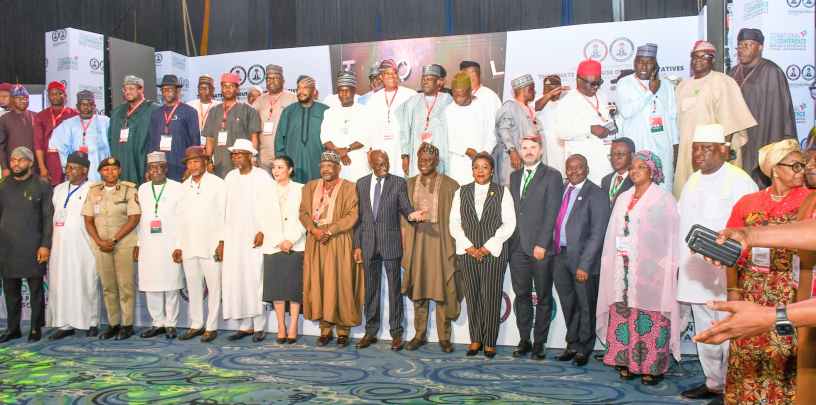
The conference was organised by the Public Accounts Committees (PACs) of the Senate and House of Representatives.
Last month during President Tinubu’s visit to his state, Nasarawa State Governor, Abdullahi Sule also told those asking how subsidy money is being spent to visit the state and see the infrastructure that his government has undertaken.
The President spoke further on how his government is transforming the economy.
He said: ‘These reforms are designed to widen the tax base by integrating the informal sector, simplify compliance for small and medium-sized enterprises, digitise revenue collection to reduce human interference and eliminate leakages, and harmonise multiple taxes to make doing business easier in Nigeria’.
Describing the new tax system as ‘a governance imperative’, President Tinubu noted that Nigeria is laying the foundation for a self-sustaining economy that gradually moves away from dependence on oil revenues to a more diverse and inclusive revenue base.
The President also emphasised economic diversification as a top policy objective, naming agriculture, manufacturing, digital services, renewable energy, mining, and the creative economy as focal sectors receiving targeted investments and reforms.
He referenced new initiatives like the National Credit Guarantee Company, which aims to support local production, empower SMEs, and boost non-oil exports.
‘These efforts go beyond mere economic metrics.
‘They are creating jobs, fostering innovation, building economic resilience, and strengthening our national security and long-term stability’, the President said.
On monetary policy, President Tinubu acknowledged the Central Bank’s efforts in stabilising the naira, taming inflation, and coordinating effectively with fiscal authorities.
‘There is better coordination now between the fiscal and monetary side, and we are determined to reduce inflationary pressures by addressing structural bottlenecks, particularly in food supply chains’.
The President affirmed that transparency and accountability are non-negotiable, citing steps taken to digitise public finance systems through platforms such as the Integrated Payroll and Personnel Information System (IPPIS), the Government Integrated Financial Management Information System (GIFMIS), and the Open Treasury Portal.
‘These platforms ensure that public funds are traceable, public officers are accountable, and the Nigerian people are empowered with information.
‘We must move from opacity to openness, from suspicion to confidence’, he declared.
President Tinubu called on the National Assembly, especially the Public Accounts Committees, to uphold their constitutional duty with ‘integrity, courage, and independence’.
House of Representatives Speaker, Abbas Tajudeen raised the alarm over Nigeria’s unresolved fiscal infractions, revealing that over N300 billion in public funds flagged by audit reports remain unrecovered.
Abbas, who spoke through House Leader, Julius Ihonbvere, described the situation as unacceptable and warned that fiscal responsibility cannot thrive where audit queries are routinely ignored without consequence.
Senate President Godswill Akpabio urged the PACs of the National Assembly to assert their constitutional powers in enforcing transparency and accountability in government, warning against the growing trend of non-compliance with legislative summons.
Akpabio who spoke through Senator Abdul Ningi, emphasised that Nigeria’s progress is inseparable from effective fiscal oversight, which is the central mandate of the PACs.
‘The PACs are not just legislative creations, they are constitutional bodies empowered by Sections 80, 81, and 88 of the Constitution to act as watchdogs of public funds.
‘They have the power to summon any individual, public or private, to account for the use of government resources,” he said.
Akpabio lamented the lack of responsiveness by some agencies and individuals to invitations from the legislature, describing it as an affront to democracy and the rule of law.
Chairman of the Senate Committee on Public Accounts, Senator Aliyu Wadada affirmed that the 10th Senate remains fully committed to open budgeting and prudent spending, and is working to review outdated fiscal legislation.
Wadada, called on Nigeria’s public institutions and leadership across sectors to recommit to a new era of fiscal integrity and responsible governance.
He said the era of fiscal recklessness must end.
Senator Wadada described fiscal governance as “the moral backbone of public service,” asserting that it is the determining factor “whether government revenue becomes national prosperity or lost opportunity.
“As Chairman of the Senate Public Accounts Committee (SPAC), I consider it both a duty and a privilege to open this timely and vital discourse, one that sits at the heart of Nigeria’s economic stability, institutional integrity, and social transformation,” he said.
Against the backdrop of growing global economic uncertainty and declining domestic revenues, Wadada stressed the urgency of “reimagining Nigeria’s fiscal framework,” warning that public trust in government can only be rebuilt through transparency and measurable service delivery.
“The vision before us is clear: To establish a culture of fiscal discipline anchored on transparency, accountability, and citizen-focused service delivery,” he declared.
Wadada expressed regret over past fiscal missteps, including poorly monitored budgets and untracked funds.
“We have seen budgets passed without adequate oversight. We have witnessed funds released without measurable outcomes. And we have, too often, overlooked the voices of citizens in matters that directly affect their livelihoods,” he said.
He challenged all stakeholders, across the legislature, executive, civil society, and the private sector, to view public funds not as privileges, but as a “sacred trust.”
“We must uphold fiscal integrity not as a slogan, but as a standard. We must treat public funds not as privilege, but as sacred trust. And we must ensure every Naira counts, for education, health, infrastructure, security, and the future of generations unborn,” Wadada urged.
Referencing a recent audit report from the Office of the Auditor-General of the Federation, the Senator acknowledged lingering gaps in financial reporting and accountability among government agencies.
He said these gaps reinforce the need to strengthen Nigeria’s public financial management systems through stronger oversight and reforms.
“These observations serve as an important reminder of the need to continuously strengthen our public financial management systems. In this regard, the Public Accounts Committee of the Senate has intensified its oversight functions, initiated inclusive public hearings, and deepened engagement with key stakeholders, all aimed at fostering a culture of transparency, accountability, and responsible governance,” he said.
Senator Wadada affirmed that the 10th Senate, under the leadership of Senate President Godswill Akpabio, remains fully committed to open budgeting and prudent spending, and is working to review outdated fiscal legislation.
“We are building institutional synergy across arms of government to ensure that fiscal recklessness becomes a thing of the past,” he said.
He acknowledged the contribution of Nigeria’s international partners, especially in promoting anti-corruption frameworks and fiscal transparency.
“Your support has been critical in promoting transparency, budget reform, and anti-corruption mechanisms. We are eager to deepen those collaborations in the spirit of mutual accountability and shared global progress,” he said.
Wadada also emphasized Nigeria’s responsibility not only to its citizens but also to global standards.
“Nigeria must not only meet domestic expectations, it must fulfill international benchmarks in public finance, debt management, and open governance,” he said.
Chairman of the House of Representatives Public Accounts Committee (PAC), Bamidele Salam, called for a complete recalibration of Nigeria’s fiscal governance systems, urging all public officials to move beyond lip service and ensure that public funds are truly used for the public good.
Salam stressed that the conference must go beyond discussions to deliver concrete, measurable outcomes that will impact the lives of citizens.
“Making public funds work for public good is a mantra we must not only proclaim but must be seen to internalise and practice in all we do as public servants,” he said.
With the theme “Fiscal Governance in Nigeria: Charting a New Course for Transparency and Sustainable Development,” Salam described the gathering as a “significant milestone in our collective pursuit of transparency, accountability, and sustainable development in Nigeria.”
He noted that the quality of fiscal governance has a direct impact on the country’s future.
“We recognise that our nation’s progress is inextricably linked to the effectiveness of our fiscal governance systems.
“It is our collective responsibility to ensure that public resources are managed in a lawful, transparent, prudent, judicious, accountable, and efficient manner,” he said.
The lawmaker identified critical areas of reform that the conference will address, including “budget and procurement transparency, financial accountability, regulatory and legislative oversight; public engagement, and the role of the media and civil society in deepening accountability as well as promoting good governance.”
According to Salam, Nigeria’s fiscal future is under pressure from dwindling revenues, an exploding population, surging youth unemployment, and decades-long infrastructural deficits.
These challenges, he argued, make it urgent to “combat the ills of corruption, impunity and abuse of due process in public sector financial management.”
Salam acknowledged some of the ongoing fiscal reforms under President Bola Ahmed Tinubu’s administration through the Renewed Hope Agenda, but said more work needs to be done in strengthening financial reporting, auditing institutions, and aligning governance with the constitutional mandate.
“In the last two years of my stewardship as the Chair of this constitutional committee in the House of Representatives, I have seen the need, more than ever before, to address fundamental issues around the timeliness and quality of our financial reporting systems, the integrity of our budgeting and procurement process, the capacity of our supreme audit institution, and the successful implementation of our shared vision as contained in Chapter 2 of the 1999 Constitution as amended,” he stated.
He emphasized that as Africa’s biggest economy and the most populous Black nation, Nigeria must assume a leadership role on the continent’s economic emancipation by improving its public finance architecture and global transparency rankings.
“There is no way we can achieve this if we do not make concerted, conscious efforts to recalibrate our fiscal responsibility systems and improve on our global transparency index,” he said.
President of the African Organization of Public Accounts Committees (AFROPAC), Hon. Medard Lubega Sseggona, commended Nigeria for taking continental leadership in promoting fiscal transparency and sustainable public finance management, declaring that the country now stands as a strategic anchor in Africa’s accountability architecture.
“This forum is a clear demonstration of Nigeria’s commitment to strengthening public financial management and enhancing transparency in championing sustainable development. It speaks directly to the collective challenges we face across the continent in our shared aspirations.”
He lauded the Nigerian National Assembly for refocusing attention on accountability.

