
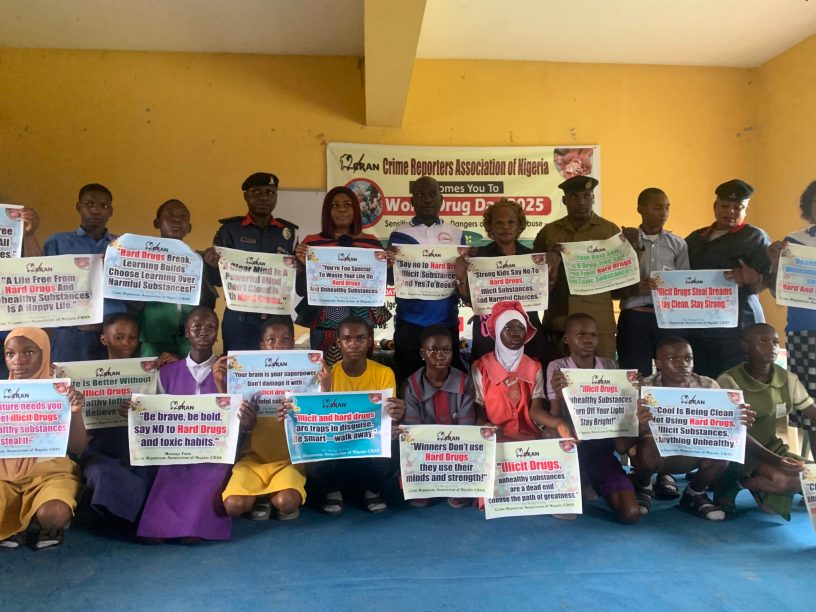
The Crime Reporters Association of Nigeria, CRAN, has taken its campaign to public secondary schools in Ajegunle-Ajeromi, Lagos.
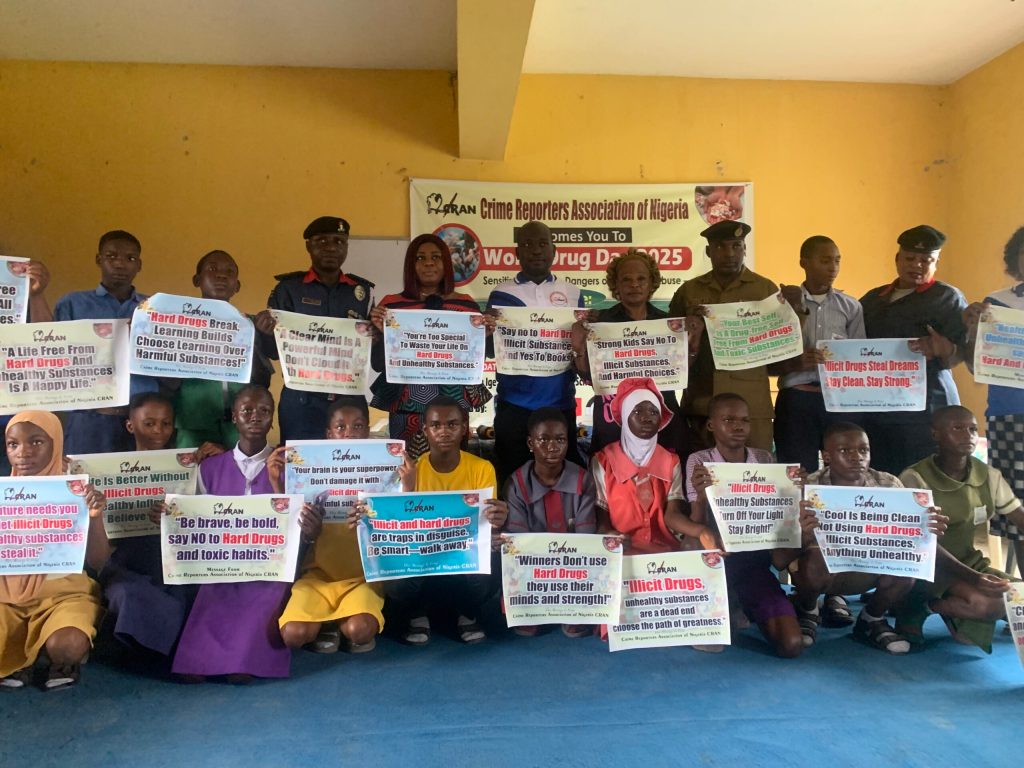
CRAN Members who are journalists covering crime, security took the opportunity to sensitise students on the dangers of illicit drug use, to combat rising cases of drug abuse among Nigerian youths.
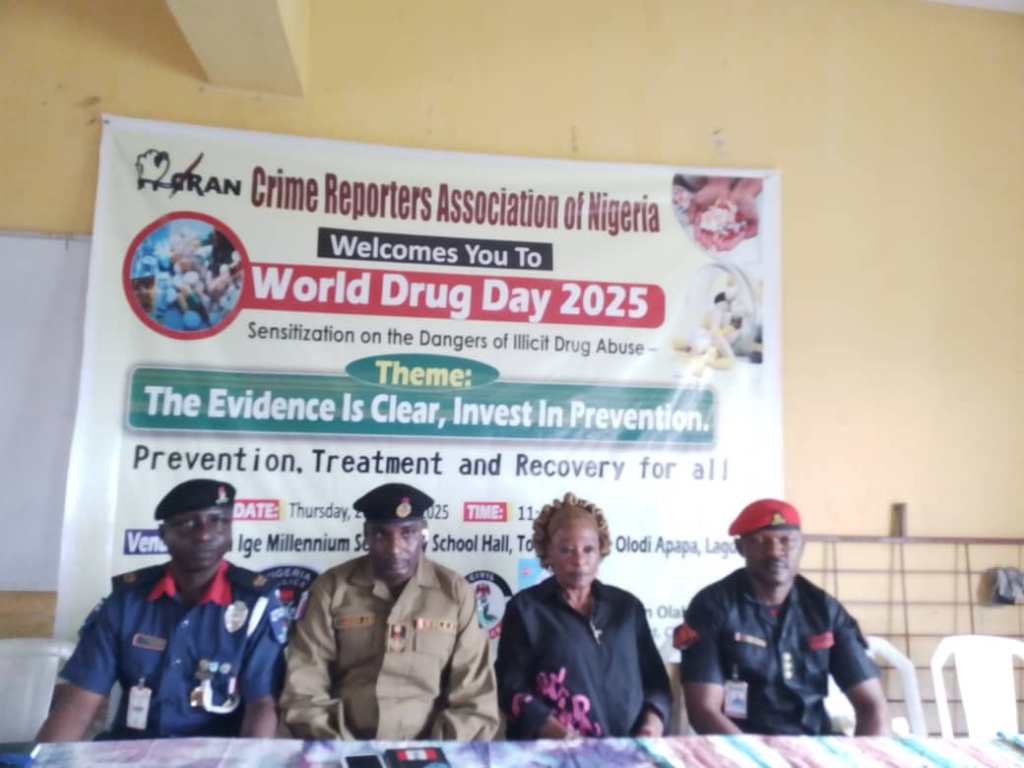
The awareness programme held in commemoration of the 2025 International Day Against Drug Abuse and Illicit Trafficking, themed “The Evidence is Clear, Invest in Prevention.”

This brought together anti-drug advocates, security officials, and media professionals to educate students at the Bola Ige Millennium Secondary School Hall, Tolu Complex, Ajegunle.
CRAN President, Olalekan Olabulo, in his welcome remarks, congratulated the students for being part of the sensitisation drive, stressing the need to actively fight drug abuse within their immediate communities.
Olabulo said Drug abuse is not peculiar to Nigeria, but because of the environment and what is happening, deliberate steps must be taken to fight it.
He urged students to become ambassadors of anti-drug advocacy, adding that CRAN has engaged in youth-focused outreach for over four years.
Olabulo, said the war against drug abuse was everybody’s fight.
He said, “Drug abuse is not peculiar to Nigeria. We have do our part and fight it within our environment.”
The CRAN President urged students to share what they learned with others.
He stressed the need for increased advocacy and sensitisation efforts by government agencies, noting that CRAN had been engaging in school outreach for over four years.
Also speaking at the event, Deputy Commander of Narcotics (DCN), Garba Abubakar, of the National Drug Law Enforcement Agency (NDLEA), provided an overview of drug abuse and its consequences.
Abubakar warned students against the use of banned substances such as cocaine, heroin, marijuana, and methamphetamine, explaining that even misuse of approved medications like Paracetamol can be harmful.
According to him, Using any of these substances damages organs, one may end up on the streets, as it is deadly, dangerous, and hard to quit.
He listed banned substances such as cocaine, heroin, methamphetamine, and marijuana, advising youths to avoid them.
He also clarified the difference between illicit drugs and medically approved substances like Paracetamol, warning that misuse—even of socially acceptable substances—could lead to health complications.
Olabulo noted that while older generations primarily encountered substances like marijuana and cocaine, the current generation faces even more dangerous synthetic drugs, requiring intensified awareness efforts.
In his contribution, Public Relations Officer of the Nigeria Security and Civil Defence Corps (NSCDC), Lagos Command, DSC Oluwaseun Abolurin, provided further clarity on the legal and medical distinctions between licit and illicit drugs.
“There are drugs permitted under Nigerian law for treatment purposes these are licit. But anyone who consumes illegal substances has broken the law and committed a crime,” he explained.
Abolurin warned that many drug users are unaware they are “smoking their lives away,” stressing that drug abuse has a direct impact on mental health and academic performance.
“Drug abuse impairs the ability to think correctly. Many students fail exams because they can no longer concentrate or retain information,” he said.
Speaking on the theme of the event, Abolurin noted that the effects of drug abuse are visibly evident in society today.
“The evidence is indeed clear—many young people are battling mental illness and deteriorating health. You often see them malnourished, withdrawn, and disoriented,” he added.
He urged students to avoid friends who engage in smoking or use of hard drugs.
“Negative peer influence is one of the fastest ways to get trapped. Walk away from such circles,” he cautioned.
Chairperson of the Lagos State chapter of the Sports Writers Association of Nigeria (SWAN), Ambassador Olatutu Oladunni, spoke on the link between nutrition, wellness, and athletic performance.
She advised students to be conscious of their dietary habits, noting that contaminated or unverified edibles could jeopardise a sportsperson’s career.
“Nutrition is critical, especially for those aspiring to careers in sports. Doping tests are mandatory in professional competitions, and what you consume can either protect or destroy your prospects,” she said.
The event highlighted the shared responsibility of media, law enforcement, and civil society in addressing drug abuse through early education, community engagement, and sustained advocacy.
CRAN’s intervention adds to national efforts to prevent substance use among youths—a demographic increasingly vulnerable to the influence of synthetic drugs and peer pressure.
“Watch what you eat. Avoid consuming substances you don’t fully understand. Some edibles may contain banned substances that could ruin a sports career,” she said, highlighting the dangers of inadvertently failing doping tests.
The programme ended with an interactive session, where students were encouraged to ask questions and make personal commitments to stay drug-free, reinforcing CRAN’s mission to build a safer, healthier youth population through continuous education and prevention.

