UN humanitarians have said escalating violence in eastern Democratic Republic of the Congo (DRC) has continued to uproot thousands more people to neighbouring countries where they face dire conditions without many basic necessities.
UNHCR, the UN refugee agency, reported on Thursday that 35,000 Congolese nationals have now reached Burundi since the beginning of February, as Rwanda-backed M23 fighters continue to advance across both South and North Kivu.
The UN human rights office (OHCHR) in DRC also expressed concern over growing lawlessness as warlords responsible for grave crimes including rape, were reportedly sprung from prison in Goma, Kabare and Bukavu in recent days.
The former detainees are now at large and pose a threat to their former victims and judges who sentenced them.
Additionally, they present a danger to the lawyers who represented victims of sexual violence.
Patrice Vahard, Director of the UN Joint Human Rights Office in DR Congo (UNJHRO), emphasised the severity of the situation.
“The consequences will be huge, first for the state of law, but in particular for these women who believed in justice because they received help, but who unfortunately now risk being confronted by some of their tormentors,” Vahard said in a statement.
Also, UNHCR spokesperson Olga Sarrado said that those fleeing DR Congo had been entering Burundi via its northwestern border.
“The vast majority are women and children, they are arriving exhausted, tired.
“Many of them tell our teams on the ground that they have lost family members, sometimes children, while they were fleeing,”she said.
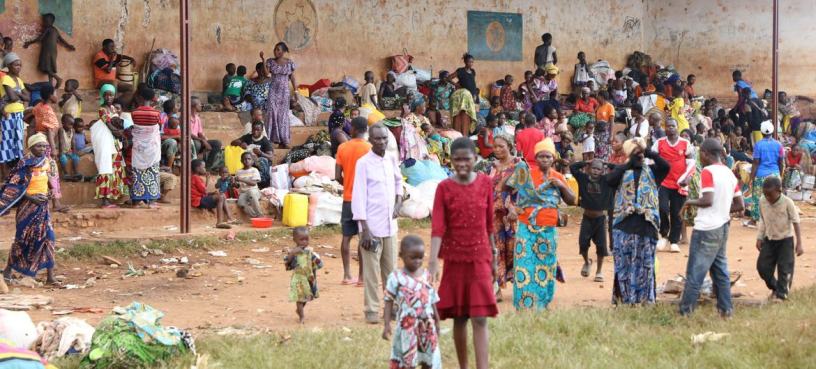
Sarrado described dire conditions at the border and said that the majority of those arriving from DRC do so by unofficial means, with many taking risks to cross the Ruzizi River.
“Some of them are sheltering in the open, just in makeshift shelters, others are being sheltered in schools and also in a stadium at the border,” the UN refugee agency official added.
“Needs are increasing and there is a significant shortage of basic services in the displacement shelters including toilets, food and water.”
The UN World Food Programme (WFP) announced on Thursday that it had partially resumed food assistance to parts of Goma, which fell to M23 rebels three weeks ago.
But as fighting between M23 and national troops continues, the UN aid agency expressed alarm at “soaring hunger” caused by people fleeing displacement camps.
In North Kivu, WFP has reached 9,000 people with emergency food assistance out of a target of 83,000.

