
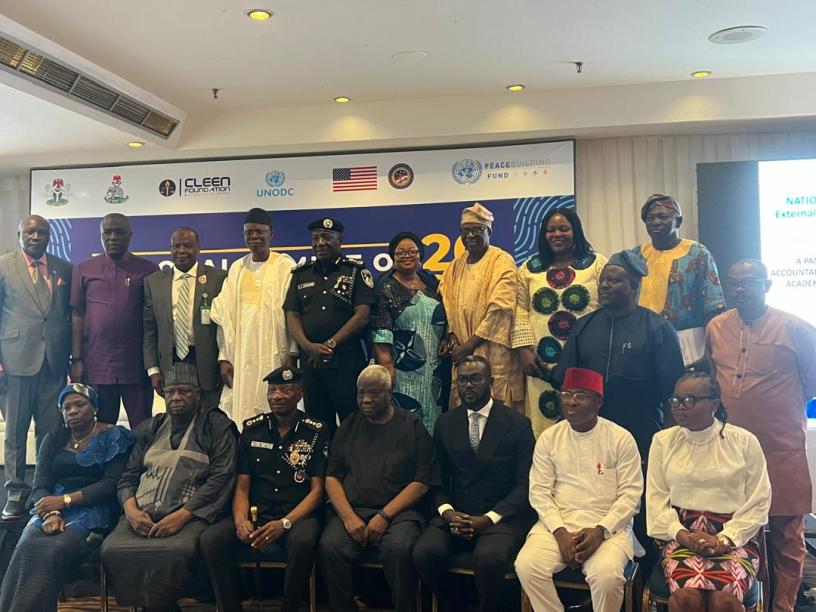
The Inspector-General of Police, IGP Kayode Egbetokun, has assured Nigerians of the Nigeria Police Force’s commitment to accountability and transparency in policing, emphasising that these principles are fundamental to fostering public trust and enhancing community safety.
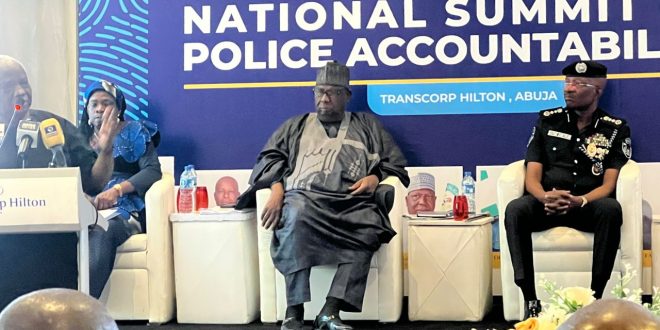
Speaking at the national summit on police accountability in Abuja, Egbetokun highlighted the critical role of police accountability as a cornerstone of democratic policing and urged all stakeholders to collaborate in building a more effective and trustworthy law enforcement system.
He further emphasised the essential nature of collaboration in achieving effective police accountability, asserting that the police cannot fulfil this responsibility in isolation.
The IGP called upon citizens to engage actively in the accountability process, highlighting that a transparent and inclusive strategy will help to bridge the divide between law enforcement and the community.
Also speaking at the event, the chairman of the Police Service Commission, retired Deputy Inspector-General of Police Hashimu Argungu, called for adequate funding for intelligence, investigations and prosecution activities of the Nigeria Police Force by the federal government.
DIG Argungu also said the government must ensure public accountability and transparency of all the activities of investigative units.
He said the deputy inspector general of police in charge of FCIID should establish an internal public complaints and feedback system. He added that Investigators must be open and transparent in their dealings and accountable to the people at all times.
DIG Argungu also noted that Police detectives and investigators should have ethics and that these ethics must be enforced for professionalism.
He called for strict measures against officers of the Nigeria Police Force found to be violating citizens’ human rights.
In his remark, Acting Executive Director of CLEEN Foundation, Peter Maduoma said Effective policing requires more than just enforcing the law; it demands adherence to the highest standards of integrity, transparency, and respect for human rights.
Maduoma said the summit underscores their collective responsibility to ensure those tasked with upholding the law are themselves held to the highest standards of accountability.
According to him, as they reflect on the vital role of law enforcement in the society, they must remember that accountability is both an expectation and a necessity.
In his words, they gather today not merely as stakeholders, but as custodians of a shared vision for a safer, fairer, and more just Nigeria, saying Police accountability is not just a procedural obligation; it is the cornerstone of democratic governance and public trust in law enforcement.
Maduoma said at the heart of their efforts lies the need for strong inter-agency collaboration, saying oversight bodies such as the Police Service Commission, the Ministry of Police Affairs, and the National Human Rights Commission each play crucial, yet distinct, roles in the accountability ecosystem.
However, their effectiveness is amplified when they work in synergy. A fragmented approach to police oversight can undermine our objectives, whereas a unified front strengthens our capacity to address misconduct and ensure justice.
This summit provides a unique opportunity to deepen collaboration among these agencies. By fostering better communication, data sharing, and coordinated action plans, we can create a holistic and responsive accountability framework.
I encourage all stakeholders to leverage this platform to explore innovative solutions, share best practices, and build a cohesive strategy for oversight and reform.
True police accountability cannot be achieved by institutions alone. It requires the active participation and engagement of the entire society. A whole-of-society approach means that every citizen, community leader, and civil society organization has a role to play in holding law enforcement accountable.
This approach fosters a culture where accountability is not seen as punitive but as a shared value that upholds justice and fairness.
Community engagement is pivotal in this regard. When communities trust their police forces, they are more likely to cooperate and contribute to public safety initiatives. Therefore, we must prioritize transparent communication, accessible complaint mechanisms, and community-centered policing strategies that foster mutual respect and understanding.
As we chart the path forward, the continued support of both our government and international development partners is essential.
The Nigerian government has made significant strides in promoting police reforms, but there is still much work to be done. Sustained political will, adequate funding, and a commitment to continuous improvement are crucial for the success of our initiatives.
International partners, such as the United Nations Office on Drugs and Crime (UNODC), UNDP, Ford Foundation, etc. play an invaluable role in this journey. Their expertise, resources, and global perspective help us adopt best practices and implement reforms that are both context-specific and globally informed.
We call upon our partners to continue their support, not just in funding, but in capacity building, technical assistance, and policy guidance.
I want to express our profound gratitude to UNODC Nigeria for their partnership in organizing this summit. Your dedication to promoting justice, human rights, and accountability has been instrumental in our collective efforts. This summit is a testament to what we can achieve when we work together towards a common goal.
As we embark on the discussions and deliberations of this summit, let us remember that the journey towards police accountability is not a destination but an ongoing process. It requires vigilance, adaptability, and a shared commitment to justice.
I urge all participants to engage actively, share insights, and collaborate on actionable strategies that will move us closer to our goal.
Together, let us reaffirm our commitment to building a policing system that is accountable, transparent, and trusted by all Nigerians. Let this summit be a catalyst for change, a platform for innovation, and a beacon of hope for a future where justice and accountability are not just ideals, but realities.
Thank you all for your presence, your dedication, and your unwavering commitment to justice. Let us work together to create a Nigeria where the rule of law is upheld, and the rights of all citizens are protected.
 securityandsafetymatters