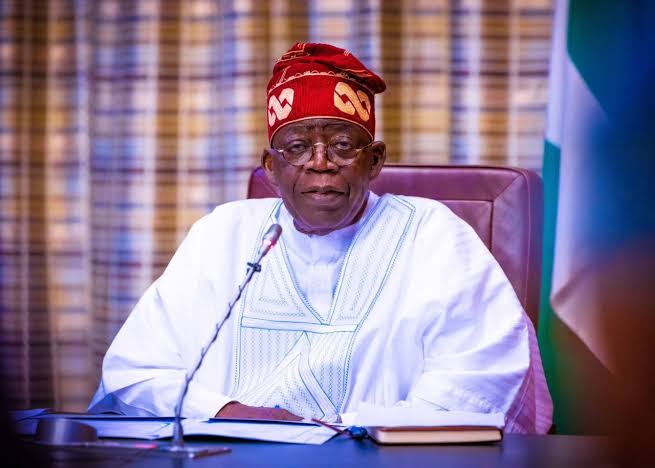
President Bola Tinubu has directed the Minister of Finance and Coordinating Minister of the Economic, Wale Edun, to calculate the cost implications of a new national minimum wage.
President Tinubu also directed the Minister to present a template for a new minimum wage between today and tomorrow so the government can have some figures ready for negotiations with Labour.
He gave the directive during a meeting with the government’s negotiation team, which met with the organised labour on Monday leading to the suspension of the industrial strike.
Minister of Information and National Orientation, Mohammed Idris, said this in Abuja after a Federal Government delegation on the new minimum wage met with the President.
…meets fed govt reps on tripartite committee
President Bola Tinubu has directed the Minister of Finance and Coordinating Minister of the Economic, Wale Edun, to calculate the cost implications of a new national minimum wage.
President Tinubu gave the directive at the State House on Tuesday, June 4, when he held a meeting with members of the federal government’s negotiation team, which met with the organised labour on Monday leading to the suspension of a nationwide crippling industrial strike called by Labour.
Speaking to journalists at the meeting, Minister of Information and National Orientation, Mohammed Idris, revealed that the Minister of Finance has been given a deadline of today (Wednesday) to provide the figures, which will guide the government’s negotiation with organized labour.
The meeting, attended by the Secretary to the Government of the Federation (SGF) George Akume; Minister of Budget and Economic Planning, Atiku Bagudu; Minister of State for Labour and Employment, Nkeiruka Onyejeocha; and the Group Managing Director of the NNPC, Mele Kyari, according to Idris, was aimed at finding a balance between the government’s pronouncements and the economic realities on the ground.
“It’s been quite challenging, but we thank God that we’re at this point. We thank Labour that true to their words last night, they have suspended their strike early this morning.
“Government on its side, you can see that the President has just summoned a meeting of all those who negotiated on behalf of the federal government, led by the Secretary to the Government of the Federation.
“We were all there to look at those issues and then the President has directed the Minister of Finance to do the numbers and get back to him between today and tomorrow so that we can have some figures ready for negotiation with Labour”, he said.
Idris emphasised that the President is committed to a new minimum wage that is acceptable, sustainable, and realistic for all Nigerians, involving not just the federal government but also sub-nationals and the organized private sector.
Idris noted that the government is not opposed to wage increases, but wants to ensure that any agreement reached is sustainable and realistic, given the economic realities on the ground.
“Let me say that Mr President is determined to go with what the committee has said, he’s also looking at the welfare of Nigerians. Like I said earlier, government is not an opponent of Labour discussions, it’s not an opponent of wage increase, but what is there is that government is desirous of ensuring that there is balance between what its pronouncement is and what realities are on ground, therefore we’ll work assiduously to ensure that whatever we do, whatever promises government makes will be kept. That’s the idea of this meeting.
“The President has given a marching order that all those who have negotiated on behalf of government and those who are representatives of other sectors, the organized private sector and the sub-nationals, come together so that we can have a new wage award that is acceptable, sustainable and also realistic for Nigeria.
“A wage award is not just that of the federal government. Like I mentioned, the sub-nationals are involved, the organized private sector is involved, the Labour is involved. It was Labour that staged a walkout during those proceedings, now that we’ve come back to the negotiating table, all of us will work together again, assiduously, within the next one week to ensure that we have a new wage for Nigeria that is acceptable, sustainable and also realistic for all Nigerians”, Idris said.
With labour suspending its strike, the government is working to ensure a new wage award that meets everyone’s expectations, with negotiations recommenced on Tuesday (yesterday).
The Senate has promised its support for the passage of a new minimum wage bill if ongoing negotiations between the Federal Government and organised labour on a new wage peg are concluded.
It also commended the leaderships of the Nigerian Labour Congress (NLC) and the Trade Union Congress of Nigeria (TUC) for suspending the industrial action embarked upon by workers to demand a new minimum wage far higher than the current N30,000.
The President of the Senate, Sen. Godswill Akpabio, gave the position of the Senate while reacting to the decision of the unions to suspend the strike for five days to allow for the conclusion of the negotiations.
Akpabio stated, “On that note, I want to thank the Nigerian Labour Congress and the Trade Union Congress for listening to the voice of Nigerians and the international community by calling off (suspending) the strike to enable negotiations to continue, and we wish them well in the negotiations.
“On our part, we will continue to do our best by making contributions and, at the same time, awaiting the incoming Bill on Minimum Wage for us to enact for the benefit of all Nigerians.”
Senators were about to take a motion on the urgent need to call off the strike when the news broke that the labour unions had suspended the industrial action.
The motion was moved by the Chairman of the Senate Committee on Labour and Employment, Sen. Diket Plang, and seconded by the Deputy President of the Senate, Sen. Barau Jibrin.
However, the prayers of the motion were stood down just as the NLC/TUC suspended the strike.
Akpabio further noted that there were several issues to be resolved in the new minimum wage agitation, including the possible retrenchment of workers if the new wage figure was “too high” for employers to afford.
He cited the case of the current N30,000 minimum wage, which the Senate President said had yet to be paid by some employers and local governments.
Akpabio went on, “Taking this motion will mean that we are jumping the gun and we are trying to settle the issues for them.
“There are many variables that they will look at. Capacity to pay and the ability of states, local governments, and the private sector to even pay.
“They will also be looking at the fact that if the minimum wage is too high, then the possibility of retrenchment of workers will occur.
“I think they will take comparative analysis to know that the last minimum wage, which was fixed by this parliament as an Act of N30,000, was: how many states were able to pay, how many local governments were able to pay, and how many employers were able to pay?
“We’ll be looking at those things because it’s important that a holistic approach be looked at, and I have taken the suggestion that we should not rest until we arrive at an amicable resolution of the issue and that the National Assembly should also continue to make its own contributions towards the ongoing negotiations.”
Labour is demanding a new minimum wage of N494,000, as against the N60,000 the government agreed to pay, a disagreement that led to the strike.
After a last-minute intervention by the leadership of the National Assembly on Sunday night, Labour refused to shift ground and proceeded to shut down public services on Monday.
But another round of talks began on Monday night, which led to the suspension of the strike on Tuesday as parties agreed to continue with the negotiations.

