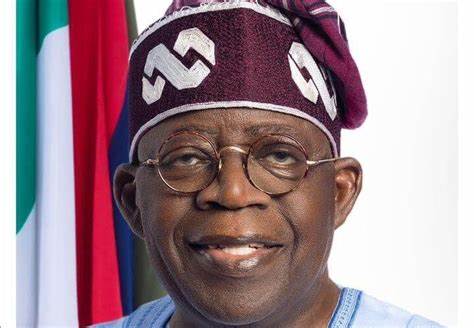
President Bola Tinubu is rallying other heads of state in the African Union (AU) and world leaders against the takeover of power announced in Libreville, the Gabonese capital, by some military leaders.
The Presidency said Tinubu, who is the Chairman of the Economic Community of West African States (ECOWAS) is at the forefront of talks on steps to take on the political crisis in Gabon.
Presidential spokesman, Ajuri Ngelale, told reporters at the at the State House in, Abuja, that his boss had expressed deep concerns over recurring political crisis in different parts of Africa, describing the situation as a contagious.
The President, Ngelale said, also emphasised the importance of upholding the rule of law and utilising constitutional mechanisms to resolve electoral disputes.
Earlier, a group of soldiers appeared on Gabonese state television to announce the nullification of the election results and the dissolution of all republic institutions.
The announcement followed the declaration of President Ali Bongo as winner of the elections, which were conducted over the weekend.
It was Bongo’s third time to win in the Central African state.
Relaying the President’s reaction to reporters,
Ngelale said: “President Bola Tinubu is watching developments in Gabon very closely with deep concern for the country’s social political stability and at the seeming autocratic contagion apparently spreading across different regions of our beloved continent.
”The President, as a man who has made significant personal sacrifices in his own life in the course of advancing and defending democracy, is of the unwavering belief that power belongs in the hands of Africa’s great people and not in the barrel of a loaded gun.
“The President affirms that the rule of law and a faithful recourse to the constitutional resolutions and instruments of electoral dispute resolution must not at any time be allowed to perish from our great continent.
“To this end, the President is working very closely and continuing to communicate with other Heads of State in the African Union and beyond towards a comprehensive consensus on the next steps forward with respect to how the crisis in Gabon will play out and how the continent will respond to the contagion of autocracy we are seeing spread across our continent.”
In search of solution to military incursions into politics, the President and the Canadian Prime Minister, Justin Trudeau, discussed extensively on the developments emerging from Niger Republic and Gabon.
Disclosing tips from the conversation, Ngelale said both leaders agreed on the need to preserve the democratic culture in African, calling on Africans in the Diaspora to exact their influence to preserve democracy on the continent.
He said: “President Bola Tinubu has held a substantive and extensive discussion with Canadian Prime Minister, Justin Trudeau, where issues related to the crisis in Niger Republic and the unfolding situation in Gabon were discussed.
“The two heads of state mutually agreed that the promotion and protection of constitutional democratic governance on the continent remains a paramount priority and that the people of Africa living in the Diaspora around the world, making a huge impact to the sociopolitical landscapes of countries around the world and the economies of countries around the world, continue to urge on the global community to advance the cause of democracy on the continent for the sake of the economic prosperity of all Africans.”
“So, it is of frontline importance to understand that His Excellency, President Bola Ahmed Tinubu, will continue to engage with heads of state, not just within the African Union, but also around the world and those engagements are ongoing.
Wednesday’s coup in Central African country Gabon drew anger from world leaders and international organisations.
They asked the junta to return to their barracks and restore democratic order in the thinly-populated oil-rich country.
The coup, the sixth on the African continent in six years, came after the one in Niger Republic, Nigeria’s Northern neighbour.
The Economic Community of West African States (ECOWAS) is still battling to get the soldiers to respect constitutional authority and quit power.
In Libreville, mutinous soldiers announced the take-over of political power.
They put President Ali Bongo Ondimba under house arrest, hours after being declared winner in an election held on Saturday that would have extended his family’s 55-year reign.
The coup unsettled the United Nations (UN), African Union (AU), European Union (EU), United States (U.S.) and others.
UN Secretary-General Antonio Guterres condemned the takeover.
His spokesman, Stephane Dujarric, said Guterres “firmly condemns the ongoing coup attempt as a means to resolve the post-electoral crisis” and reaffirms “his strong opposition to military coups”.
The Head of the AU Commission, Moussa Faki Mahamat, condemned the coup and called on security forces to peacefully return to “democratic constitutional order”.
“He calls on the national army and the security forces to guarantee the personal safety of the president, the members of his family and those of his government,” Mahamat’s spokesperson said.
EU’s top diplomat, Josep Borrell, said the situation in Gabon would be discussed by the bloc’s ministers this week.
“If this is confirmed, it’s another military coup, which increases instability in the whole region,” Borrell said.
Commonwealth Secretary-General Patricia Scotland called the coup “an illegal takeover of power”.
“The Commonwealth Charter is clear that member states must uphold the rule of law and the principles of democracy at all times and the Commonwealth Secretariat will be keenly monitoring the situation,” she said.
The ousted president called on people loyal to him to “make noise” to support him. He spoke in a video apparently from ‘detention’ at his residence.
But rather than heed his call, crowds took to the streets in Libreville, chanting the national anthem.
They celebrated the putsch against a dynasty accused of getting rich on the country’s wealth while many of its citizens struggle to scrape by.
Bongo has served two terms since coming to power in 2009 after the death of his father, who ruled the country for 41 years.
France, Gabonese colonial master, condemned the military coup, saying it was closely monitoring developments in the country.
It reaffirmed its wish that the outcome of the election, once known, be respected.
French government spokesman Olivier Veran said: “France has maintained close economic, diplomatic and military ties with Gabon, and has 400 soldiers stationed in the country leading a regional military training operation.
French President Emmanuel Macron on Monday denounced what he called an “epidemic” of coups in French-speaking Africa countries – from Mali and Burkina Faso to Guinea and Niger.
Paris maintains a military presence in many of its former colonial territories, including Gabon, where it has 370 soldiers permanently deployed, some in the capital, Libreville, according to the French Ministry of the Armed Forces website.
The U.S. described the development as “deeply concerning”.
“We are going to watch this closely, and we’re going to continue to do everything we can to support the idea of democratic ideals that are expressed by the African people,” said White House national security spokesman John Kirby.
China called on relevant parties in Gabon to restore order as soon as possible.
It also urged them to ensure the personal safety of President Bongo, maintain national peace, stability, and overall development, according to Wang Wenbin, a spokesperson for China’s Foreign Ministry.
In a reaction from Moscow, Russia said it received with concern reports of the sharp deterioration in the internal situation in Gabon.
”We continue to closely monitor the development of the situation and hope for its speedy stabilisation,” Russian Foreign Ministry spokesperson, Maria Zakharova said.
Spain’s Acting Defence Minister Margarita Robles said at a European Union Defence Ministers’ meeting in Toledo that Spain was monitoring events in Africa’s Sahel region with great concern.
Spain has about 140 troops stationed to the northeast of Mali’s capital, Bamako, as part of the EU’s training mission there.
In a statement, Egyptian Foreign Ministry called on all parties “to uphold the national interest in order to preserve the security, stability and safety of the country”.
The ministry called on Egyptians in Gabon to exercise utmost caution and avoid areas of security tension.
“Egypt aspires to see stability returned to Gabon as soon as possible and preserve the safety of the brotherly Gabonese people,” it added.

