The Federal Government, and the Central Bank of Nigeria has been advised to find other means of reining in inflation beyond raising the Monetary Policy Rate, MPR.
They were asked to look beyond the orthodox method of increasing interest rates to curb inflation to proffer viable solutions while taking cognizance of the peculiarities of Nigeria’s economic situation.
According to the Institute of Chartered Secretaries and Administrators of Nigeria, the apex bank has increased MPR about four times by a total of about 225 basis points this year with little or no impact on inflation.
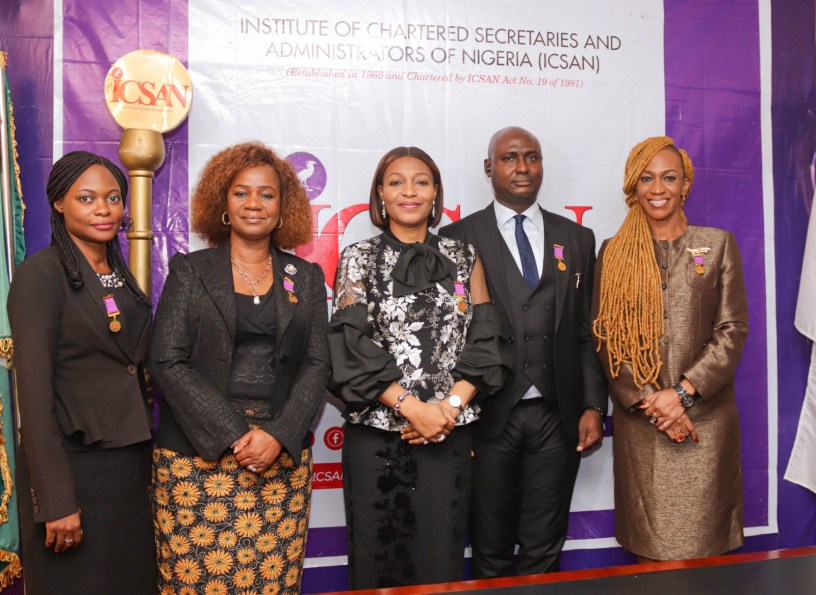
Its President and Council Chairman, Funmilayo Ekundayo who is the Institute’s first female President, said despite several increase the general interest rate, which ordinarily should have an impact in reducing the inflation rate of the country has not had any impact on inflation.
Ekundayo said there are so many areas that the government can look into to make the economy more efficient, saying there is a need to look into real investment in infrastructure.
According to her, the government should also try to reduce leakages in the system and the cost of governance, all of these also have a direct impact on growth and the ability of the government to invest.
In her words, the apex bank should also make economic policies, taking cognisance of our own peculiarities, the peculiarities of our economic situation and what would work for us.
Ekundayo said the generally believed notion that when you increase interest rate, this will incentivise savings and reduce spending which will also lead to a reduction in inflation, but it is working against us.
She highlighted massive salaries and allowances of public office holders, maintenance of a large number of aids, and duplication of functions in Ministries, Departments and Agencies as factors that have led to increased cost of governance in the country noting that these are some areas the government should look into to reduce cost of governance.
CBN tasked to look beyond orthodox method to control inflation
With Nigeria’s inflation at 22.7%, with its attendant consequences on pricing and consumer purchasing power, Central Bank of Nigeria, CBN has been tasked to look beyond the orthodox method and text book theories in curbing inflation.
According to her, the generally believed notion is that when monetary authorities increase interest rate, this will incentivise savings and there will be less borrowing and perhaps this will reduce spending and consequently inflation can also be reduced but she said “this has not been working for us”.
Ekundayo advocated for economic policies that take into consideration Nigeria’s peculiarities and economic situation.
According to her, there is therefore the need for the government through the CBN to continuously assess monetary policies with a view to checking out whether those policies are giving the objectives for which they are implemented. If they are not achieving the objectives, we should not be shy of rejigging and tweaking as required”, she said.
The ICSAN president also looked at the Nigeria’s high external debt burden and said the current position of external debt is not healthy for the economy.
She said debt in itself is not bad thing, but the utilisation of that debt is what is key.
According to her, “in a situation where major percentage of the fund raised is used for recurrent expenditure, that is definitely not healthy, but if government tailors it into critical and key sectors of the economy that can become a revenue generating asset, we would be sure that the revenue would be adequate enough to take care of servicing and paying the debt”.
On infrastructural development seen as critical for economic growth, Ekundayo proffered Public Private Partnership, PPP arrangement to address infrastructural gaps.
She said with this, the private sector is brought in to fund infrastructure projects which will reduce the capital required under the budget to fund those projects and therefore free some funds for government to use for other things.
On ways to reduce cost of governance, Ekundayo said there is clear connection between high cost of governance and the country’s sub-optimal developmental outcomes in real terms.
She asked government to address duplication of functions in MDAs and restructure MDAs to be more effective. “If there are overlapping functions, we can merge ministries and MDAs to reduce costs of governance”.
The ICSAN president also shared the road map of her administration for the next two years.
She said her administration will concentrate of empowering ICSAN members with professional skills, leverage technology to generally improve the quality of the institute’s programmes and ensure ICSAN secretariat building is commenced.

