

Thirteen sectoral groups have been constituted to spread the tentacles of corporate governance principles in line with international best practices across Nigeria.
They were constituted by the Institute of Chartered Secretaries and Administrators of Nigeria, to ensure the dynamism of corporate governance is entrenched across all sectors of the economy following the country’s recovery from Covid-19 pandemic.
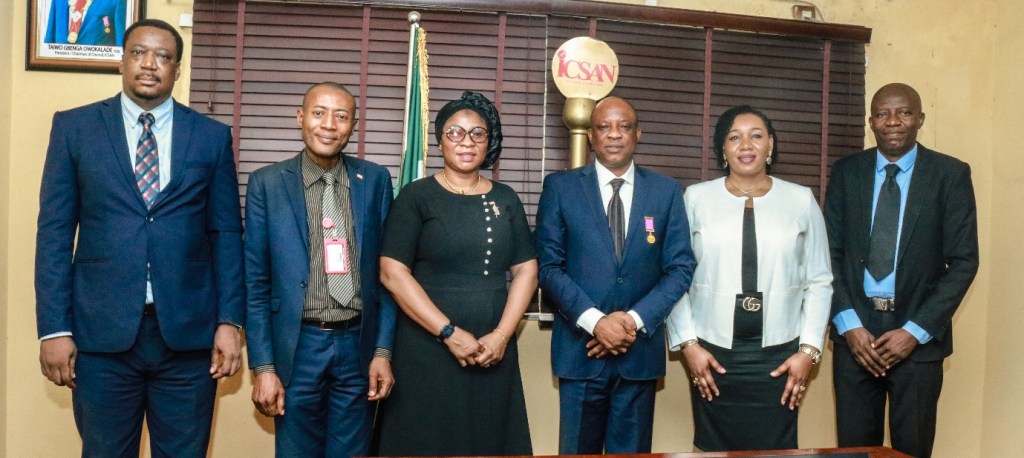
According to its President/Council Chairman, Gbenga Owokalade, many sectors which had been affected by the pandemic had unveiled some corporate governance issues.
Owokalade identified some of the groups to include; Public and Allied institutions group, digital, energy, aviation, maritime, sports, building, insurance, and banking amongst others.
He disclosed this at the institute’s fourth media parley in Lagos, saying the official launch of the groups which would operate virtually so the expertise of its members is not lost irrespective of distance is on November sixteen.
In his words, this is just another step to ensure the dynamism in corporate governance matters are well entrenched in many Nigerian sectors to make it more prosperous and economically viable.
Owokalade said they want to be able to address issues as they come up and as the foremost corporate governance institute in Nigeria, we want to be properly positioned to throw light and provide solutions to issues as they present themselves so that Nigeria gets better.
In his view, the challenges foisted by Covid-19 pandemic have exacerbated the problems of sustainability in many companies and industries, the concept has become more relevant now. When we now say sustainability beyond rhetoric, what are we talking about? Nearly everyone will agree that the concept of sustainability is very vital not only for the present business operations, but for the future of human society as well.
He noted that ICSAN was a leading recognised professional body dedicated to enhancing the status and practice of corporate governance and administration in both the public and private sectors of the economy.
According to him, ICSAN is the only professional body authorised in Nigeria to conduct the examinations leading to the qualification of Chartered Secretaries and Administrators, saying it is a member of the Corporate Secretaries International Association, CSIA, registered as a global voice for Corporate Secretaries and Governance Professionals.
For him, the Institute remains the leading voice on corporate governance and public administration in Nigeria with its various advocacy programmes.
He said one of the major ways ICSAN has acquired this enviable reputation is through the various programs on topical business and national issues like Public Lecture, Seminars, Press Releases, Media Chats, among other enlightening and educative programs.
“Over the years, we have consistently promoted the ideals of Corporate Governance through periodic issuance of policy papers and Guidance materials on Corporate and Public Administration.
Speaking on the unfortunate Ikoyi building mishap, Owokalade urged Nigerians to shun sentimental and false reportage and allow the constituted committee and authorities address the matter and present their findings.
He commiserated with the Governor and people of Lagos State, expressing satisfaction and confidence with the expertise and integrity values in the leadership and members of the committee to look into the collapse.
To him, everyone building, must always consider the implications of their actions in line with the location, safety of lives and properties and the Nigerian image and economy as a whole.
He said the institute commiserates with the entire people of Lagos and appealed to allow the committee do it’s work and not be preemptive about anything till findings are presented.
In his words, the government has been very proactive on the matter and must provide guidelines to prevent and ameliorate future occurrences.
The ICSAN President also charged the government to implement policies that allows economic predictions by proven statistical bodies such as the International Monetary Fund become reality.
He said the Nigerian budget must begin to reflect value addition components in a way that it trickles down to impact the lives of ordinary citizens.
According to him, the onus is on the leadership of the country to ensure the people feel the impacts of the predictions at the end of the day, saying the government must address insecurity levels head-on to boost the agricultural sector and allow the Central Bank’s monetary intervention on the sector to have effect.
He said this would in turn address food inflation, reduce rural to urban migration and lead to improved Gross Domestic Product outputs.

