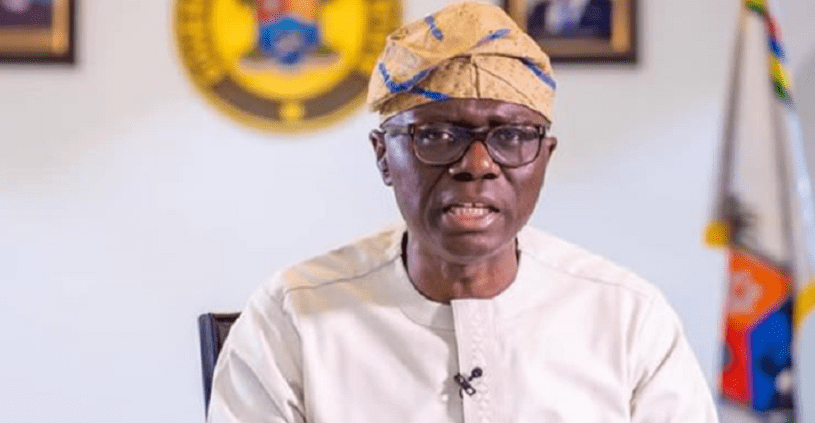
Lagos State vaccination rate is far below the minimum target of sixty per cent recommended by the World Health Organisation, WHO, per city population.
According to Governor Babajide Sanwo-Olu, at the current rate the state is going, it would take about three years to achieve herd immunity target.
To tackle the pandemic, Sanwo-Olu said his administration is planning to vaccinate 30 per cent of its population within one year.
Herd immunity occurs when a large portion of a community (the herd) becomes immune to a disease, making the spread of disease from person to person unlikely.
The governor spoke at the 2021 Global Citizen Live Concert held at Fela’s Afrika Shrine in Ikeja. Audiences in 11 cities across the world, including Paris, Seoul, London, Sidney, New York and Los Angeles, witnessed the live event held in honour of frontline and essential workers in the battle against the global pandemic.
Sanwo-Olu, who said the state cannot continue at this speed if it seriously wants to beat the virus, gave detailed explanation on how his administration had expanded access to vaccines since the vaccination programme began in March and the state’s projection to protect its residents and environment.
“To safely achieve herd immunity against COVID-19, a substantial proportion of our population would need to be vaccinated to lower the overall amount of virus able to spread in the whole population. One of the objectives of attaining herd immunity is to prevent mutations from emerging leading to more aggressive strains. It is important that Lagos achieves herd immunity at the same time with all countries together.”
Free access to Coronavirus (COVID-19) vaccines is one of the strategies designed by the United Nations (UN) to kick start global recovery, especially in cities that are signatories to the Sustainable Development Goals (SDGs) framework.
Global Citizen Live is a 24-hour global event initiated in six continents to unite the world in defending the planet against diseases and defeating poverty.
A-list Nigerian musical artistes that performed live during the international concert included Femi Kuti, Davido, Tiwa Savage and Made Kuti, among others.
As the epicentre of the pandemic outbreak, Sanwo-Olu said Lagos had pursued a radical vaccination programmes, which led to the administration of 16,000 jabs of vaccines daily. This, the governor said, is a far cry from what was projected in achieving herd immunity.
Sanwo-Olu added that 405,000 residents had received first doses of AstraZeneca and 289,000 persons returned for their second doses. The state, he said, administered 230,000 first shots of Moderna to raise the vaccinated population to about 1.2 per cent within five months.
The governor noted that the situation of unequal distribution of vaccines in which richer nations secured more doses than the size of their populations and are preparing to roll out booster shots, while poorer countries struggled to administer first doses, threatening the global efforts to end the pandemic.
He said vaccine equity remained the only path to toe by world leaders to end the pandemic. To do this, the Sanwo-Olu said the world must ensure that vaccines were available to all, especially poorer countries that had struggled with supply.
On how Lagos is creating access and ramping up vaccination, Sanwo-Olu said the government was leveraging the private sector funding, capacity and infrastructure to scale up availability and distribution.
He said: “Our proposal to the private sector is to reserve and administer 50 per cent of the vaccines procured in partnership with the private sector to be made available free of charge at government health centres. We propose to deploy a proven system where those who can pay for vaccines subsidise the cost of vaccination for those who cannot.”
The governor urged Nigerians to continue to be law-abiding and comply with the travel guidelines stipulated by the Presidential Steering Committee (PSC) to prevent the importation of new variants.
He reiterated that observation of social distancing and personal hygiene would break the cycle of community transmission of the virus.

