
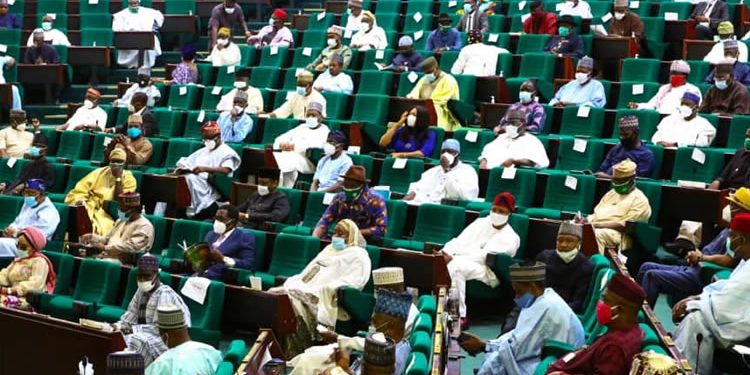
The House of Representatives has adopted the report on the Petroleum Industry Bill (PIB) for passage at the Committee of the Whole.
The Executive bill, which sought to reform the oil and gas sector and ensure its governance met with best global standards, was presented by the Chairman of House Committee on PIB, Rep. Mohammed Monguno (APC-Borno).
Following the adoption of the report, the bill will now be scheduled for third reading and final passage by the House.
Presenting the report, Monguno said the PIB had suffered lots of setbacks in the parliament since its introduction in 2000.
He said the bill sought to address the very core aspect of the nation’s economy which largely depended on the oil and gas sector.
“The bill also seeks to unbundle the Nigeria National Petroleum Corporation (NNPC) so that it will become NNPC limited and for it to be run commercially,” he said.
The lawmaker said the bill, when passed into law, would ensure transparency in the oil and gas sector by addressing the challenges facing the sector through various funding that would be put in place.
Monguno also said the bill would attract investors and ensure competitiveness in the oil and gas sector in line with world best practices.
Deputy Speaker, Ahmed Wase, who presided over the session, read out the 318 clauses of the bill and members voted in support.
In his remarks, the Speaker of the House, Rep. Femi Gbajabiamila, commended the lawmakers for their cooperation and for adopting the report.
He said history would remember them positively for adopting the report which has eluded the parliament for many years as a result of various interests.
Gbajabiamila also announced that the Electoral Amendment Bill would come up for consideration and adoption next week before the house embark on its 2021 long vacation on July 14.
Meanwhile, Stakeholders in the oil and gas sector welcomed the passage of the Petroleum Industry Bill (PIB) by the National Assembly after almost two decades.
The stakeholders noted that the passage of the bill was being greeted with caution until its contents are made public.
The bill, which has five parts, eight schedules and 319 clauses was passed by both the Senate and House of Representatives on Thursday.
The legislation is aimed at “promoting transparency, good governance and accountability in the oil and gas sector.”

