
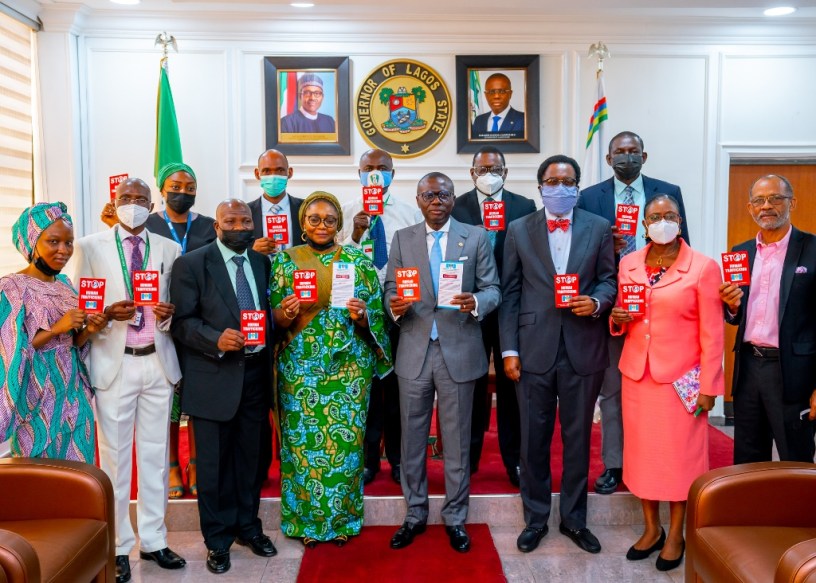
Lagos State Government has said the unabated trafficking in persons presents a threat to the country.
It pledges that the State will be lending more support to the National Agency for the Prohibition of Trafficking in Persons, NAPTIP, to rehabilitate victims and prosecute traffickers.

According to Governor Babajide Sanwo-Olu, the State would be reaching out to the agency for support in human capital requirements and operation space to boost the agency’s response to the crime.
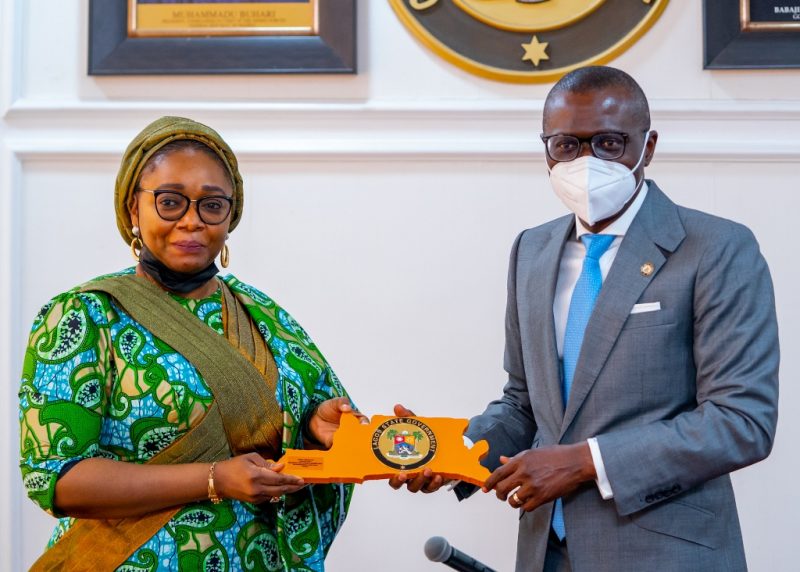
The Governor made the pledge when the NAPTIP’s Director-General, Imaan Suleiman-Ibrahim, led members of the management team on courtesy to the State House, Alausa.
He disclosed that Government had strengthened social awareness in communities to discourage trafficking and other forms of human rights abuses.
In his words, Lagos had raised its investment in attending to the psychosocial needs of victims of abuses and granting them protection from their abusers.
For him, Human trafficking indeed presents a deadly trend in the society and there is need to protect citizens, especially the vulnerable in communities, while those who had fallen victims, they must stand up and protect them.
He says the support and collaboration which the NAPTIP has enjoyed from Lagos State Government could be strengthened, through the Ministry of Woman Affairs and Poverty Alleviation, we have rendered support to NAPTIP in terms of human and material requirements for your zonal office.”
Sanwo-Olu said Lagos was ready to boost its collaboration with the agency in other areas of support, adding that government would work closely with NAPTIP to rehabilitate victims and equip them with skills that will make them self-reliant.
Suleiman-Ibrahim said Lagos remained strategic to the fight against human traffickers, because of its proximity to international borders, which she said, made the State prone to trafficking activities.
She noted that Nigeria remained a fertile ground for recruitment of trafficked persons, saying victims had been turned to commodities.
The NAPTIP boss says the agency cannot fight traffickers from skeletal locations; this is why they are deepening engagement with States to stop trafficking and those behind the dehumanising trade.

