
There is need for a legal framework that will protect and cover journalists to carry out their constitutional and professional works so they are protected against powerful Nigerians.
According to Civil Society Legislative Advocacy Centre, CISLAC, it is important to provide a framework that would help journalists exercise their fundamental and constitutional rights without fear of intimidation.
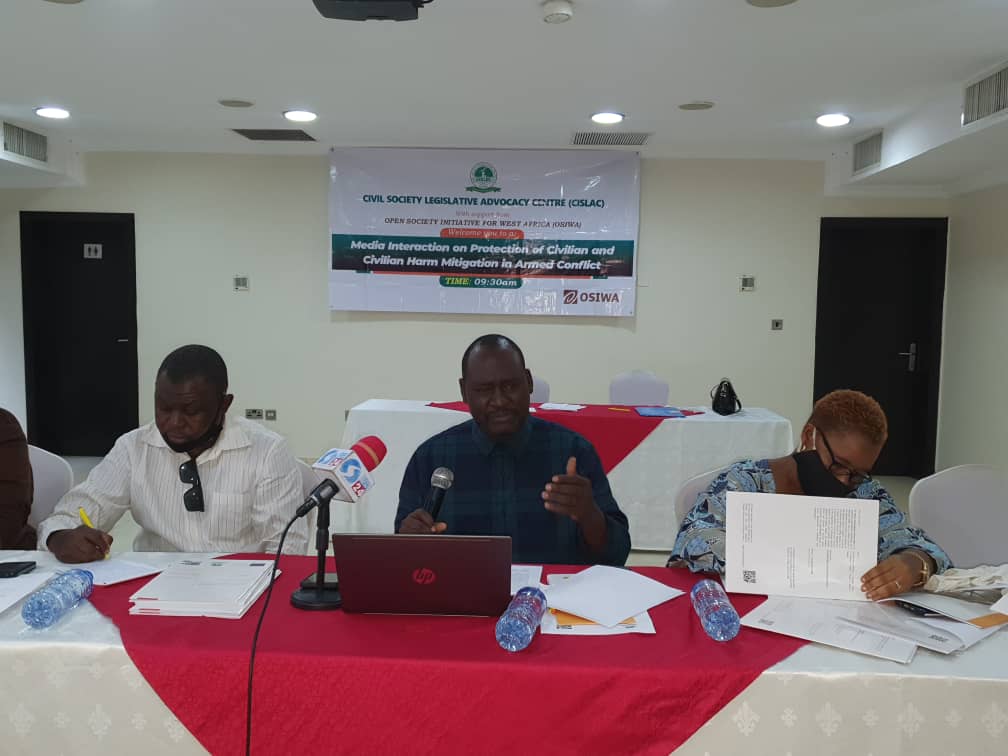
Its Executive Director, Auwal Musa, said the rights would enable them expose deviousness, corruption and bad governance.
He states that the nature of the media had changed rapidly due to technology and global information which had rapidly transformed information and communication activities.
Musa attributed the decline in media freedom to bad governance, which stifles ability of the media to freely expose corruption and injustice in the country.
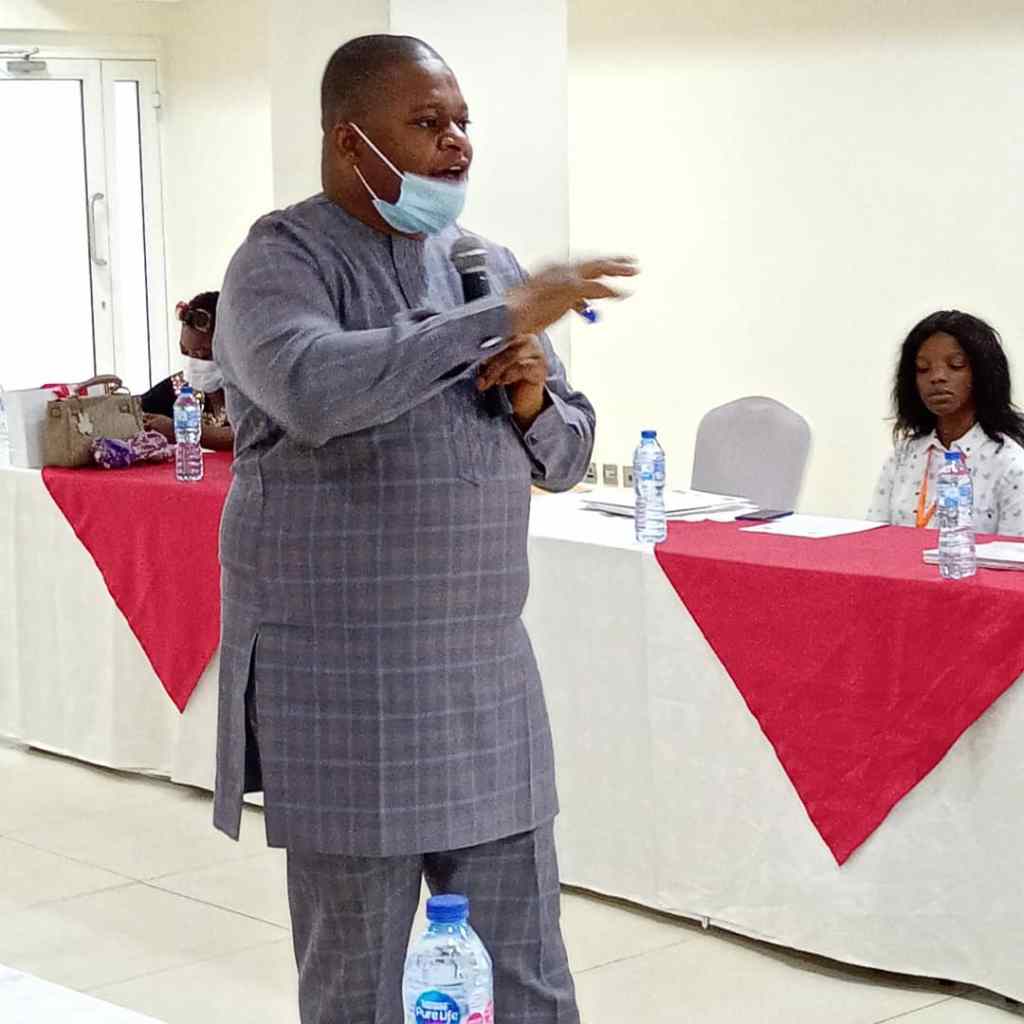
According to him, the freedom of expression was gradually going down compared to previous assessments and this had been largely due to intimidation and harassment in the country.
In his words, this has led to a global drop in rating of the Freedom of Media in the country, saying many journalists are not able to freely carry out their constitutional and professional duties because they have been attacked for exposing wrong doing in the society.
To him, good governance is understood as a society’s ability to guarantee the rule of law, free speech and open and accountable government, and in turn, freedom of expression is an essential pillar of governance more broadly, because this right enables as many citizens as possible to contribute to, and monitor and implement, public decisions on development.
Musa stated that the importance of press freedom in promoting good governance is underlined by the increasing numbers of people who have access to an expanded realm of media platforms.
According to him, without effective media contribution toward deepening democracy by exposing corruption, human rights abuses, injustice, impunity and bad governance, there is no way we can actually succeed in democratising Nigeria.
He said the media was specifically empowered to expose wrong doings in the country according to our Constitution which gave it the legal foundation to do that.
Musa said the media do not have basic legal protection, so the danger, risk and lack of appreciation is much, yet the media still carries out its duties for the country to survive.
The Executive Director noted that the importance of a free, professional and plural media in contributing to Protection of Civilian and Civilian Harm Mitigation in Armed Conflict has gained traction in his organisation work.
According to him, a vibrant media gives people free flowing access to information, enables dialogue, encourages people to express their views, prompts greater political participation and encourages accountability.
He stressed that conflicts today are, in many cases, more complex and multidimensional than ever before, saying this has continued to threaten protection of civilians in various levels.
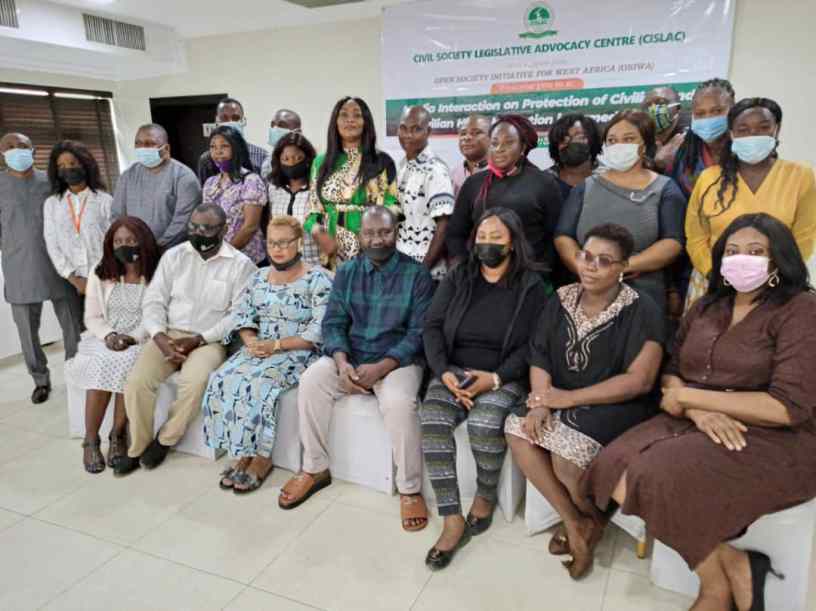
The Executive Director, said this during a one-day media interactive session on “The Protection of Civilian And Civilian Harm Mitigation In Armed Conflict”, supported by Open Society Initiative for West Africa, OSIWA, held at Ikeja, Lagos, with over twenty media practioners from both Print, Electronic and Online media.
Read His Address
The importance of a free, professional and plural media in contributing to Protection of Civilian and Civilian Harm Mitigation in Armed Conflict has gained traction in our work. A vibrant media gives people free flowing access to information, enables dialogue, encourages people to express their views, prompts greater political participation and encourages accountability. Conflicts today are, in many cases, more complex and multidimensional than ever before. This has continued to threaten protection of civilians in various levels. Most conflict deaths occur during internal wars rather than between states and regular armies. Over the past decade there has been an increase in conflict relapse rate. Conflicts are less likely to be resolved through traditional political settlements and this is due mainly to the emergence of organized crime that tends to exacerbate state fragility and undermine state legitimacy.
Let me say that CISLAC remains deeply concerned by the high number of acts of violence against civilians in various theatres of operations across the country. It is often said that the first casualty of war is truth. Accurate, impartial media reports conveyed from conflict zones serves as fundamental to public interest. In the information era, images and news can have a decisive impact on the outcome of armed conflicts. As a consequence, the obstruction of journalistic tasks in times of armed conflict is alarmingly frequent. The spectrum of interference is wide, it ranges from access denial, censorship and harassment to arbitrary detention and direct attacks against media professionals.
The velocity of today’s communication often means that a journalist’s ability to assess critically what is happening is reduced due to the difficulty of maintaining a balanced distance from events, leading to a horrible and potentially dangerous cycle of misinformation. Expressing observations and opinions in soundbites and tweets and avoiding rational discourse and analysis can put civilian in harm’s way. It is increasingly difficult for organizations to hold back sensitive information from the public until an appropriate time. The speed of communications and competition for audience share makes the media less likely to play a gatekeeper role by withholding certain information that could derail potential risk to vulnerable civilians. The accelerating speed of communications can have positive as well as negative consequences.
The continued suffering of civilians, particularly the effects of sexual violence, loss of livelihood and constant attacks by non-state armed groups is a cause for deep concern, children and armed conflict and the psyche of the children in these environment is a potential harm to the society. Sexual Violence in Conflict is a niche issue, protecting civilians from sexual violence and other conflict-related mayhem is a step in the right direction. The stories from various IDP camps and locals in operation theatres are indeed sore tales.
Civil Society Legislative Advocacy Centre (CISLAC), in collaboration with Open Society Initiative for West Africa (OSIWA) has worked collectively to institutionalize a participatory system that is vibrant, robust and effective. The nature of the media is changing rapidly, arguably more rapidly than any other sector. Media is exploding and flourishing in Nigeria, with changes happening often very rapidly; new technologies, and particularly mobile telephony, are rapidly transforming information and communication opportunities, including for the poorest with poorly understood consequences. This shifting landscape has implications for the role of media in Protection of Civilian and Civilian Harm Mitigation in Armed Conflict.
Social media places the audience as both content creators and consumers: “ordinary” people as opposed to professional journalists creating user-generated “news.” In this way it can be emancipatory, giving voices to those who otherwise may not be heard, and thus having the potential to become a significant factor in effective and proactive protection of civilians. But this open information landscape also opens the door to abusive, intolerant and oftentimes malicious discourse. Learning to live with free expression in a digital age requires a new movement to help people understand that free speech is not without some responsibilities.
In conclusion, we are grateful to OSIWA for providing the resources needed to host this very important meeting. We are also grateful to all of you for joining us today. The cooperation we have so far received from stakeholders has been wonderful, we urge you all to put into good use robust strategies and skills gathered here today.. To all of you who have devoted time to be part of this meeting, again we say thank you.
Speaking on the concept of ransom payment for captives, CISLAC Program Manager, Salaudeen Hashim said non-kinetic approach is the way to go.
According to him, there are communities in most of the hidden areas where captives are kept or where those who are victims are kept, saying those communities are deliberately not volunteering information because of the threat that has been given them.
He spoke extensively on the failure of non-payment of ransom to kidnappers in exchange for captives by government officials, saying such position is a way of de-marketing the industry.
His words, unfortunately, if they are going to negotiate, it is not necessary they are going to negotiate based on paying ransom but there are other tools for negotiation.

