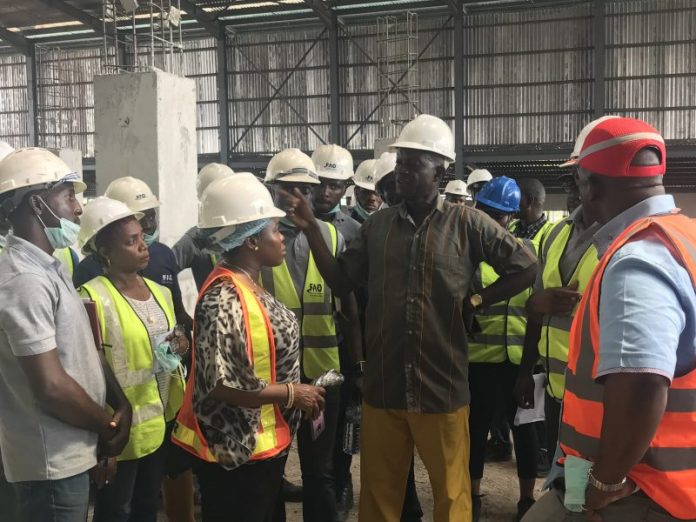
As the Imota rice mill nears completion, Lagos State Government in collaboration hosted Ondo, Ogun delegates for United Nations Food Systems Summit in Ikeja, Lagos.
In an attempt to achieve Sustainable Development Goal two “zero hunger” which is central to the attainment of the other sixteen goals by twenty-thirty, the United Nations has set the podium to address the challenges facing food systems and security among member states ahead of its Food Systems Summit in September.
Speaking at the event tagged: ‘‘Implementation of Exploratory Dialogue of the United Nations Food Systems Summit in the south-west geopolitical zone’’, Governor Babajide Sanwo-Olu, said government has completed a five-year Agricultural masterplan.
According to him, the plan is expected to raise the agricultural production capacity of the state, and creating a marketing platform for the export of local agro-allied products and improving food security.
He also revealed that the State is working towards the commissioning of the almost completed 52 tons per hour rice mill at Imota in Ikorodu to ensure food security in the State and across the nation.
He said: “In Lagos, we are putting in optimum efforts to ensure we support the agricultural sector and promote a sustainable food system.
”We are pleased to note that we have completed our five-year Agric master plan, which would be raising our capacity to be a key player in agricultural production, while also creating a marketing platform for the export of local agro-allied products and improving food security.
“In a bid to also ensure we maximize the opportunities inherent in the agric sector, we have also put in place the Lagos Aquatic Center of Excellence (LACE), which is a fish processing centre capable of stimulating our fish capacity production from 20% to over 60%.
Sanwo-Olu who spoke through Commissioner for Economic Planning and Budget, Sam Egube, said they are also working towards the commissioning of the almost completed 52 ton per hour rice mill in Ikorodu to ensure food security in the State and across the nation, as rice is an important staple of the Nigerian diet,” the Governor said.
Earlier, the Permanent Secretary of the Federal Ministry of Budget and National Planning, Olushola Idowu explained that the zonal exploratory dialogue aims to allow States to identify and explore different options towards solving the national food systems and encourage a collective approach towards building a sustainable food system.
“The objective of the Zonal exploratory dialogue is to enable the states to explore different options to solving the national food system; examine the possibility of making it inclusive, efficient, resilient and sustainable.
“The Nigeria National food system dialogue will eventually enable the government to develop a plan of action to improve nutrition, food security, to reduce hunger and prevalence of nutrition in line with the national food as well as nutrition policy for Nigeria. It is envisioned to create more inclusive, healthier food systems and encourage a collaborative approach towards building a sustainable food system,” she said.
Also, the Commissioner for Agriculture, Bisola Olusanya said the southwestern states need to come together to incorporate policies that would enhance agricultural processes in the region, while also creating an enabling market for farm produce in adequate quantity at the right time and right places.
She said: “For the southwest region, we know that land is especially an issue for Lagos but other southwestern states have the land. We need to begin to come together and integrate our policies in such a way that we will become a force as well. We need to come together now to say this is how we want to plan the food system within this region.”
Also present are the events were Commissioner for the Environment and Water Resources, Tunji Bello, his counterpart for Women Affairs and Poverty Alleviation, Bolaji Dada who joined virtually; Ogun State Commissioner for Budget and Economic Planning, Olaolu Olabimtan.
Others are Permanent Secretary, Lagos Ministry of Economic Planning and Budget, Abiola Liadi; her counterparts in Ministry of Agriculture, Hakeem Olaniyi; Ministry of the Environment, Aderonke Odeneye; Office of Sustainable Development Goals, Bose George; Ondo State Permanent Secretary for Agric, Sunday Akintomigbe and other stakeholders.

