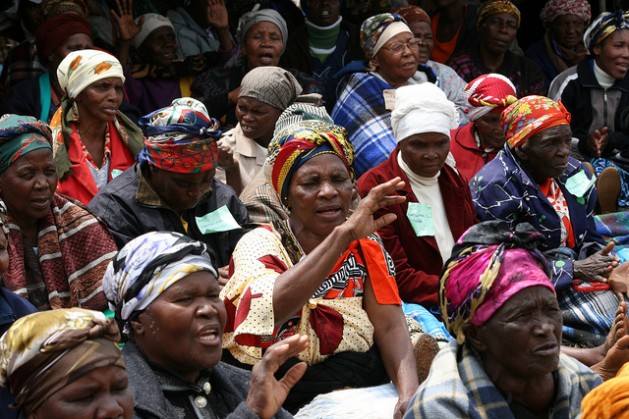
In Nigeria, a new class of activists and women’s right advocates are emerging to take on the Nigerian establishment and its historical suppression of women, and push for increased representation for women.
Nigeria is one of the worst places to be a woman in the world: harmful cultural practices, poverty, the highest maternal mortality rate in the world, economic inequality, misogynistic laws, and political exclusion are just a few of the issues Nigerian women have to live with.
According to Nigerian Feminist Forum, NFF, the reform was aimed at achieving the mandated 30 per cent affirmation as enshrined in the Beijing 1995 declaration for women political empowerment or even the 35 per cent National Gender Policy, NGP.
It says the declaration requires governments, international organisations and civil society groups to take a range of actions to enhance women’s political emancipation.
Its Focal Person, Chinonso Okechukwu, called for legal and structural reforms to reflect and enforce improved women participation in politics and representation into decision-making offices.
Okechukwu made the call during the forum’s zonal conference in Lagos with the theme “Legal Reform and Women’s Participation in Political Leadership in Nigeria”.
She stated that women play great roles in societies, communities and homes, noting that there was need for them to be adequately represented in many areas and leading positions, whether in elected offices, civil service, the private sector or the academia.
Okechukwu emphasised the need to break barriers to women’s emancipation through laws and institutions, as well as some cultural barriers.
She added that “women constitute over half of the world’s population and contribute in vital ways to societal development generally, assuming key roles as mothers, producers, home-managers, community organisers, socio-cultural and political activists.
According to her, under international standards, both men and women should have equal rights and opportunities to everything worldwide, most especially to participate fully in all aspects and at all levels of political processes.
In her words, in spite of the major roles they play, women are yet to be given adequate recognition due to cultural stereotypes, abuse of religion, traditional practices and societal structures.”
Okechukwu recommended that political parties should create a support network for prospective aspirants by pairing them with established women politicians to play key roles as mentors and to provide capacity building for young or aspiring female politicians.
She called for the creation of an enabling environment that would allow women to engage meaningfully in decision making process in a sustainable and effective way free from violence and harassments of any kind.
She also called for the establishment of a legal fund to assist women politicians and introduce quota system at all levels of government to assist the female gender to achieve their goals.
Its National Coordinator, Blessing Duru says women around the world at every socio-political level find themselves under-represented in parliament and far removed from decision-making levels.
She noted in the Millennium Development Goals, United Nations, 2019, women’s equal participation with men in power and decision-making is part of their fundamental right to participate in political life, and at the core of gender equality and women’s empowerment.
According to her, strategies to increase women’s participation in politics have been advanced through conventions, protocols and international agreements for gender mainstreaming, but they are yet to prove effective in achieving gender parity in the highest government rankings.
In her words, women continue to be underrepresented in governments across the nation and face barriers that often make it difficult for them to exercise political power and assume leadership positions in the public sphere.
Duru said Nigerian women constitute about half of the population of the country and are known to play vital roles as mother, producer, time manager, community organizer and social and political activist.
But she said despite the major roles they play and their population, the society has not given recognition to these and to the fact that they are discriminated against, due to some cultural stereotype, abuse of religion, traditional practices and patriarchal societal structures.
According to her, Nigerian women have therefore over the years become target of violence of diverse form based on their positions in promoting transformative politics.

