
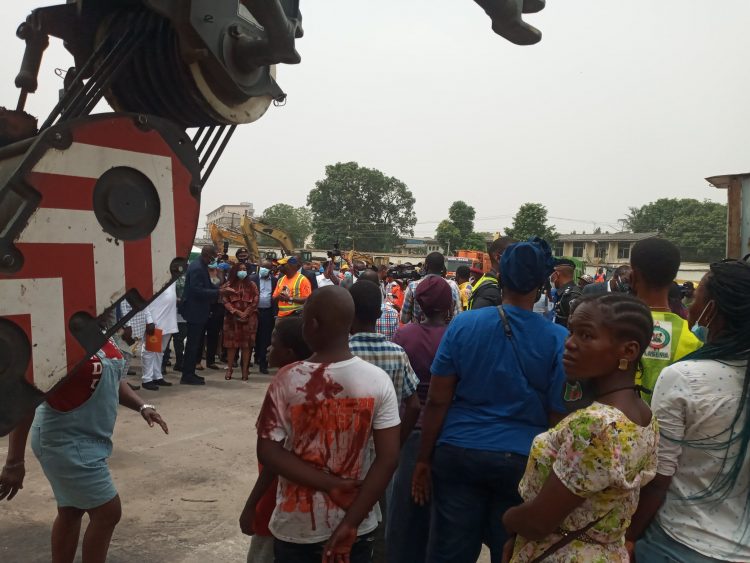
Over three hundred fuel tanker accidents were recorded in Lagos State last year.
According to the Lagos State Government, between December last year and now, Lagos State Emergency Management Agency had responded to one hundred and fourteen major emergencies, saving lives and billions of naira worth of properties.
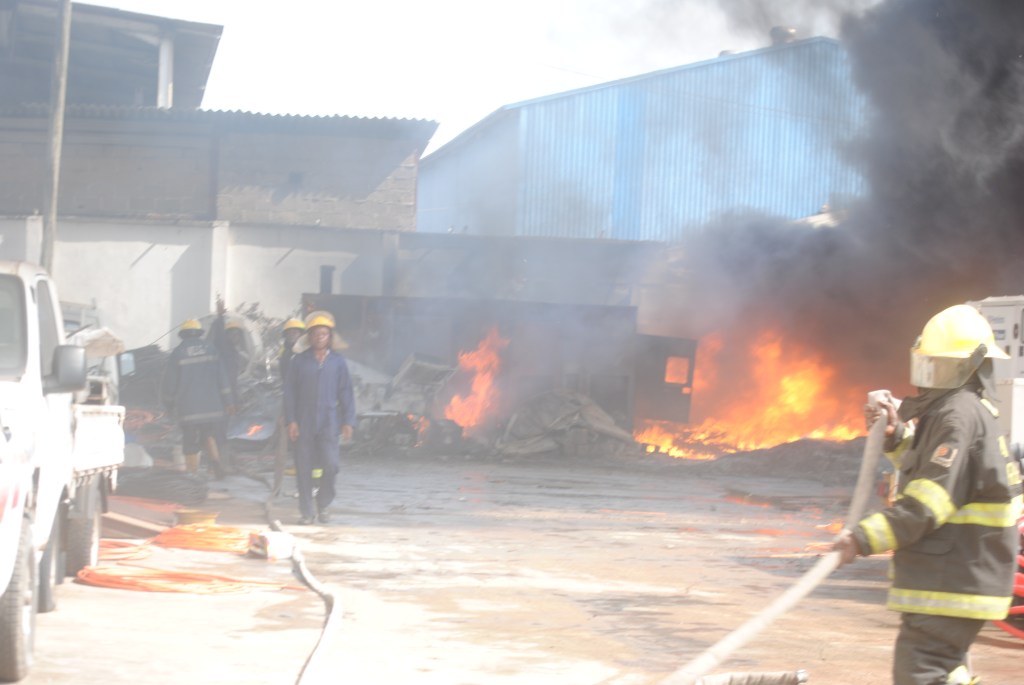
Commissioner for Special Duties and Inter-Governmental Relations, Tayo Bamgbose-Martins disclosed this at the Road Traffic Accident Simulation exercise, held at the Lagos State Emergency Management Agency, Cappa Base in Oshodi, Lagos.
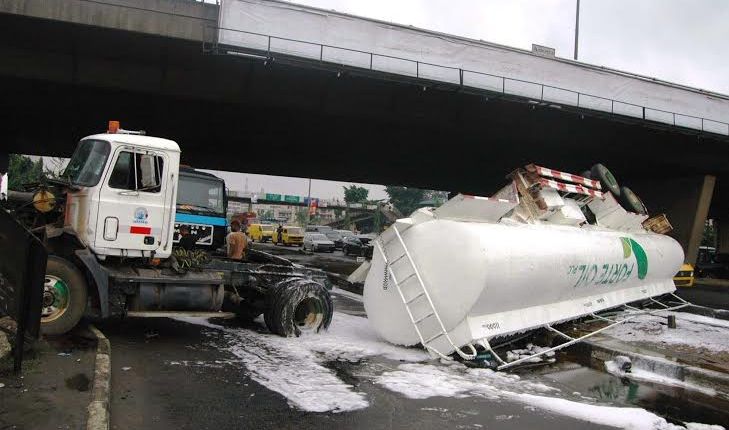
He also disclosed that the agency as the coordinating Agency for emergencies, coordinates and supports all Agencies in all emergency response but also acts as a responder during major incidents that is beyond the capacity of primary responders.
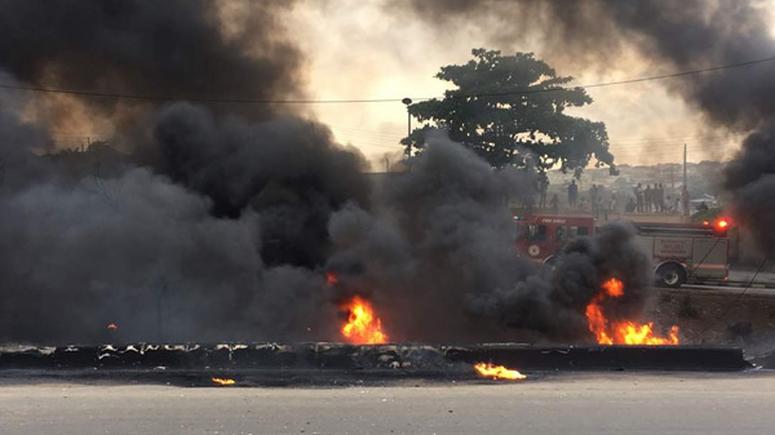
Bamgbose-Martins stated that the incidents had not only affected the State as a whole but individual households and businesses, experiencing loss of income, adding that nevertheless, the State had to be prepared to respond quickly to every and any type of emergencies.
He added that LASEMA and its sister agencies had lived up to the expectation that borne their existence, as loss of lives had been prevented, and the effect of many disasters mitigated with their professional handling of such unfortunate events.
This simulation exercise, the first this year, is to further prepare our agencies for better disaster management and also show the level of preparedness of our agencies, stimulating our responders for any event that will need their
expertise.
Wife of the Lagos State Governor, Dr. Ibijoke Sanwo-Olu said every government is duty-bound to protect the lives of its people and their properties from disasters, and that as the government agency solely responsible for disaster management in Lagos State, LASEMA’s simulation exercise is an important aspect of the agency’s increased state of preparedness to ensure proper readiness of the management and staff of the agency in order to help it fulfill its mission and mandate.
Sanwo-Olu said Lagos State is extremely vulnerable to a high incidence of disasters and emergencies., such as flooding, fire, road traffic accident, pipeline vandalisation and explosion, among others.
“In recent times, residents in Lagos State have been inundated with road traffic accidents, Disaster/Emergency incidents, and Fire outbreaks, being the most obvious examples.
“These unfortunate occurrences destroy homes and several means of livelihoods but also leave their immediate environment blighted, while jeopardising the entire society and economy of the state in the process.
“It is, therefore, the responsibility of a caring government to engage in active Disaster Risk Reduction efforts by aligning the skill set and competencies of its staff and stakeholders to build the capacity of Lagosians from the grassroots level up, through the establishment of Local Emergency Management Committees, LEMCs, in the 20 Local Government Areas and 37 Local Council Development Areas, in the state,” she stated.
She said the attendant risks had meant that disaster managers must be equipped with sufficient knowledge and skills to protect lives and properties with emphasis placed on promoting disaster reduction concepts rather than response and recovery, with the ultimate objective of developing resilient societies and communities, and alleviating the financial burden of humanitarian assistance through proper ‘Preparedness’ which is enhanced by simulation.
Director-General, LASEMA, Dr. Femi Oke-Osanyintolu said the simulation exercise was meant to test the capability of the agency to respond to a simulated emergency in disaster or crisis situation.
According to him, Managing emergencies is reliant on effective coordination and efficient operations of all phases of emergency/disaster cycles which LASEMA has been able to achieve with appropriate response time, despite all hindrances of a metropolitan and cosmopolitan city like Lagos, in line with global best practice.
Oke-Osanyintolu says this is so because LASEMA has an established and functional emergency response structure that runs all sections of the emergency/disaster cycle effectively. In all the phases of emergency/disaster management, preparedness is one of the key phases of the emergency cycle.
He said preparedness encompassed the tactical exercises, drills and simulations, including awareness and public education with a view to ensuring better operational performance at the scene of incidence due to adequate preparation through routine and cyclical training.

