Plans are in top gear by Governor Babajide Sanwo-Olu of Lagos State to repeal the Public Office Holder (Payment of Pension Law 2007) in the state.
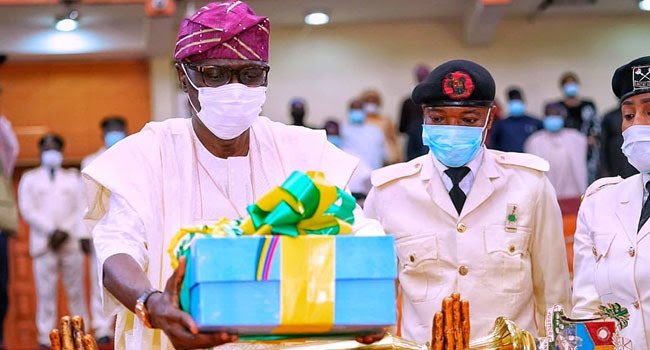
He made the announcement while presenting government’s budget proposal for the 2021 fiscal year to members of the Lagos State House of Assembly in Alausa, Ikeja.
According to him, the Speaker and members of the House, in light of keeping the costs of governance low and to signal selflessness in public service, government will be sending a draft executive bill to the House imminently for the repeal of the Public Office Holder (Payment of Pension Law 2007), which provides for payment of pension and other entitlements to former Governors and their Deputies.
Governor Sanwo-Olu added, it is government firm belief that with dwindling revenues and the appurtenant inflationary growth rates, that it needed to come up with innovative ways of keeping the costs of governance at a minimum while engendering a spirit of selflessness in public service.
He explained that government was able to successfully restructure all existing internal loans from an interest rate of 20 per cent to 12 per cent, and in some cases single-digit interest rates.
Governor Sanwo-Olu informed the lawmakers that this resulted in a cumulative cost savings of N12 billion, noting that the state’s debt portfolios would also be held as much as possible in naira to reduce its foreign currency exposure risk.
He stated that while revenue collection remained a major challenge, government would encourage residents to pay their correct taxes to ensure inclusive development – a major thrust of his administration.
In his word, on the part of government, it will assiduously work at improving the tax system through revolutionary reforms that enable easy tax collection and payment.
He says another major achievement in the outgoing fiscal cycle is the successful review of the 2018 Land Use Charge Law, saying the law now accommodates the yearnings of Lagosians for a more friendly, modern, and realistic Land Use Charge Law.
 securityandsafetymatters