African countries can defeat the Covid-19 pandemic the same way it eradicated the wild poliovirus on the continent.
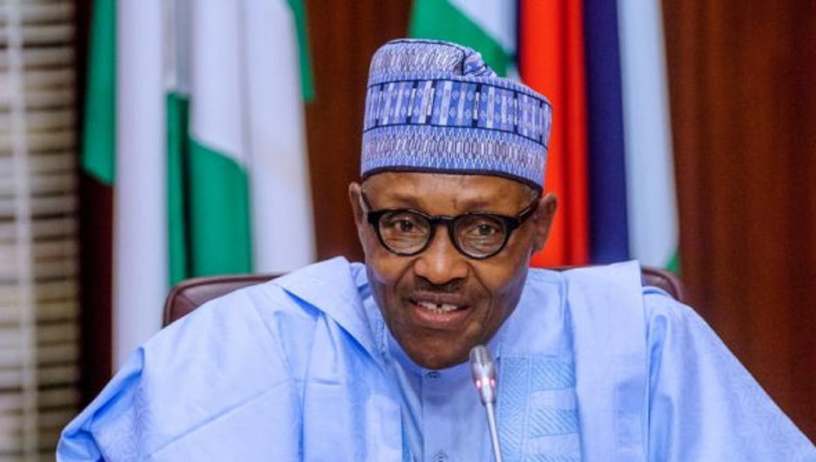
President Muhammadu Buhari expressed optimism at the formal certification of the wild poliovirus eradication in the African region during the virtual session of the seventieth World Health Organisation’s regional committee for Africa.
He assured the global community that Nigeria will sustain the momentum and leverage on the lessons learnt from polio eradication to strengthen her health system, especially primary health care, and prioritise health security.
The President said Nigeria used data systems, community engagement and innovative technology to monitor and predict the occurrence of polio outbreaks.
The statement was titled ‘Like polio, we can defeat COVID-19, President Buhari declares, lauds Aliko Dangote, Bill Gates, Emeka Offor, others.’
Adesina quoted the President as saying that “I recall that shortly after assuming office in May 2015, I made a pledge to Nigerians that I would not bequeath a polio-endemic country to my successor.
“This certification is, therefore, a personal fulfillment of that pledge to not only Nigerians, but to all Africans.
“At a time when the global community is battling the COVID-19 pandemic, this achievement strengthens my conviction that with the requisite political will, investments and strategies, as well as citizens’ commitment, we will flatten the epidemic curve.
“I can affirm the commitment of all African leaders to this course of action.”
He said Nigeria used data systems, community engagement and innovative technology to monitor and predict the occurrence of polio outbreaks, adding that these same skills and tools are being used to fight COVID-19 and the multi-country outbreaks of Circulating Vaccine Derived Polio Viruses.
Buhari, who described the achievement as a truly historic moment, commended President Cyril Ramaphosa of South Africa and Chairman of the African Union, under whose leadership, Africa crossed the finishing line.
He recounted that the journey to eradicate the virus dates back to 1996, when late Nelson Mandela inaugurated the Kick Polio out of Africa campaign.
The Nigerian leader also seized the opportunity to congratulate Dr. Matshidiso Moeti and the WHO Regional Committee for Africa on their untiring efforts, contributions and leadership towards polio eradication in Africa.
The World Health Organisation says Nigeria was the last African country to be rid of the wild polio virus.
This was made known by the WHO Director-General, Dr. Tedros Adhanom Ghebreyesus, in an emailed opinion he co-authored with the Rotary International President, Holger Knaack, on Tuesday.
It was titled ‘Creating a great polio legacy in the African region.’
The organisation explained that having no wild polio case since 2016 in the African region “is one of the greatest achievements in public health history.”
It added that delivering polio vaccines to every child in the African region and wiping out the wild virus “is no small feat and the human resources, skills and experience gained in the process leaves behind a legacy in how to tackle diseases and reach the poorest and most marginalised communities with lifesaving services.
“As recently as 2012 half of all globally recorded cases of wild poliovirus were in Nigeria – the final country in the region to rid the virus from its borders. However, as with the COVID-19 pandemic, the lesson is that it’s never too late to turn a disease outbreak around. Through hard work, new innovations and ensuring that no child was missed, Nigeria and the entire African region have now defeated polio.
“Across the region, health workers go village-to-village and door-to-door vaccinating children multiple times and offering health advice and support to the community.
“It’s a remarkable effort started by Rotary International, which in the 1980s – when there were hundreds of thousands of cases every year – made a global call for eradication.”
Poliomyelitis, or “wild polio” is an acutely infectious and contagious disease that attacks the spinal cord and causes irreversible paralysis in children.
It was endemic around the world until a vaccine was found in the 1950s, though this remained out of reach for many poorer countries in Asia and Africa.
As late as 1996, WHO said there were more than 70,000 cases in Africa alone.
Nigeria, a country with over 200 million population, had been among the trouble-spots in the early 2000s.
In the northern areas, vaccination campaigns were stopped in 2003 and 2004 due to extremist belief that it was a vast conspiracy to sterilise young Muslims.
Also, the emergence of Boko Haram in 2009 caused another rupture in the programme. In 2016, four new cases were discovered in Borno State, the heart of the conflict.
But WHO said its partners and officials sought to intercept people coming in and out along market and transport routes in a bid to spread medical information and recruit “health informants” who could tell them about any polio cases.

