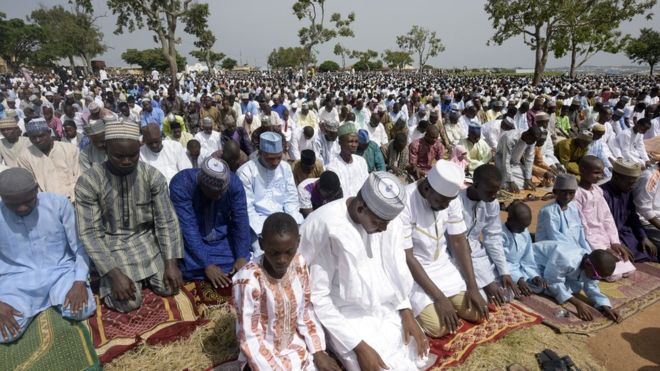
Lagos State Government has stopped the reopening of worship centers initially scheduled for Friday, June 19 (mosques) and Sunday, June 21 (churches).
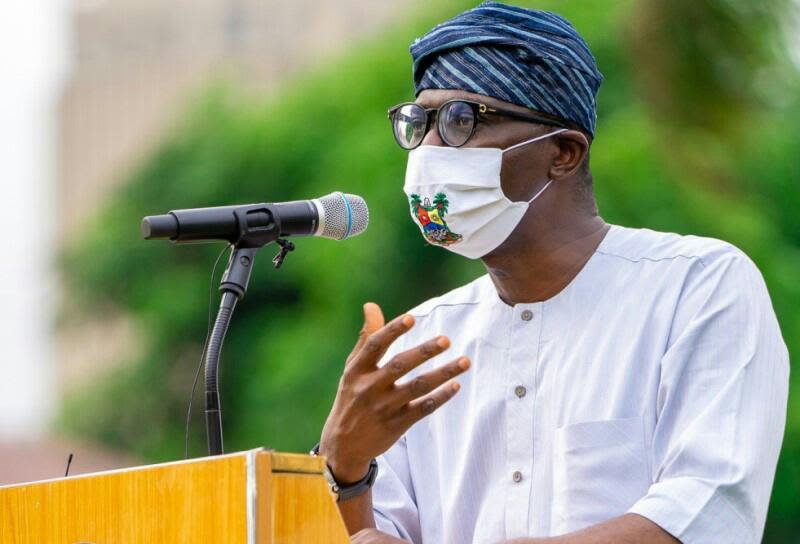
Governor Babajide Sanwo-Olu announced the decision at a press briefing on Tuesday.
According to him, the development became necessary as a result of the rising cases of COVID-19 in the state.
“Dear Lagosians, in the most recent guidelines which we issued on the gradual easing of the lockdown, based on the advice of the Presidential Task Force on COVID-19, I noted that we would shortly be permitting the restricted opening of religious houses, on the condition of strict compliance with detailed guidelines issued by the Lagos State Safety Commission.
“We have been closely monitoring the situation since then, and have now concluded that we cannot proceed with any form of re-opening for places of worship in Lagos State, until further notice,” Sanwo-Olu said.
“This is not a decision that we have taken lightly, it is simply in line with our ongoing evaluation of evolving scenarios regarding the course of the infection in Lagos State and the corresponding public health advisory guidelines issued by the experts.
“So, let me say this again: we are now hereby suspending, with immediate effect, the plan to re-open religious houses and places of worship in Lagos State, until further notice. We will continue to monitor the situation closely, and continue to base our decision-making on data modelling; as well as on the responsibility we have to act in a manner that ensures the protection of all of you the people of Lagos State.
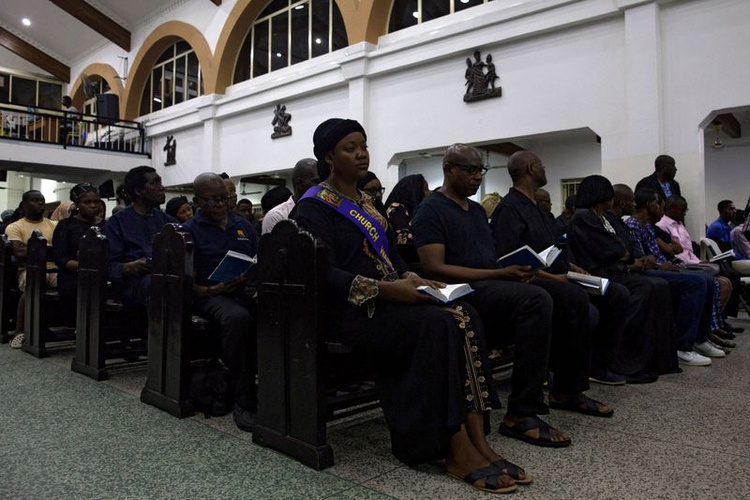
“Therefore, until further notice, all places of worship in Lagos State will remain closed. Social and events centers, and social clubs, will also remain closed, for now,” he added.
On Monday, Nigeria recorded 573 new coronavirus infections, bringing the total number of cases in the country to 16,658.
Of the new infections, Lagos reported the highest figure with 216 new cases, bringing the total number of cases in the state to 7,319.
Consequently, the state has remained the epicentre of infections in the country, closely followed by the FCT with 1,264 and Kano state with 1,158.
To curb further spread of the virus, the Federal Government had in March, imposed a lockdown on the three majorly affected states at the time (Lagos, Ogun State and the FCT).
Subsequently, other states began to impose varying degrees of curfews and governors eventually agreed on interstate lockdowns as they began to record new infections.
But weeks after the federal government-imposed lockdown, President Muhammadu Buhari announced again that there would be a gradual easing of the lockdown in order to allow economic activities resume as the country could not sustain an extended period of economic inactivity.
While essential workers and other levels of workers have been allowed to resume so far, the government has still appealed to those who can afford to stay at home, to do so.
Reducing interpersonal contacts and maintaining social distancing of up to 2-3 meters is said to be one of the ways to curb the spread of the virus but that in itself has proven to be a difficult task for most Nigerians.
Other measures to stay safe include sneezing or coughing into your elbow, washing of hands regularly, use of alcohol-based sanitizers and wearing of face masks.
While most businesses have been allowed to resume with strict adherence to the above measures, schools, cinemas, clubs and other places of mass social gatherings remain shut.
However, on June 1, the Presidential Task Force on COVID-19 lifted the ban on religious gatherings in the country.
While the PTF had said it does not recommend that people resume at places of worship, it noted that if they have to, they must adhere strictly to the guidelines, some of which include the mandatory use of face masks by worshippers and provision of handwashing spots at the entrances.
Also, the use of hand sanitizers with at least sixty per cent alcohol content and mandatory temperature checks was advised.
The PTF also mandated that facilities be structured in a way that physical distancing can be observed and as much as possible, congregants avoid activities such a hugging, shaking or kissing.
In addition, it noted that church/mosque volunteers (ushers, choir, security etc) that have underlying illnesses should not be allowed to serve, while the time for worship services should not be more than one hour.
Following the announcement, states began to lift the ban placed on worship centers.
In Lagos State, the governor on June 4, announced that worship centers could reopen but limit the capacity of persons per time to 40%.
For larger worship centers, he said the maximum of attendees should be 500 persons per time.
The reopening was to commence on June 21 for churches and June 19 for mosques.
Fifteenth Update on Coronavirus by the Incident Commander, Governor Babajide Sanwo-Olu.
Dear Lagosians,
As at midnight yesterday, June 15, 2020, Lagos State had recorded a total of 7,319 confirmed cases of Covid-19.
Of this number, 1,137 have fully recovered and been discharged, while 82 have sadly died, leaving 6,100 active cases under management in the State.
Our dear State therefore continues to be the epicenter of the coronavirus pandemic in Nigeria, with about 44% of the total number of confirmed cases nationwide.
Let me again say that the steady increase in number of confirmed cases is by no means unexpected. Considering that the infection is now very much in our midst, the more we test, the more the number of positive cases that will emerge.
The uplifting news is that, based on the statistics emerging from Lagos State, more than 90 percent of the people who test positive will go on to fully recover under supervision, and be discharged.
Dear Lagosians, in the most recent guidelines which we issued on the gradual easing of the lockdown, based on the advice of the Presidential Task Force on Covid-19, I noted that we would shortly be permitting the restricted opening of religious houses, on the condition of strict compliance with detailed guidelines issued by the Lagos State Safety Commission.
We have been closely monitoring the situation since then, and have now concluded that we cannot proceed with any form of re-opening for places of worship in Lagos State, until further notice.
This is not a decision that we have taken lightly, it is simply in line with our ongoing evaluation of evolving scenarios regarding the course of the infection in Lagos State and the corresponding public health advisory guidelines issued by the experts.
So, let me say this again: we are now hereby suspending, with immediate effect, the plan to re-open religious houses and places of worship in Lagos State, until further notice.
We will continue to monitor the situation closely, and continue to base our decision-making on data modelling; as well as on the responsibility we have to act in a manner that ensures the protection of all of you the people of Lagos State.
Therefore, until further notice, all places of worship in Lagos State will remain closed. Social and events centers, and social clubs, will also remain closed, for now.
Let me make this clear, that we are now fully in the phase of personal responsibility, regarding this pandemic. This means that, while the Government maintains its responsibility to take protective decisions for the common good, what will ultimately save us all and defeat this virus are the sensible personal decisions that we take on a daily basis.
Decisions to use masks anytime you are out of your house, to avoid non-essential travel, to stay at home when we don’t have any business being outside, to wash or sanitize our hands regularly – these are the simple but necessary steps that will save and protect us all.
As a Government we will continue to do everything in our power to safeguard the health and wellbeing of the people, but that can only be effective when the people themselves act responsibly, and do not behave in a manner that undermines public health guidelines and puts the society at risk.
We will, as always, continue to keep you informed and updated on the decisions that are taken for the public health and safety of all of us. One of the most important tasks that we face as a government is to carefully and responsibly balance the competing considerations of life and livelihood, and one of the most important tasks before you as citizens is to abide by the decisions that have been taken for the good of all of us – even when it is not easy to do so.
Let me, as I end this address, express gratitude to all those at the frontlines of the response to this pandemic, in the public and private sectors.
Our medical workers, Rapid Response Teams, support personnel like call center workers, drivers, cleaners, and others, monitoring teams at the State and Local Government level, and all our security agencies. Thank you for the very important work that you all do.
Thank you also to everyone who has taken it upon themselves to be a whistle-blower, and report violations of our directives.
We encourage people to speak up and report on our hotlines: 0901-051- 3197; 0901-051-3198; 0901-051-3199. As always, strict confidentiality of all reports is guaranteed.
I thank you all for listening.
Babajide Sanwo-Olu
Governor of Lagos State
16th June, 2020.

