The partial closure of Nigeria’s borders is not meant to punish her neighbours, but to strengthen the country’s security and economy.
According to President Muhammadu Buhari, the period of closure would be used for stock-taking on threats to the nation’s security and economy.
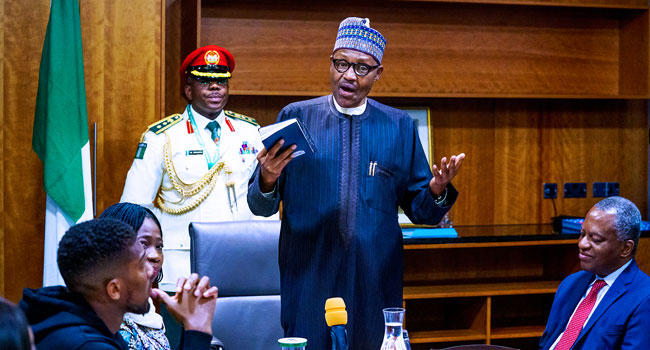
Buhari told a selected group of the Nigerian Community in the United Kingdom that Nigerian farmers had been celebrating the closure which had drastically reduced the smuggling of agricultural produce.
The President who commended Nigerians in the Diaspora for their huge home remittances of more than twenty-five billion dollars in Twenty-eighteen, also lauded their individual performances in their various fields of expertise.
President Buhari attributed the country’s virtual food security position to the “very good last three rainy seasons;” the federal government’s reduction in the price of fertilizers by 50 percent and the presidential directive to the Central Bank of Nigeria not to give foreign exchange for food imports thereby saving the nations billions of naira.
Explaining the achievements of his administration in implementing its three-point campaign agenda by focusing on fixing the economy, providing security and tackling corruption, the President said Nigeria’s “huge, vibrant youth population” have been encouraged to go back to the farms and are “living decent and respectable lifestyles.”
On security, he said “it is common sense that you can only run the country if it is secured,” adding that the country “has not done badly in the North East.”
Describing the havoc done by corruption to the image and economy of Nigeria as “terrible,” President Buhari said that his administration has now focused on retrieving stolen fixed assets and returning the proceeds of the sale “to the treasury through the Treasury Single Account (TSA),” so that nobody can return them back to the convicts even after his tenure.

