
Security stakeholders in Lagos have said the Nigeria Police Force would stop collecting money for granting bail to suspects if the force could be adequately funded by the government.
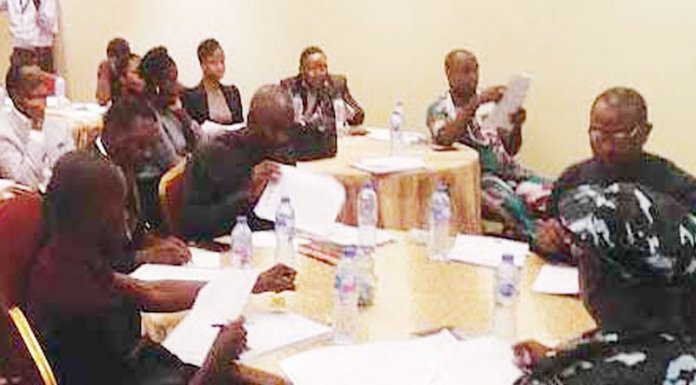
The stakeholders said this at a one-day Civil Society Organisation/Media interaction on bail process at different police stations and the citizens’ rights to bail, organised by an NGO,the Rule of Law and Accountability Advocacy Centre(RULAAC) in collaboration with the Nigerian Policing Programme (NPP).
According to the stakeholders, the collection of money for bail at police formations such as the area commands and divisions is attributable to lack of monthly allocations, stressing that the system fuels such corruption.
Executive Director of RULAAC, Ikechukwu Nwanguma, said many people had often complained about police demanding money before granting suspects bail while the officers complained of lack of funding by the government as well.
Nwanguma said the interaction was aimed at raising public awareness on the rights of citizens and the bail process at police formations considering the powers and the duties of the police under the law.
He said granting of bail ought to be free at any police formation, but added that paucity of fund to carry out operational duties by the area commands, and the divisional police stations, was making corruption to thrive within the force.
President, Committee for the Defence of Human Rights, Barrister Malachy Ugwummadu said the police might be under funded, yet that should not give them the licence to collect money for bail as the law of the land had stipulated that bail is free.
Ugwummadu said he was not in anyway supporting under funding of the force, stressing that gross underfunding of the force had encouraged collection of money for granting bail.
He called for sanctions against erring police officers indulging in the corrupt practice that had been tarnishing the image of the force, emphasising that no police officer had the power to detain any suspect beyond 24 hours, except through court authorisation.
The Legal Practitioner said many people’s rights were being violated because they did not know their rights and how to seek redress for their rights and lacked the capacity to do so.
Also, Executive Director, International Centre for Human Rights Nonviolence and Safety Awareness, Ene Unobe, said the police should not be blamed alone for collecting money before granting bail, alleging that the law courts were doing same.
She said many people were in prisons nationwide due to their inabilities to meet certain bail conditions, urging relevant authorities to look into the court’s bail conditions.
Some police officers, including DPOs, and unit leaders present at the event said no police division, unit or area command had allocation of funds to run their stations.
They also said the officers in charge of such stations used to print the bail papers, arrest warrants, and any other documents required to run a police station from their own salaries, stressing that only those willing to pay for bail do so, without compulsion.
The officers also said policemen used their salaries to go to court to prosecute suspects, and give money to prisons officials to transport their suspects to prison if remanded.

