Nigeria must deploy intelligence to be able to combat terrorism, banditry and kidnapping.
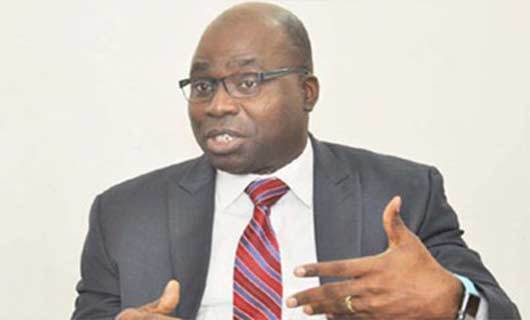
According to Chairman, Independent Corrupt Practices and Other Related Offences Commission, Professor Bolaji Owasanoye, intelligence should also be deployed in the war against corruption.
Owasanoye gave the advice when he received the students of Basic Intelligence Officers’ Course 12/2019 of the Defence Intelligence College, who visited the commission in Abuja.
He, therefore, urged the students to deploy acquired knowledge in helping to solve the problems that had arisen from security challenges in the country.
“We as a nation have had our fair share of terrorism, banditry and lately, the upsurge in kidnapping, kidnapping for ransom.
“However, you must note that those challenges are further aggravated by endemic corruption that is ravaging our nation.
“Hence, you must be at the forefront of eradicating corruption if we desire a nation free of terrorism, banditry and corruption,’’ the chairman said.
He congratulated the Course participants, saying that they were fortunate to have been selected by their agencies for the programme.
“This is an opportunity you must not miss as it is a course that exposes you to intelligence-gathering and how to deploy such intelligence, especially now that the nation is facing so much challenges arising from global terrorism.
“We must work together to address issues of transparency and integrity in the Nigerian project of Good Governance and Accountability,” he said.
Owasanoye pointed out that if corruption was allowed to fester in the systems, it would affect the very heart of the future of the country.
He said winning the war and defeating corruption depended greatly on intelligence-gathering and how such intelligence was deployed.
“We must also note that the future of the battle against corruption would have to be fought in the hearts and minds of people through creating and fostering attitudinal change and reorientation of values.
“It will be also through capacity building to tackle the phenomenon head on at every stage and level of the Nigerian society.”
Owasanoye, spoke through a member of the commission, Justice Adamu Bello.
Earlier, Leader of the course group, Group Captain Emmanuel Ukpong, had said the study tour entailed visit to three institutions, including ICPC, Economic and Financial Crimes Commission and Police Headquarters.
He said the theme for the tour was “Harnessing the Potential of Globalisation in the Fight against Corruption for Nigeria’s National Security.
“The specific topic for ICPC is ‘An Appraisal of Anti-Corruption Agencies and Nigeria’s National Security: ICPC in Perspective.”
Meanwhile, the Independent Corrupt Practices And Other Related Offences Commission (ICPC) says it is set to commence tracking of its first phase of constituency projects in 12 states.
According to its Public Relations Officer, Rasheedat Okoduwa, the initiative launched on April 2, 2019 by ICPC, aimed at ensuring satisfactory execution of all constituency projects as well as obtaining value for money.
Members of the Steering Committee for the initiative included Nigerian Institute of Quantity Surveyors (NIQS), Budget Office of the Federation, and Office of the Accountant General of the Federation.
Other members are Premium Times, International Centre for Investigative Reporting (ICIR) among others.
According to Okoduwa, the first phase of the exercise will commence in 12 states across the six geo-political zones of the country.
“At least five projects have been identified for tracking in each state.
“The zones and states include North Central; Kogi and Benue, Northeast, Adamawa and Bauchi while others are Northwest, Sokoto and Kano.
“Southeast has Imo and Enugu, Southwest, Lagos and Osun; South-South, Akwa Ibom and Edo.”

