The era of politicking with violence is over in Lagos State.
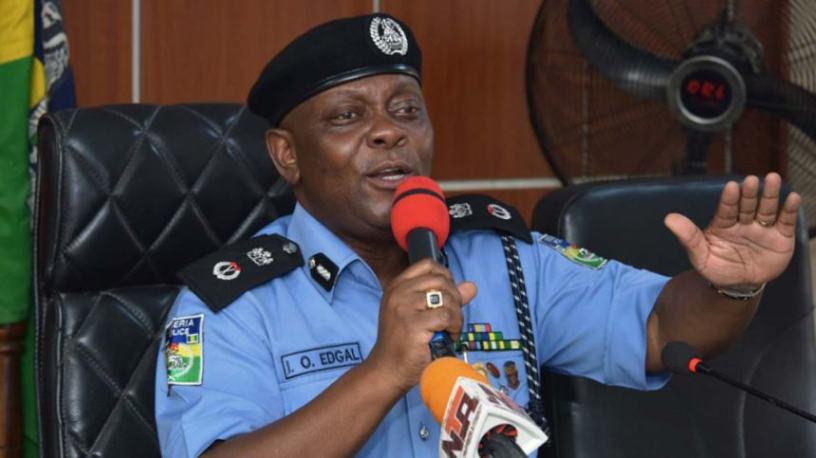
According to Commissioner of Police, Imohimi Edgal, politicians should steer clear of violence before, during and after twenty-nineteen polls.
Edgal said this at a Stakeholders Meeting organised by the Independent National Electoral Commission in collaboration with the Organised Private Sector and the Nigeria Policing Programme in Lagos, as part of INEC’s programmes to seek collaboration of stakeholders ahead of the general elections.
According to Edgal, who is the Chairman of Inter-Agency Consultative Committee on Election Security in Lagos State, the command with other security agencies have mapped out flash points and plans to provide adequate security in the general elections.
He said the command was committed to ensuring the state was well policed and adequately policed jointly by all enforcement agents, saying since all responsible Lagos residents want a free, fair and peaceful election, all have roles to play, it is the responsibility of politicians to call their supporter to order.
Edgal assured the residents of the state that the elections would be violence-free and peaceful with the increasing activities of police in the state, including the marine and coastal areas.
He sought the cooperation of all stakeholders for the security agents on election duties, saying the police had increased its activities before the elections to ensure peaceful polls.
According to Edgal, he will release the precise number of police men and other security agencies that will be deployed polling booth by polling booth.
Also, on behalf of organised private sector, Director-General, Lagos Chamber of Commerce and Industry, Mudah Yusuf, said democracy was all about participation and inclusiveness.
Yusuf, who said the private sector had been a very good supporter of INEC, said the private sector was partnering with the commission to sensitise private sector on the need to be part of the electoral process.
He called on all stakeholders to be part of electoral process to continually improve the quality of democratic process, saying: “Citizens’ participation is very important.
“A situation where only a 30 per cent of the voting population determines who leads is not good enough and that has been the experience over the years. We need to improve on that.’’
He appealed to the security agents and INEC to promote peace by ensuring equity, fairness, non-partisanship and independence as “there is the confidence that the chances of violence will also be minimal.’’
Chairman, Nigeria Union of Journalists, Qasim Akinreti, said the role of the media was huge in elections in informing, educating, sensitising people and interrogating public policies.
Akinreti, who said journalists were faced intimidation and harassment, urged the stakeholders not to take laws in their hands when any journalists erred but rather report such to the council.
He called for the security of the journalists, saying that security agents and political thugs should desist from harassing journalists.
According to him, there is the need for integrity and credibility of 2019 election, and that journalists already have a code for the coverage of elections which will be adhered to.
Director, National Orientation Agency in Lagos State, Waheed Ishola, said politician should ensure they played the game according to the rules and mobilise voters for elections.
Ishola said if there was violence during elections, the economy of the country would be grounded, added: “We must ensure that our supporters eschew violence, during the forthcoming general elections’’.
Administrative Secretary of INEC, Lagos State, Adelani Asade, said the commission’s commitment to free, fair, credible, peaceful and acceptable elections in 2019 occasioned the meeting.
Asade said: “To conduct free, fair, credible and hitch-free elections is not the sole responsibility of INEC. It involves the cooperation, collaboration, support and synergy of all stakeholders.’’
According to him, political parties, candidates, security agencies, civil society organisations, youths, women, faith-based organisations, traditional rulers, people living with disabilities, media and the entire citizenry should participate in electoral process.

