Security stakeholders have advocated for constructive engagement between the civilians and security agencies to build trust and collaboration and enhance their roles in nation-building.
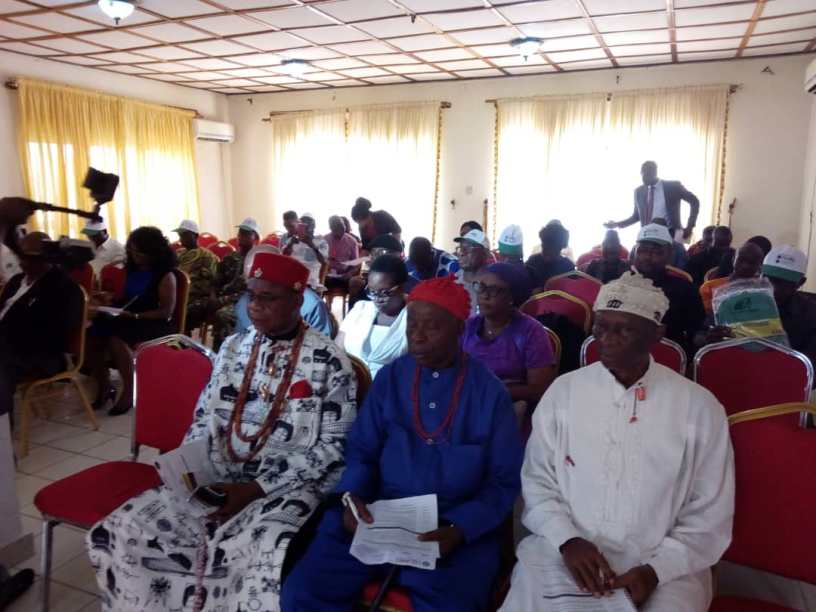
The stakeholders made the call at a Civil-Military Relations Town Hall Meeting for South-East, held in Umuahia, Abia, organised by CLEEN Foundation in collaboration with National Human Rights Commission (NHRC) and Institute for Peace and Conflict Resolution.
A resource person, Andy Nkemneme of IPCR, said there was need for dialogue, rather than force, in fostering a cordial relationship between civilians and the military.
In his presentation entitled “Civil-Military Relations in Nigeria: The Roles of Civilians and the Military in Peace-building”, said there was gap in understanding between civilians and military, which often resulted in conflicts in the society.
According to him, the military must reach out to the civilians, while the civilians on the other hand must articulate a clear vision of the type of military they want.
“Unfortunately, the military have little training in managing their relationship with the civilian, especially as it relates to internal conflict vis-a-vis their history
“Inevitably, there is every need to work together in tackling the growing insecurity in the country,” he said.
Another speaker, Jasper Uche, a lecturer in the Department of Political Science, University of Nigeria, Nsukka, said that over-militarization of the society severed the relationship between civilians and the military.
Uche, who spoke on “Civil-Military Relations as a Tool for Preventing and Countering Violence and Conflict in South-East’’, urged Directorate of Military Intelligence to re-prioritize intelligence-gathering and deal with the findings accordingly.
He also called for end to the de-humanizing punishments meted on innocent citizens during military operations.
Similarly, the Commissioner of Police, Abia Command, Anthony Ogbizi, called on various stakeholders to assist the police in security business, saying that policing was not exclusive to the police.
Ogbizi, who was represented by Assistant Commissioner of Police (Operations) in the command, Gabriel Elaigwu, called for proper understanding between the police and the people.
He said people should show some level of love to the police, stressing that Nigerian environment had peculiar challenges that did not give room for effective policing.
On his part, Air Commodore David Aluku, Director of Civil-Military Relations, Nigerian Air Force Headquarters, Abuja, said the Force was rapidly modernising.
He said civil-military relations had been incorporated into the various units of the Air Force.
According to him, the Force is working at establishing a human rights desks.
Earlier, the Executive Director of CLEEN Foundation, Benson Olugbuo, said the meeting was aimed at offering a platform to exchange information, experience and good practices among participating agencies.
The was attended by representatives from the Nigerian Security and Civil Defence Corps (NSCDC), Civil Society Organisations (CSOs), Christian Association of Nigeria (CAN) and traditional rulers among others.
The participants, however, deplored the absence of the Nigerian Army even as the organisers explained that they were duly invited.

