There has been an increased focus by Nigerians and the international community on the response mechanisms set up by security agencies to address human rights violations and complaints from the public.
In Nigeria, traditional platforms to address past rights violations have come in the form of panels of investigations and national conferences established by various successive governments in Nigeria.
Again, recent efforts to set up accountability mechanisms by security agencies emerged against a backdrop of human rights abuses perpetrated by security officials leading to numerous complaints by members of the public.
The relations between the security officials and civil society continues to be fraught with mistrust, characterised by limited interaction, intimidation.
This is deeply rooted in histories around the long years of military rule in Nigeria and the perceived clampdown on the freedom of expression and the shrinking space for civil liberties.
As part of measures to instil public confidence and to position security institutions as rights respecting, accountability mechanisms are being established to address citizens’ complaints and concerns.
The complaints ranging from human rights abuses by the various security personnel to professional misconduct on the line of duty are part of the human rights/professional concerns being addressed by the institutions.
According to CLEEN Foundation, one of such recent efforts by the Nigeria Police Force is the recently established Public Complaints Rapid Response Unit set up in twenty-fifteen to address complaints from the public as it concerns Police Officers, this predates several other efforts by the Nigeria Police.
The Foundation says Nigerian Army equally has also established a Human Rights Desk within the Directorate of Civil Military Affairs in early twenty-sixteen and a Call Centre to receive complaints against the Army amongst other accountability units in other military and paramilitary agencies.
The group says one of the missing links in assessing the effectiveness and efficiency of the mechanisms is the voice of the public in strengthening the work of the units which is under-scored by the largely opaque feedback mechanisms to complainants to indicate what actions have been taken to address their concerns.
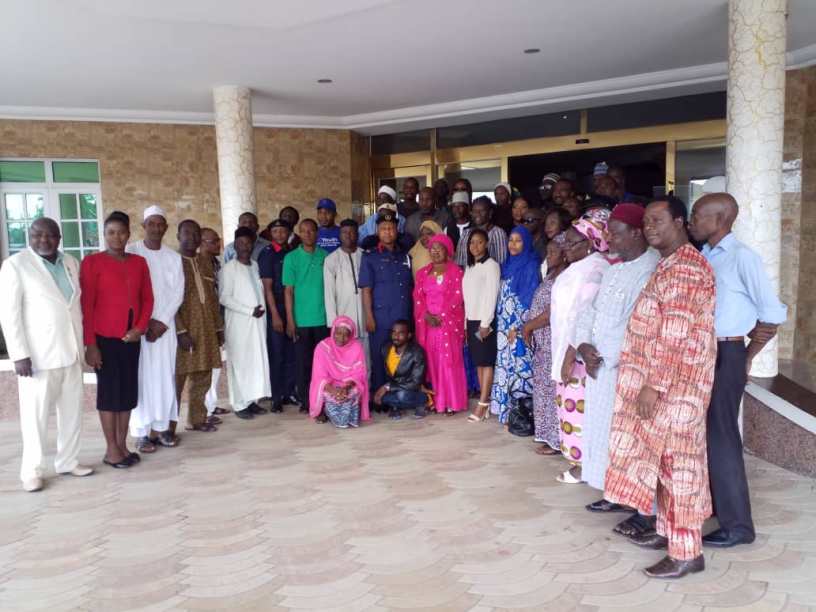
Its Executive Director, Benson Olugbuo said it was against the background on the need to strengthen current accountability mechanisms of security institutions that the CLEEN Foundation organised the Accountability Forum Of Civil-Military Relations In Nigeria.
Olugbuo said the forum was aimed at fostering constructive engagement and dialogue between civilians and the security agencies to build trust and collaboration and enhance their roles in nation building.
According to her, with the forum, they want to offer a platform to exchange information, experiences and good practices among participating agencies on civil military relations, and also to look into issues of human rights violations, the role of security agencies in holding their personnel accountable and finding mutual solutions to these challenges.
She said the forum was a part of the foundation’s project activities for the ‘Fostering Civil Military Relations’ Project funded by the National Endowment for Democracy, with the objective to strengthen civil-military relations through sustained dialogues and improved understanding between the military and civilians to improve accountability, security and respect for human rights in Nigeria.
Olugbuo said accountability by security agencies was part of the cardinal principles of democracy within the framework of effective oversight of the security agencies, saying the military and other state security actor was expected to be competent and professional enough to defend the society and citizens as well as protect the interests, institutions and critical infrastructure of the country including respect for the fundamental human rights of the citizens.

