
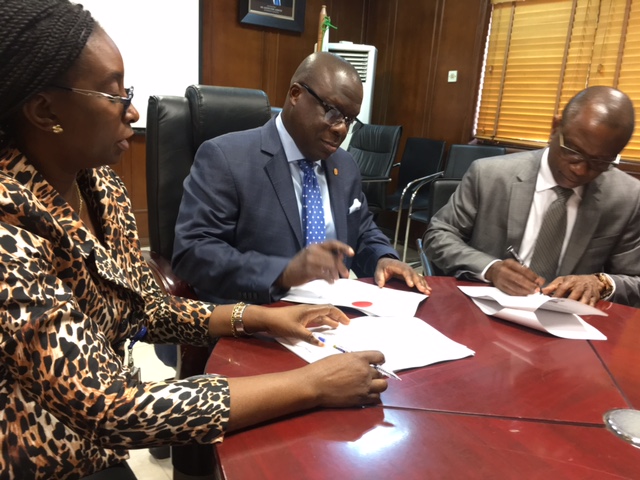
Lagos State has said its DNA Forensic Centre, would enhance investigation of crimes and mark the end of wrongful conviction of the innocent or acquittal of the guilty.
It said the centre would also help to resolve controversy about paternity and identification of bodies of accident victims by their loved ones.
Attorney General of Lagos State and Commissioner for Justice, Adeniji Kazeem, who said the DNA Forensic Centre, sited on Lagos Island, had since been delivering on its mandate, disclosed that there was plan to introduce a toxicology section, this year.
He said, “The whole idea was to try and set Lagos as the destination for forensic investigation…Toxicology is one part we intend to add to that facility.”
Since its set up, the DNA Forensic Centre, Kazeem said, had handled no fewer than 40 cases.
Added to this, the Attorney General said the state would, this year, introduce a data crime register, christened the Lagos Criminal Information System.
This system, he said, would capture all the people who have been convicted of crimes in the state, adding that the information would come in handy to the general public and law enforcement agencies.
“What it means is that every person who has got a conviction, especially in Lagos State, you will find that person on that system. That is what the public wants to see, whether this personality has been once convicted. You can go there and check,” he said.
The system would also capture names of accused persons, who are being tried in court and the offences for which they are being prosecuted. Kazeem, however, said this aspect of the data base would only be accessible to lawyers in the ministry of justice and law enforcement agencies, as making it open to the general public might lead to stigmatisation of accused persons, who may in the end be found not guilty of the offence with which they were charged.
The Attorney General said, “Sometimes, you are prosecuting a matter in which the man needs to be given bail, you need information to be able to take that decision whether he should be given bail or not. There are so many things the practitioners would extract from that system. But that part is not going to be available to the public because, in essence, the person is innocent until proven guilty. This is to avoid stigmatisation on the personality yet; but once the person is convicted, you can extract information.”
Investigation of landed property titles
Close to this, Kazeem said the state had noted with concern the spate of litigation over landed property. He said the state had decided to respond by creating a website where prospective buyers of landed property can search for the status of the property that they are planning to buy.
He said, “Lack of knowledge of litigation would affect your decision whether or not to buy a property. It also helps banks that give credit based on property. If you want to buy land, you will go to the land registry and you will visit the location to see if it is free from any encumbrances, but with these alone you cannot know if there is litigation on the property; and while the bank may still give you money based on that property, not knowing the status might affect the level of risk, interest they place on it.
“So, what we are basically trying to do is to give people the opportunity to make informed decisions. We are working very closely with the judiciary so that any land-related litigation is placed on a website; so you can go there and search at the click of the button.
“For instance, if you are buying a property at Ejigbo; you’ll just go to the website, enter Ejigbo as a search parameter, it will bring out all the litigation on Ejigbo. If you look at it and you find that this property is under litigation, you are warned and can walk away. We believe this is going to help a lot. Don’t forget that our job is to improve access to justice, access to tools that can help the general public to make informed decisions. That is going to be launched any time from now.”

