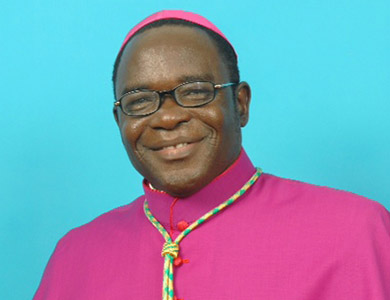
Bishop of the Catholic Diocese of Sokoto, Bishop Mathew Kukah, has said military solution alone would not end the Boko Haram insurgency in the North East.
Bishop Kukah said this in Maiduguri while speaking after a three-day long engagement involving community leaders drawn from Adamawa, Borno and Yobe states, organised by The Kukah Center.
He said, “For me, as an intellectual, military solution is never the best way to resolve a conflict. Most conflicts have never been resolved on the war front. The final issues of human survival, the building blocks of a better society are laid by those who listen to the ordinary stories of people and how they survived.
“We will defeat Boko Haram militarily. But Boko Haram is an idea; it is not about guns and weapons. The guns are important. But beyond that is constructing a befitting edifice that can ensure an inclusion that will figure out how to manage the massive diversity that constitutes Nigeria. That is at the heart of the tragedy of Boko Haram.
“So, I think we must renew our commitment, first, to the fact that education is the antidote, but, most importantly, is the need for us to centre every policy around the development of the human person.”
The focus of the meeting is on de-radicalisation, rehabilitation and reintegration of Violent Extremist Offenders (VEOs).
The plan is to start conversations at the community level aimed at tackling the challenges of integrating repentant insurgents.
During the discussions, it was agreed that radicalisation is one of the factors that have to be addressed. It was also agreed that there is the need to regulate religious preaching, bad governance, endemic poverty, social security and justice among others.
Participants are embracing the bitter pill of forgiveness as a key antidote for ending the insurgency problem.
In recent times Boko haram insurgents have continued to launch deadly attacks on the civilian populace even after negotiations with the Federal Government led to the release of some of the abducted Chibok girls.

