
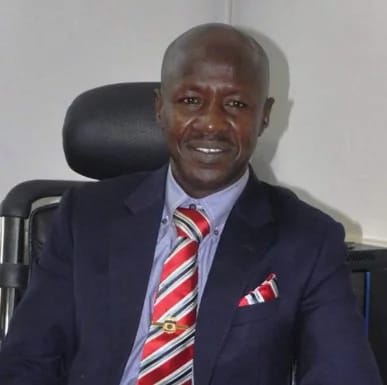
Acting Chairman of the Economic and Financial Crimes Commission,EFCC, Ibrahim Magu, has said the cooperation of Nigerians was necessary to fight corruption in the country.
Magu stated this in Abuja at a workshop on economic and financial crime reporting, organised by the commission for journalists on its beat, saying the workshop was designed to build the capacity of journalists covering the commission, considering the challenges they face in reporting the commission’s activities.
According to him, the fight against corruption was not about the commission or about an individual, but about Nigeria as a nation moving forward.
The EFCC boss, however, said the commission was opened to constructive criticism, saying this would make it make amends where necessary in its fight against corruption.
He said though not all Nigerians had confidence in the commission, it would strive to succeed in exposing and convicting corrupt public office holders.
According to Magu, the commission is already succeeding in its fight against corruption because some form of attitudinal change is being enthroned in the country.
This, he said, was especially so because impunity and recklessness in public administration and finance were being curbed and was not as rampant as before.
Magu said even in his acting capacity, he was determined to do more for the commission.
A Senior Editor in Premium Times and a speaker at the workshop, Ibagan Isine, urged the commission to be opened to the media always.
Isine, who spoke on a topic titled: “Journalism and the fight against corruption; lessons from other lands,’’ said it was critical to avoid speculative reporting.
He stressed the need for journalists as gate keepers to investigate every aspect of the commission’s statement before publishing, advising journalists to also get documents to substantiate information given by a source that pleaded anonymity.
Another speaker, Managing Director and Editor-in-Chief of the Interview, Azu Ishiekwene, said it was unfortunate that most corrupt cases were not reported in the country.
Ishiekwene attributed this to lack of trust on some investigative institutions, fear of reprisal and poor remuneration of journalists when they consider what they stand to gain from corrupt persons.
He said there was need for the independence of anti corruption agencies to enable them gain public confidence.
The workshop was organised for journalists from different media organisations covering the EFCC.

