
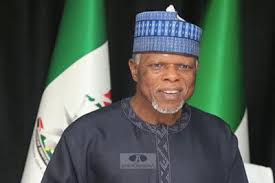
Nigeria Customs Service, FRSC and the Federal Inland Reveue Service said they were in partnership on a project to ensure that all vehicles imported into Nigeria paid duties before registration to shore up revenue of the country.
Customs Public Relations Officer, Wale Adeniyi, said the objective of the collaboration was to shore up the revenue base of the country and stop vehicle smuggling, saying the meeting of the heads of the agencies was to fashion out the modalities to achieve the implementation of the project.
According to him, the collaboration is in response to the directive Mr President gave that government agencies should think out of the box to enhance the revenue base of the country.
“This project involves high level collaboration among the three agencies to ensure that no vehicle will be registered unless verification of duty payment is made.
“There will be one shop verification facilities, officers who will be deployed to state licence offices.
These officers will be able to check the system and confirm payment before such applicants are directed to the licencing authority for vehicle registration.
“It is also part of this collaboration that every importer will be made to produce the Tax Identification Numbers (TIN) before they can conduct any business with customs.
“FIRS will equip us with the knowledge to be able to access their system and be able to determine whether these are responsible individuals and corporate citizens before they can conduct business with customs.
“The collaboration is going to mutually benefit the relationship among all the agencies,’’ Adeniyi said.
Adeniyi said the effective implementation of the project was that the heads of the agencies had resolved to set up two technical committees, saying one of the committees would work on the ICT interface of the agencies
He said the other committee would draft the Standard Operative Procedure (SOP) for deployment of officers to the state tax offices where registration of vehicles would take place.
Adeniyi said a lot of training and sensitisation would be involved in the collaboration process, saying in the short run, customs officers will go to FRSC that will train and equip them with the skills that will be necessary to actualise the collaboration.
He said in the long run, both agencies agreed that a training module would be introduced in their different training schools that would allow customs officers to be trained by FRSC officials’ vice- versa.
Adeniyi said the modules of the training would be incorporated into the curriculum of the academy of both institutions, saying government had earlier tasked MDAs to think out of the box in coming up with measures that would improve and increase revenue of the nation.

