Senegal has postponed the start of the school year nationwide following heavy rains and destructive flooding which claimed several lives in recent days.
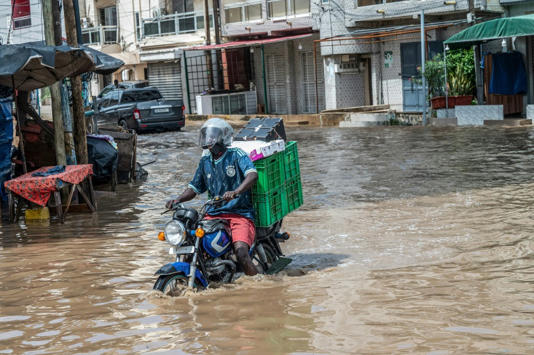
From Friday to Monday, the west African nation experienced torrential rain that flooded several regions and paralysed parts of the capital Dakar, submerging some neighbourhoods.
Several major roads were also cut off.
Senegalese President Bassirou Diomaye Faye stated that the storms had caused “loss of life” without giving a number.
In Dakar, a mother and child were found drowned in their home overnight Sunday to Monday, according to multiple local media reports.
Senegal’s rainy season usually starts in June before trailing off in October.
The education ministry announced in a statement that the decision to postpone the academic year was “driven primarily by the need to ensure the safety and protection of our children”.
It would also allow, among other things, for the “cleaning, sanitation, disinfection and restoration” of educational facilities, the ministry added.
Rather than start Wednesday as scheduled, primary and secondary school will begin next Monday, an unprecedented postponement in recent years.
Global forecasters predict Africa and the rest of the world will be hit in the coming months by an El Nino weather event that will peak at an intensity never observed in the modern era, compounding the effects of man-made climate change which drives extreme weather patterns.
El Nino is a natural phenomenon recurring every two to seven years owing to the warming of sea surfaces — bringing worldwide changes in winds, pressure and rainfall patterns.

