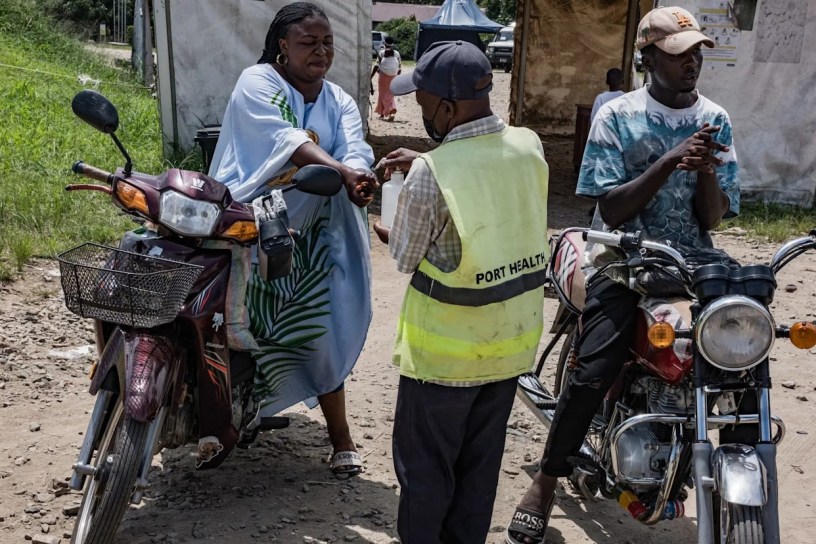
Uganda has intensified border surveillance measures following the Ebola outbreak. Health workers have begun screening travelers’ temperatures and enforcing handwashing at border points near Bundibugyo in western Uganda.
The outbreak, believed to have killed more than 90 people, was recently declared an international public health emergency by the World Health Organisation.
A Ugandan health worker, Clovis Bwambale, said when we heard the news of Ebola, we had to first tell the attendants who were in a health facility how best they could prevent themselves from being in contact with those people who could be having or who they suspected of having Ebola.
This latest epidemic is caused by the less common Bundibugyo strain, for which there is no vaccine or specific treatment. It has a high fatality rate.
A Ugandan politician, Mbabazi Alice, said it is not the first time we’ve experienced this as Bundibugyo people. It has been here. And then, being that it is something that we have never experienced, I believe that the government has the power to handle this issue if it breaks up, even nowadays.
The Africa Centers for Disease Control and Prevention (Africa CDC) in a statement declared the Ebola outbreak in DR Congo and Uganda a Continental Public Health Emergency.
The Democratic Republic of Congo has recorded 131 deaths from 513 suspected cases of Ebola, and there has been one death in neighboring Uganda

